Vegan Sri Lanka sounds almost too easy on paper. The island runs on rice, coconut, lentils and a dozen kinds of vegetable curry, and plenty of plates are plant-based already. The catch is three things you can’t see. There are flakes of dried fish hidden in the coconut sambol, egg cracked into “vegetable” kottu as a matter of course, and ghee in the Indian-style vegetarian places. Know about those three and you’ll eat brilliantly for a dollar or two a meal; don’t, and you’ll have eaten them before you think to ask.
Sri Lanka is the trip a lot of people save up for, for the tea country, the elephants, the temples and the beaches that are warm when Europe is grey. If you don’t eat meat, eggs or dairy (or you’re travelling with someone who doesn’t), you’ve got one extra thing to plan, which is food. And if Sri Lanka is just one name on your shortlist, our pick of winter sun destinations for vegan travellers covers where else to go.
So is Sri Lanka vegan friendly, really? When should you go, with two monsoons hitting opposite coasts? Is the famous train to Ella even running after the 2025 cyclone? What does the visa cost now, and what do you actually say in a local canteen where nobody has heard the word “vegan”? It’s all below, with prices in rupees and in dollars and pounds. If you’re weighing it up against Japan, the answer to whether Japan is vegan friendly is a lot more mixed.
We haven’t made it to Sri Lanka together yet, so this isn’t a trip diary. It’s a properly researched guide. In October 2026 we looked up every place’s own website and menu, or at least two independent, recent sources. We checked the visa rules against official pages and converted prices at the official exchange rate. Places that have closed, or whose plant-based food we couldn’t confirm, aren’t here, even if other sites still recommend them.
Is Sri Lanka vegan friendly?
Yes, Sri Lanka is one of the easiest countries in Asia for vegans, as long as you eat local food and ask about three ingredients. Sri Lankan cooking is built on rice with several vegetable curries, lentil dhal and coconut milk instead of cream. A huge share of everyday food is vegan by default; nobody just calls it that.
The word “vegan” itself draws blank looks in most ordinary eateries. Colombo’s daily The Morning put it neatly. Say you’re vegan in a typical eatery and you’re more likely to get polite confusion than a plant-based menu, even though vegan-friendly dishes are everywhere. Vegetarian is widely understood, so say “vegetarian” and then spell out what you don’t eat.
Fully vegan restaurants are few and cluster in Colombo and the tourist towns on the coast. You don’t need them for everyday travel, though. Almost every town has a rice and curry place where they’ll show you the pots and you pick the ones without fish or egg.
The simplest strategy for the whole trip is this. Eat where they cook rice and curry, and ask about fish, egg and ghee (clarified butter) for every dish. Those three questions cover almost everything.
Sri Lanka on our vegan map
10 places, 2 fully vegan. Tap a pin to see the details.
Loading the map…
- 100% vegan
- Vegetarian
- Vegan options
- Stays
See every place from this article on our vegan map.
Vegan Sri Lanka: what Sri Lankans eat and what’s vegan
Sri Lankan food means rice and curry above all. That’s a mound of rice with several small bowls of curry, sambol and greens. Breakfast is hoppers and string hoppers, lunch is rice and curry, and dinner is often kottu or roti. Most of these dishes are plant-based at heart and only change with what goes on top.
Rice and curry, the national dish
Rice and curry is the closest thing Sri Lanka has to a national dish. It isn’t one curry but a pile of rice surrounded by three to seven bowls. Typically you’ll get red lentil dhal (parippu) simmered in coconut milk, young jackfruit curry (polos), aubergine (wambatu), okra (bandakka), potato or pumpkin, and sometimes a sweet-sour pineapple curry.
Alongside come sambol, mallung (finely chopped greens lightly cooked with grated coconut and red onion) and poppadoms. In local places rice and curry is often a buffet, or bowls are brought to your table and you only pay for what you eat. Fish and meat curries are always separate dishes, so you just ask which pots are fish-free.
Breakfast: hoppers, string hoppers and kiribath
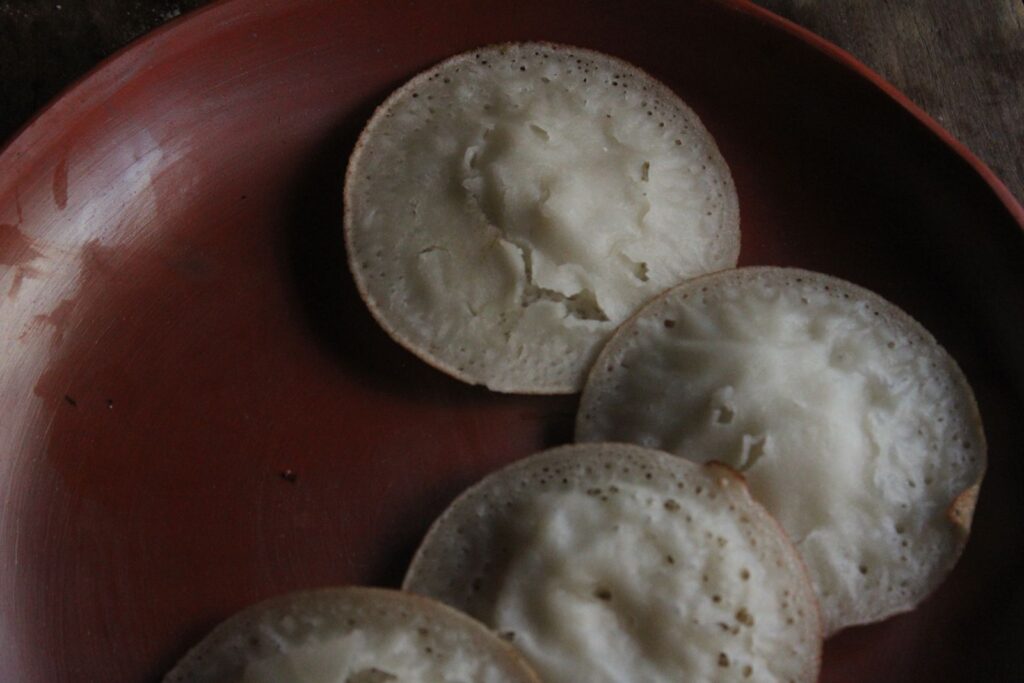
Hoppers (appa in Sinhala) are thin, bowl-shaped pancakes made from a fermented batter of rice flour and coconut milk, crisp at the edges and soft in the middle. Plain hoppers are plant-based, but the most popular version is the egg hopper with an egg cracked into the centre, so order “plain hoppers” by name.
String hoppers (idiyappam in Tamil) are little nests of rice noodles steamed on wicker mats. They’re eaten with dhal, coconut curry and sambol and turn up at breakfast all over the island. Pittu are steamed cylinders of rice flour layered with grated coconut, and kiribath is rice cooked in coconut milk, served at celebrations and at ordinary breakfasts.
Kottu, roti and street snacks
Kottu roti is chopped flatbread stir-fried on a griddle with vegetables, spices and sauce. You’ll hear it before you see it, because cooks chop it with two metal blades against the hotplate and every town clatters with it after dark. Egg, meat and cheese are add-ons, but egg goes into a lot of “vegetable kottu” by default, so say no egg before they start.
Short eats are the fried and baked snacks sold on streets and trains. The safest for vegans are vadai (fried lentil fritters), vegetable roti and samosas. With bakery items always ask, because egg goes into a lot of doughs and fillings. You’ll also find cones of roasted peanuts and chickpeas and stacks of fresh fruit, from mangoes to king coconut, the orange drinking coconut.
Sweets: which ones are vegan
Kokis are crisp fried rosettes of rice flour and coconut milk, a fixture of Sinhala New Year. Kevum are little fried cakes of rice flour and treacle. Both are usually plant-based, though family recipes vary.
Watalappam, Sri Lanka’s best-known dessert, is a coconut custard with jaggery and cashews that’s set with eggs, so it isn’t vegan. The other classic is buffalo curd drizzled with kithul palm treacle. The treacle on its own is plant-based and is gorgeous over fruit.
| Dish | What it is | Vegan? |
|---|---|---|
| Rice and curry | rice with 3 to 7 bowls of curry | yes, skip the fish curries and ghee |
| Dhal (parippu) | red lentils in coconut milk | usually yes |
| Hoppers (appa) | bowl-shaped rice-flour pancakes | plain yes, egg hoppers no |
| String hoppers | steamed rice-noodle nests | yes |
| Kottu roti | chopped flatbread with vegetables | only if you say no egg and no cheese |
| Pol sambol | grated coconut with chilli and lime | often contains Maldive fish, ask |
| Kiribath | rice cooked in coconut milk | yes |
| Watalappam | coconut custard | no, contains egg |
Travelling with someone who eats meat? Take them for rice and curry. Jackfruit, pumpkin and aubergine curries taste so full that most people go back for seconds. Sri Lankan cooking is a good reminder that plant-based food doesn’t have to be a “lighter” version of anything.
The three traps (fish, egg, ghee)
The three most common animal ingredients in Sri Lankan food are Maldive fish, egg and ghee. You usually can’t see any of them, because they melt into a sauce or hide in a sambol. It helps to know which dishes to check and how to ask in the local language.
Pol sambol and Maldive fish
Pol sambol is grated coconut pounded with chilli, red onion, salt and lime, and it comes with almost everything. A common version adds Maldive fish (umbalakada in Sinhala), smoked and dried tuna sold as flakes or powder. You won’t spot it by look or taste in a fiery coconut relish.
Maldive fish can also turn up in some curries and in mallung, and shrimp paste goes into some curries. The easiest habit is to ask about fish for anything reddish or green served with rice. Umbalakada epa (“no Maldive fish”) is a phrase worth learning. In the Maldives, where Maldive fish gets its name, it turns up even more often. Read how to eat there in our article on the vegan Maldives.
Egg in kottu, hoppers and bakery snacks
Egg is the second big trap. Egg hoppers are one of the most typical breakfasts, and egg goes into kottu, the sweet coconut-filled pancakes and a lot of bakery short eats. It also appears as egg curry in some rice and curry spreads.
The fix is easy because egg is added at the end. Plain hoppers and kottu without egg are no trouble for the cook, as long as you say so first.
Ghee and curd in Indian and Tamil restaurants
Vegetarian restaurants in Colombo and in the Tamil north and east often cook South Indian food like dosa, idli and vadai. It’s meat-free, but vegetarian isn’t vegan here, because ghee is used and curd (yoghurt) is served on the side. A “ghee masala dosa” is named after the butter.
In these places ask for your food cooked in oil. In Tamil, try nei vendaam (“no ghee”) and paal vendaam (“no milk”).
Is Sri Lankan food spicy?
Yes, Sri Lankan food is usually spicy, even at breakfast. Anything labelled “devilled” is extra hot, and travellers say even “not spicy” is still pretty fiery for European palates. Ask for less chilli and cool things down with rice, coconut roti, fresh king coconut water or a fruit juice.
Best time to visit Sri Lanka
For the classic trip to the south-west coast and the hills, the best time to visit Sri Lanka is December to March; for the east coast it’s May to September. Two monsoons hit the island at opposite times of year, so somewhere is always dry. October and November are the wettest months, when rain can fall right across the island.
January and February are also mostly dry on Zanzibar, another island with a coconut-heavy kitchen. Read about vegan Zanzibar, its food and the best time to visit.
Two monsoons, two seasons
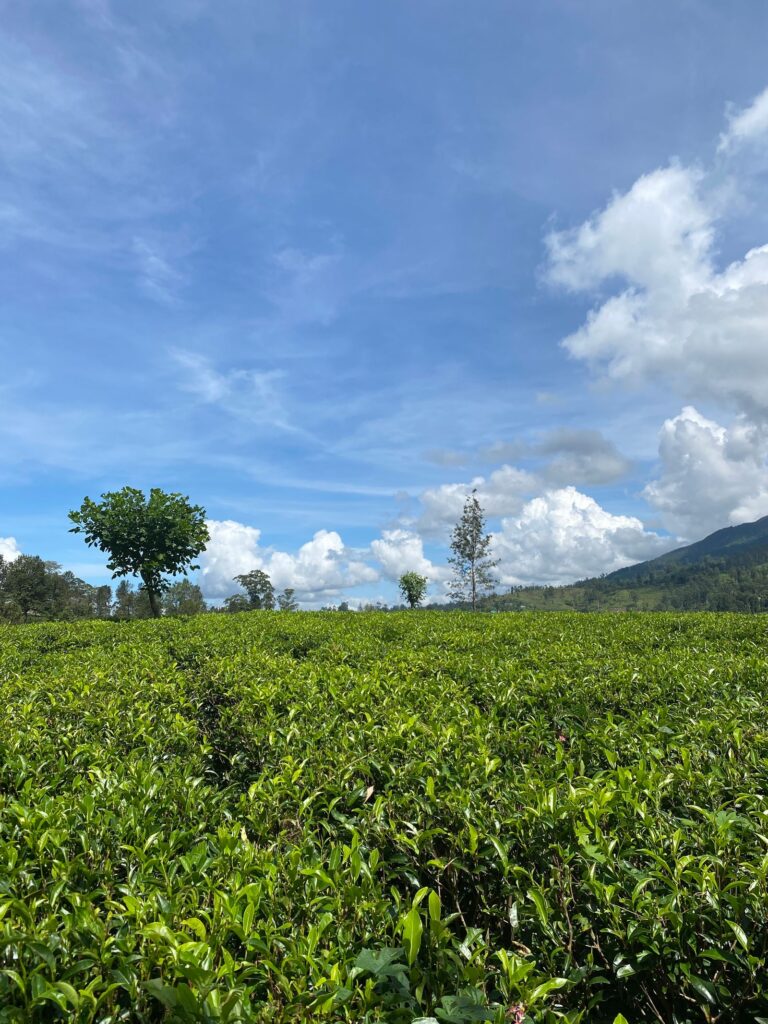
The south-west monsoon, roughly May to September, brings rain to the west and south coasts (Colombo, Galle, Mirissa) and to the hills around Kandy and Ella. The north-east monsoon, roughly December to February or March, soaks the north and east, including Trincomalee and Arugam Bay. In between, in October and November, rain is common all over. Sources differ by a few weeks on the exact edges, because the weather shifts from year to year.
Cyclone Ditwah showed what that can mean. It hit Sri Lanka at the end of November 2025, and the floods and landslides killed more than 600 people. If you’re planning a late-autumn trip, allow for weather to disrupt transport as well as beach days.
| Month | Where to go | Notes |
|---|---|---|
| January | south-west, south, hills | peak season, dry |
| February | south-west, south, hills | driest month in the south |
| March | south-west, south | east coast season begins |
| April | south and east | humid; Sinhala and Tamil New Year 13 to 14 April |
| May | east, Cultural Triangle | monsoon starts in the south-west; Vesak full moon |
| June | east (Arugam Bay, Trincomalee) | surf season on the east coast |
| July | east | Kandy Esala Perahera (July to August) |
| August | east | Kandy Esala Perahera |
| September | east | east coast season winds down |
| October | best avoided | rain across the island |
| November | best avoided | very wet month |
| December | south-west, south | peak season starts |
Full moons and festivals that affect food
Every full moon in Sri Lanka is a poya day, a Buddhist public holiday. There are 13 or 14 a year, and alcohol sales are banned on poya days (exemptions for some tourist hotels change from year to year). For vegans, poya is mostly good news: many Sri Lankans avoid meat on the day, and more vegetarian food gets cooked.
The biggest full moon is Vesak in May, marking the Buddha’s birth, enlightenment and death, when streets are hung with vesak kudu lanterns. In July and August, Kandy holds the Esala Perahera, a huge procession honouring the Sacred Tooth Relic, and rooms need booking well ahead. Sinhala and Tamil New Year on 13 and 14 April is a family holiday when kokis and kevum get fried by the trayful.
How much does food cost in Sri Lanka?
Food in Sri Lanka is very cheap. Local rice and curry costs roughly 350 to 1,000 rupees (about $1 to $3, or 80p to £2.20). A main in a tourist café is around 2,000 rupees (about $6 or £4.50). The bigger costs are flights, accommodation and above all entry tickets to sites and national parks, where foreigners pay many times the local price.
Food prices in rupees
At October 2026 exchange rates, one US dollar is about 334 Sri Lankan rupees and one pound about 446. The rupee has swung a lot since the 2022 economic crisis, so treat these prices as a guide.
| Item | Price in rupees | Roughly |
|---|---|---|
| Rice and curry in a local canteen | 350 to 1,000 LKR | $1 to $3 / 80p to £2.20 |
| Gado gado or a bowl at Squeeze Me | 2,300 LKR | $6.90 / £5.20 |
| Vegan chocolate cake at Squeeze Me | 900 LKR | $2.70 / £2 |
| Tourist ETA for 40 nationalities | free | free |
Squeeze Me prices are from the café’s own menu (October 2026) and the local rice and curry price from current travel guides.
Do you need a visa for Sri Lanka?
Yes, you need an Electronic Travel Authorisation (ETA). Since 25 May 2026, though, the tourist ETA is free for citizens of 40 countries, including the UK, the US, Canada, Australia, Germany and the Czech Republic. You still have to apply online before you fly, on the official eta.gov.lk portal. Watch out for unofficial sites that charge a fee to “process” it.
The free ETA is valid for 30 days with two entries; on the second entry you only get the days you have left. You’ll need a passport valid for at least six months, an onward or return ticket, booked accommodation and enough money for the stay. Longer stays need a paid extension from Sri Lanka’s immigration department.
Entry tickets to the Cultural Triangle (Sigiriya, Polonnaruwa) and safaris often cost more than a week of food. When you budget, work out the tickets first and leave food until last, because that’s where Sri Lanka saves you the most.
Getting to and around Sri Lanka
Sri Lanka is easy to travel independently, because the visa is online and you can get around by train, bus, tuk-tuk or a hired driver. Most travellers from Europe fly with one connection, usually in the Gulf. The one big complication in 2026 is the railway damaged by Cyclone Ditwah.
Flights into Colombo
Bandaranaike International Airport is at Katunayake near Negombo, north of Colombo, so Negombo works well for your first or last night. From Europe you’ll usually connect in Dubai or Doha. On a long-haul flight, book a vegan meal (code VGML), with most airlines at least 24 hours before departure. Our guide to the vegan airline meal explains how.
The Ella train after Cyclone Ditwah
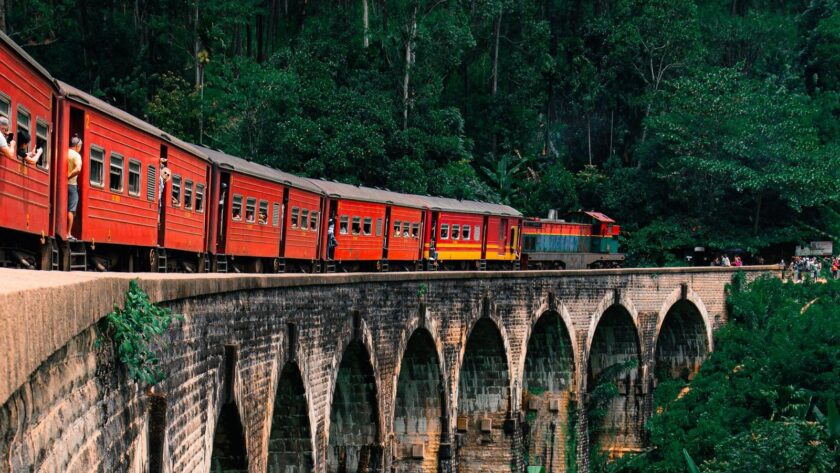
The famous Kandy to Ella line through the tea plantations isn’t running end to end in October 2026. After Cyclone Ditwah the Nanu Oya, Ella and Badulla section reopened on 20 June 2026. Trains don’t reach Kandy itself, though, and the stretch between Kandy and Nanu Oya is cut. At the end of October 2026 a landslide stopped trains from Colombo to Peradeniya again. You can reach Nanu Oya (near Nuwara Eliya) by bus or with a driver and ride the prettiest part of the line to Ella from there.
The line is reopening in stages, so check this regularly updated train status page before you travel. Pack your own food for the train or buy vadai and roti from the platform sellers.
Tuk-tuk, driver or bus
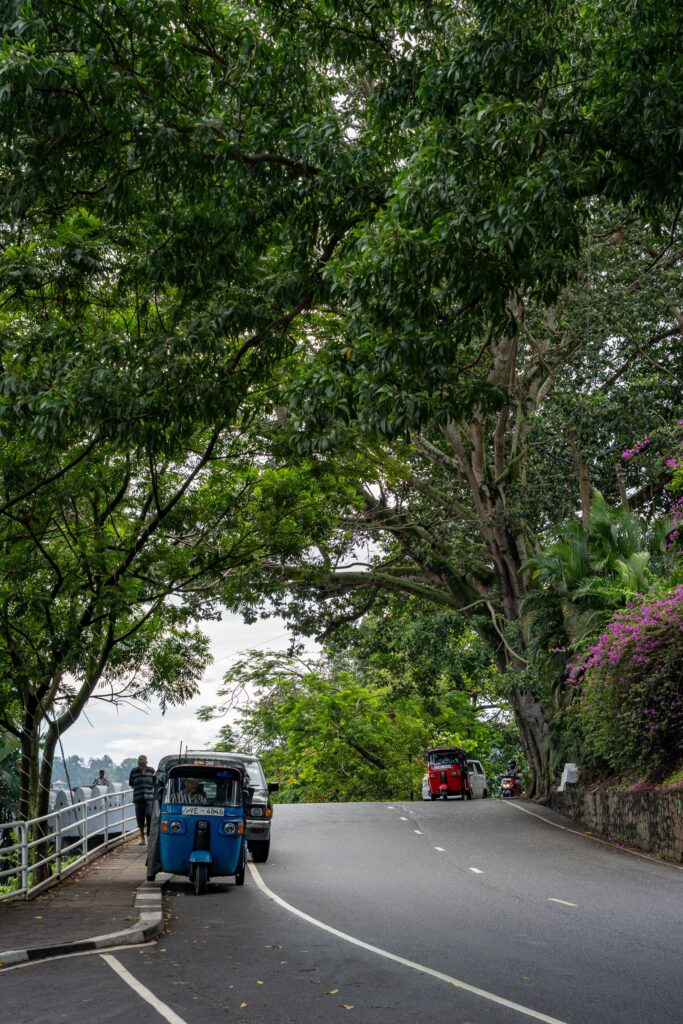
Short hops are by tuk-tuk, longer ones by bus, which is the cheapest and slowest way. Many travellers hire a car and driver for a week-long loop. For vegans, a driver has one unexpected perk: they know the canteens along the way and can explain to the cook exactly what you don’t eat.
If you’re weighing Sri Lanka against another Asian trip, have a look at our guide to whether Thailand is vegan friendly. The food logic is similar, except there you watch for fish sauce instead of Maldive fish.
In Sri Lanka you don’t need to hunt for a vegan restaurant. Find a place that cooks rice and curry, and ask about fish, egg and ghee.
Where to eat vegan in Colombo, Kandy, Ella and on the coast
Fully vegan places in Sri Lanka are few and mostly in Colombo and the tourist towns of the south and east. We checked every place below on its own website and menu, or in two independent sources, and we say whether each one is vegan, vegetarian or just has vegan options.
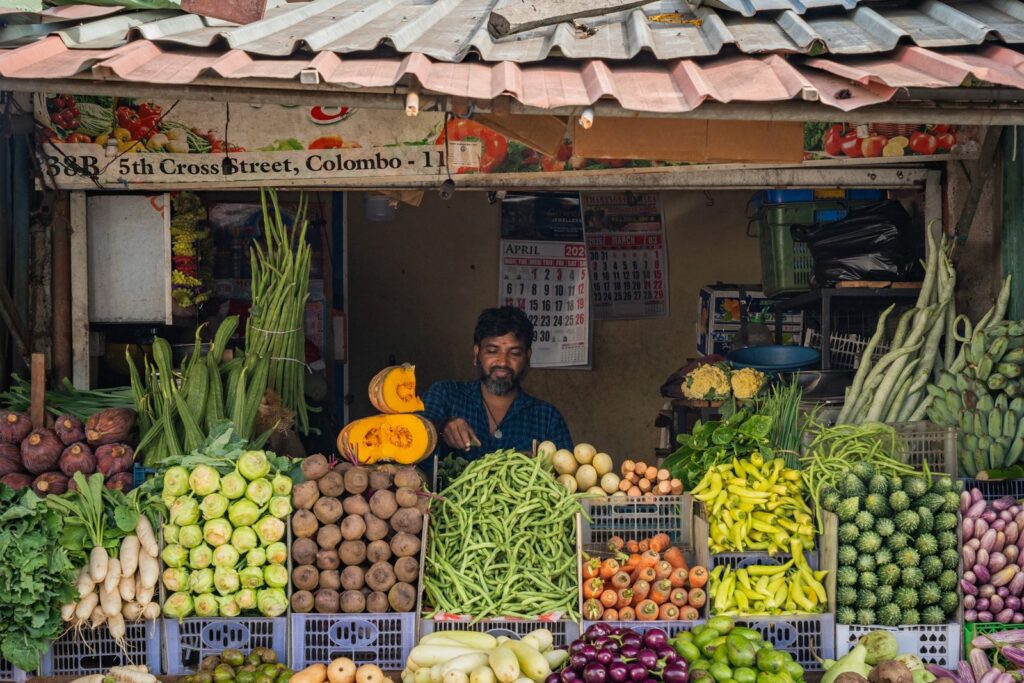
Colombo: Ranbath Organic and Shanmugas
Ranbath Organic (11 Park Terrace, Park Road, Colombo 5) is a vegan restaurant serving Sri Lankan food made from organic produce. It does rice and curry with heirloom rice varieties; you choose your rice and curries at the counter. Current listings give daily hours of 6am to 9pm, so it works for breakfast too. Some diners say the menu board behind the counter lists dishes that aren’t on offer or aren’t vegan, so ask staff what’s in each dish.
Shanmugas (53/3 Ramakrishna Road, Wellawatte, Colombo 6) is a vegetarian South and North Indian restaurant that locals have known for more than two decades. Order dosa, idli, vadai or puri with potato masala. It’s vegetarian, not vegan, and some dishes are made with ghee, so ask for yours cooked in oil.
Kandy: The Soya Centre
The Soya Centre, in the YMCA building in central Kandy, is a small vegetarian shop and snack bar where everything is made from soya. It’s famous for its dairy-free soy soft serve. In 2017 Life.lk called it the only place in Sri Lanka making 100% soya ice cream, and in 2016 the Sunday Times praised its soya savouries too. There are also soya rolls, samosas, vadai and tofu.
The Soya Centre is a handy stop on the way to the Temple of the Tooth.
Ella: Matey Hut and cooking classes
Matey Hut (No. 91, near the tunnel on the edge of Ella) is a tiny canteen serving Sri Lankan rice and curry where you pick four curries yourself. Most are vegetable, but the menu also has chicken curry and egg dishes, so go for jackfruit, banana flower, pumpkin, aubergine or beans. It’s a small place and a queue forms at dinner, so arrive early. Matey Hut runs cooking classes too.
Cooking classes are on every corner in Ella, including in family spice gardens. They usually cover around seven curries, often including a chicken one, so ask for a fully plant-based menu when you book. A class is the best souvenir going, because you’ll learn dhal and a fish-free pol sambol.
South coast: Mirissa, Ahangama and Weligama
THE SLOW in Mirissa is a design hotel with a restaurant right on a surf beach, and its entire menu is vegan. It serves breakfast, bowls, burgers and pasta, and you don’t have to be staying there to eat. If you’re travelling with non-vegans, it’s the easiest shared dinner on the south coast.
Squeeze Me has cafés in Ahangama (at Kaya Collective) and in Arugam Bay. The menu is plant-based, with egg (Rs 300) and a few take-away add-ons as optional extras. Try the gado gado with grilled tempeh and peanut sauce or the “Peace” bowl with hummus and falafel (both 2,300 rupees).
East coast: Arugam Bay
Arugam Bay is a surf village on the east coast, in season from May to September. Squeeze Me is in the Water Edge area and opens daily from 8am to 9pm, according to its website. Beyond it you’ll mostly find local rice and curry places, where the same rules apply as anywhere (ask about fish, egg and ghee).
Vegan-friendly places to stay in Sri Lanka
Sri Lanka has only a handful of fully vegan hotels, but they exist, along with a few Ayurveda resorts with plant-based kitchens. If you’d rather not think about food at all, book one of them for part of your trip.
THE SLOW in Mirissa is a vegan design hotel. Every room faces the ocean, some with a balcony or terrace, and there are apartments with kitchens too. The whole restaurant is vegan, so this is the one place where you never have to read a menu twice.
Green Peace Inn in Weligama is a beachfront retreat centre that has run eight-day breathwork, meditation and yoga retreats since 2017, with vegan food. Unlike a hotel, you book onto fixed retreat dates rather than any number of nights.
Jetwing Ayurveda Pavilions near Negombo, about 12 km from the airport, is an Ayurveda resort with a vegetarian and vegan kitchen. Jetwing says it was one of the first hotels in Sri Lanka certified by VeggieHotels. Expect seven-curry platters and red finger-millet roti. It’s handy for a first or last night because it’s so close to the airport.
If you’re on a package holiday at a beach hotel or on a guided tour, mention that you’re vegan when you book and remind the hotel on day one. Our guide to eating vegan at an all-inclusive resort covers how to handle it. For more fully plant-based stays worldwide, see our list of vegan hotels.
How to order vegan food in Sri Lanka
Sri Lankans speak Sinhala and Tamil, and you’ll get by in English in tourist areas. Hardly anyone knows the word “vegan”, though, so a few local words go a long way. The simplest Sinhala pattern is a word plus “epa”, meaning “don’t want” or “no”.
| English | Sinhala | Tamil |
|---|---|---|
| Hello | ayubowan | |
| I’m vegetarian | naan saivam | |
| No meat | mas epa | |
| No fish | malu epa | meen vendaam |
| No Maldive fish | umbalakada epa | |
| No egg | biththara epa | muttai vendaam |
| No milk | kiri epa | paal vendaam |
| No ghee | nei vendaam | |
| Thank you very much | bohoma sthuthi | nandri |
Pronunciation is approximate and spellings vary by source. Tamil is spoken mainly in the north and east and in Tamil and Indian restaurants in Colombo; elsewhere Sinhala and English will do. Pointing at a pot and asking “fish?” works too.
Save the phrases on your phone or write them on a card to show the cook. At rice and curry places pointing works well, because you can usually see the pots and ask about each one.
Heading further into Asia?
Bali has the same puzzle as Sri Lanka, except the hidden ingredient is shrimp paste. Read about the best time to visit Bali and what to eat as a vegan.
Is vegan Sri Lanka worth it?
Sri Lanka is one of the rare places where vegans eat best where the locals eat, not in pricey cafés for tourists. Rice and curry, hoppers and kottu are plant-based almost by themselves, and three questions about fish, egg and ghee solve nearly every problem. Go in the dry season for the region you want to see, plan around the broken train to Kandy, and budget for entry tickets rather than food. If you catch the curry bug, our vegan curry recipes will keep it going at home.
Have you been to Sri Lanka? Where did you have your best rice and curry, and did Maldive fish turn up somewhere you didn’t expect it? Tell us in the comments.
Frequently asked questions
Is Sri Lanka vegan friendly?
Yes, Sri Lanka is one of the easiest countries in Asia for vegans, because rice and curry, dhal, string hoppers and plain hoppers are plant-based at heart. Watch for Maldive fish in pol sambol, egg in kottu and hoppers, and ghee in Indian-style vegetarian restaurants.
Is Sri Lankan food spicy?
Yes, Sri Lankan food is usually spicy, even at breakfast, and anything labelled “devilled” is extra hot. Ask for less chilli and cool down with rice, coconut roti or king coconut water.
What is the national food of Sri Lanka?
Rice and curry is the closest thing to Sri Lanka’s national dish. It’s a plate of rice with three to seven small curries, often including lentil dhal, jackfruit, aubergine and pumpkin, plus sambol and greens.
How much is food in Sri Lanka?
Local rice and curry costs roughly 350 to 1,000 rupees (about $1 to $3), and a main in a tourist café about 2,000 rupees (around $6). Entry tickets to sites and parks usually cost far more than food.
What is the best time to visit Sri Lanka?
December to March is best for the south-west coast and the hills, and May to September for the east coast around Arugam Bay and Trincomalee. October and November are the wettest months across the island.
Newsletter
Get our free e-books
Join the newsletter and download Our Vegan Christmas Kitchen straight away, 10 recipes for Czech cookies, gingerbread and vánočka. Then once a month, new places from the vegan map and new articles. Unsubscribe with one click.