Vegan Zanzibar sounds like a contradiction at first. This is an island famous for its spice farms, yes, but also for octopus curry, grilled lobster and a night market laid out with seafood skewers. As far as we can verify, there is currently not one fully vegan restaurant on Zanzibar. And yet you can eat really well here without meat, fish, eggs or dairy. That is down to beans simmered in coconut milk, vegetarian Indian kitchens in Stone Town and beach cafés in Paje that label their vegan dishes.
Most people arrive on a package, spend a week at a beach resort and take one trip into Stone Town. So this article does not start with restaurants. It starts with what to expect at the hotel, and only then gets to where to eat outside it.
When is the best time to visit Zanzibar if you want to dodge the long rains? Is all inclusive worth it when the buffet leans heavily on fish? What traditional Zanzibar food is vegan by default, and what only looks innocent? How much does food in Zanzibar cost, and what do the visa and the mandatory insurance add? And what do you say in Swahili so nobody drops fish into your curry? It’s all below, with prices in US dollars.
We haven’t made it to Zanzibar together yet, so this is not a trip diary but a well-sourced research piece. In October 2026 we looked for each venue’s own website and menu, or at least two independent, recent sources. We checked the visa rules on the Tanzanian embassy’s site. Places that have closed, or that we could not confirm, are left out, even where other websites still recommend them.
Is Zanzibar vegan friendly?
Zanzibar is vegan friendly in practice, as long as you don’t expect a fully vegan restaurant. What you will find is vegetarian Indian kitchens, cafés with clearly labelled vegan dishes, and everyday Swahili cooking built on coconut milk, beans, rice and cassava leaves. If you can explain what you don’t eat, you’ll eat well for a few dollars.
What “vegan” means on the island
Zanzibar cooks a lot of fish and seafood, so the default at hotels and beach restaurants is fish. But the island’s food also carries strong Indian influences, which is why there are pure vegetarian Indian kitchens and local eateries with pots of vegetable curry. Vegetarian is widely understood, vegan much less so. The safest approach is to say you’re vegetarian and then name eggs, milk, ghee (clarified butter) and fish out loud.
Where it’s easiest
Stone Town (the old quarter of Zanzibar City and the island’s historic heart) and the villages of Paje and Jambiani on the southeast coast have the most plant-based choice. Paje is a kitesurfing village full of cafés serving bowls, hummus and plant milk for your coffee. The north (Nungwi and Kendwa) has the best swimming but the fewest places that really get vegan food. If you stay in the north, expect to rely more on your hotel.
Before you book, email the hotel and ask whether the kitchen will cook vegan meals outside the buffet. A reply within two days, or a sample menu, tells you more than the star rating ever will.
Zanzibar on our vegan map
9 places. Tap a pin to see the details.
Loading the map…
- Vegetarian
- Vegan options
See every place from this article on our vegan map.
Best time to visit Zanzibar, month by month
The best time to visit Zanzibar is June to October, when it is dry and less humid. The second good window is January and February, the hottest months, usually dry too. Avoid April and May, when the long rains (Masika) arrive, and be ready for short showers in November.
| Month | Daytime high | Rainfall | What to expect |
|---|---|---|---|
| January | 32 °C | 89 mm | hot, mostly dry, busy |
| February | 33 °C | 56 mm | hottest, dry, best winter-sun month |
| March | 33 °C | 153 mm | first half fine, rains start late in the month |
| April | 30 °C | 401 mm | wettest month, some hotels close |
| May | 29 °C | 255 mm | rains easing, lowest prices |
| June | 28 °C | 68 mm | dry season begins, pleasant |
| July | 28 °C | 48 mm | dry, peak summer season |
| August | 28 °C | 47 mm | dry, windy, ideal for kitesurfing |
| September | 29 °C | 50 mm | dry, quieter than August |
| October | 30 °C | 97 mm | still good, shoulder season |
| November | 32 °C | 226 mm | short showers, cheaper deals |
| December | 32 °C | 194 mm | showers in the first half, busy over Christmas |
Daytime highs come from cestujlevne.com’s monthly table and rainfall averages from tour operator Altezza Travel. The sea stays at 25 to 29 °C all year, so swimming works in every month.
When is the best time to visit Zanzibar for a winter-sun break?
For Europeans escaping winter, January and February are the strongest choice. They are hot and mostly dry, and the Christmas crowds have gone. Early December still falls in the short rains, which usually means a heavy shower followed by sunshine rather than a day of rain.
Ramadan 2027 and what it means for vegans
Ramadan is expected to run from around 8 February to 8 or 9 March 2027, based on astronomical projections. During the fasting month many local eateries close in the daytime and open after sunset. Hotels and tourist restaurants carry on as normal.
For vegans this matters, because the local eateries in Stone Town are where the cheapest plant-based meals are. If you travel in February, plan lunches at the hotel or tourist cafés and save local food for the evening.
The tide matters more than the weather
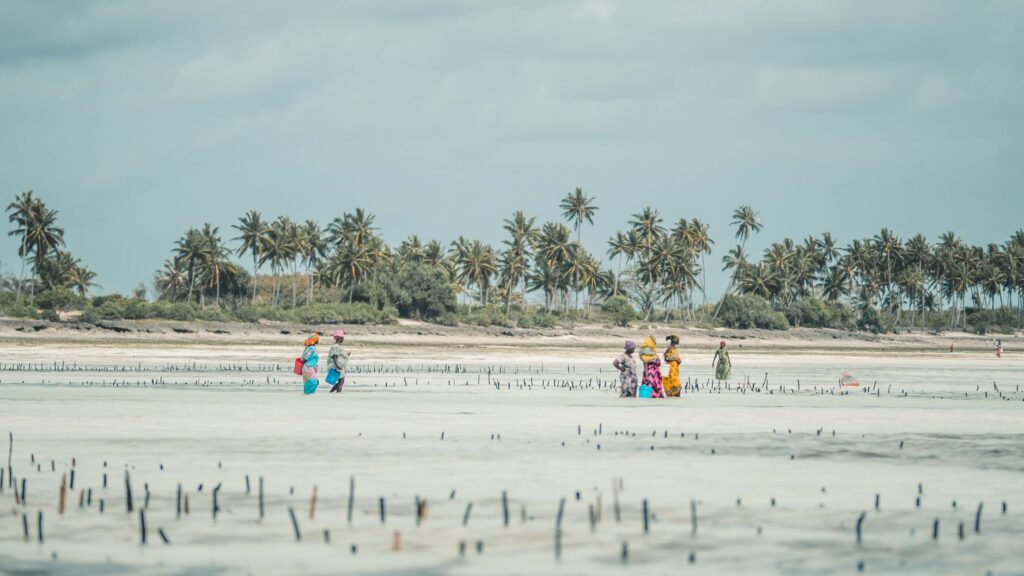
On the east coast (Paje, Jambiani, Bwejuu, Michamvi) the sea retreats hundreds of metres at low tide. You can only swim for a few hours around high tide, and the timing shifts every day. If you want to swim at any hour, stay in Nungwi or Kendwa in the north. That means fewer vegan cafés within walking distance, so choose your beach and your food plan together.
Getting to Zanzibar, visa and costs
Most travellers fly into Abeid Amani Karume International Airport, just outside Stone Town, with one change. Typical routes from Europe go via Istanbul, Doha, Dubai, Addis Ababa or Nairobi. From the Czech Republic and Slovakia there are winter charter flights with a refuelling stop in Hurghada. Expect 12 to 17 hours door to gate on scheduled airlines.
Ordering a vegan meal on the flight
Long-haul carriers on these routes generally let you pre-order a special meal. Ask for the vegan code at least 24 to 48 hours before departure and pack a backup snack anyway. We explain how it works, and what to do when it goes wrong, in our guide to the vegan airline meal (VGML).
Visa and mandatory Zanzibar insurance
Most nationalities need a Tanzanian tourist visa costing 50 USD (100 USD for US and Irish citizens). You can apply online in advance through the official Tanzania Immigration portal or get it on arrival. Since October 2024 Zanzibar also requires its own visitor insurance at 44 USD per adult for 92 days, with children at half price. You buy it online at visitzanzibar.go.tz, and your own travel insurance does not replace it. If you add a safari on the mainland, one policy covers both. Mainland Tanzania has required its own 44 USD visitor insurance since 1 October 2026, and visitors to both parts only need one. Before you fly, also check Tanzania’s current health entry rules. The Tanzanian authorities issued a travel advisory on the threat of an Ebola outbreak on 17 October 2026, and travellers fill in a health surveillance form.
How much is food in Zanzibar?
Food in Zanzibar is cheap if you eat local and expensive if you eat at tourist restaurants. Street food at Forodhani costs roughly 1 to 2 USD a portion. A lunch of pilau and curry at a local eatery is about 2 to 4 USD, and dinner at a tourist restaurant 10 to 20 USD. Hotels usually add a nightly tourist levy on arrival.
| Item | Typical price |
|---|---|
| Tourist visa (most nationalities) | 50 USD |
| Zanzibar visitor insurance (adult) | 44 USD |
| Street food portion at Forodhani | 1–2 USD |
| Local lunch (pilau, bean or vegetable curry) | 2–4 USD |
| Dinner at a tourist restaurant | 10–20 USD |
Zanzibar all inclusive for vegans: is it worth it?
Zanzibar all inclusive is worth it for vegans mainly when the hotel confirms in advance that the kitchen will cook for you outside the buffet. Zanzibar resorts tend to be smaller than the mega-resorts of Egypt or Turkey, and the buffets are more modest, so you can’t count on a wide plant-based spread. The upside is that smaller kitchens are often happy to cook to order.
What you can usually eat at the buffet
A typical Zanzibar buffet has coconut rice, chapati, vegetable curry, beans, salads, chips and plenty of tropical fruit. The risk is hidden ingredients. Curries are sometimes finished with cream or cooked in ghee, pilau is sometimes made with chicken stock, and chapati is often brushed with butter. Ask about specific dishes rather than whether something is “vegetarian”.
All inclusive or half board?
If you stay in Paje or Jambiani, with cafés and local eateries a few minutes’ walk away, half board or breakfast only often makes more sense. You save money and eat out in the evenings. In Nungwi or at an isolated resort, all inclusive is easier because there’s little around the hotel. Our general advice on getting vegan meals at any resort is in how to eat well as a vegan at an all-inclusive resort.
Email the hotel before you arrive with something like “I eat a vegan diet (no meat, fish, eggs, dairy, ghee or honey). Can your kitchen prepare vegan meals for me during my stay?” Save the reply on your phone and show it at reception and in the restaurant.
Day trips with lunch included
Boat trips such as Safari Blue include a beach lunch, which is mostly grilled fish and seafood. Request a vegan option when you book, not on the boat. Fruit, rice and coconut are almost always served, but nobody will prepare a main dish for you without notice.
On Zanzibar, don’t look for a vegan restaurant. Look for a cook who will make you beans in coconut milk without ghee, and the island is full of them.
Traditional Zanzibar food: what is vegan by default
Traditional Zanzibar food is built on coconut milk, rice, pulses, plantain, cassava and the spices that grow on the island. A lot of everyday dishes are plant-based as a result. The exceptions are the famous street foods aimed at visitors, Zanzibar pizza and urojo soup, which usually come with egg or meat.
| Dish | What it is | Vegan? |
|---|---|---|
| Wali wa nazi | rice cooked in coconut milk | yes |
| Maharage ya nazi | red beans in coconut sauce | usually, ask about ghee |
| Mbaazi wa nazi | pigeon peas in coconut milk | usually |
| Kisamvu | cassava leaves with garlic and coconut milk | yes |
| Pilau | spiced rice with cloves and cardamom | ask about chicken stock |
| Chapati | pan-fried flatbread | ask about butter or ghee |
| Mandazi | sweet fried doughnuts | sometimes made with milk, ask |
| Urojo (Zanzibar mix) | tangy mango and tamarind soup | only without egg and meat |
| Zanzibar pizza | thin dough parcel, pan-fried | usually not (egg, cheese, mayo) |
| Sugarcane juice | pressed with lime and ginger | yes |
Coconut beans and pigeon peas, the best vegan lunch
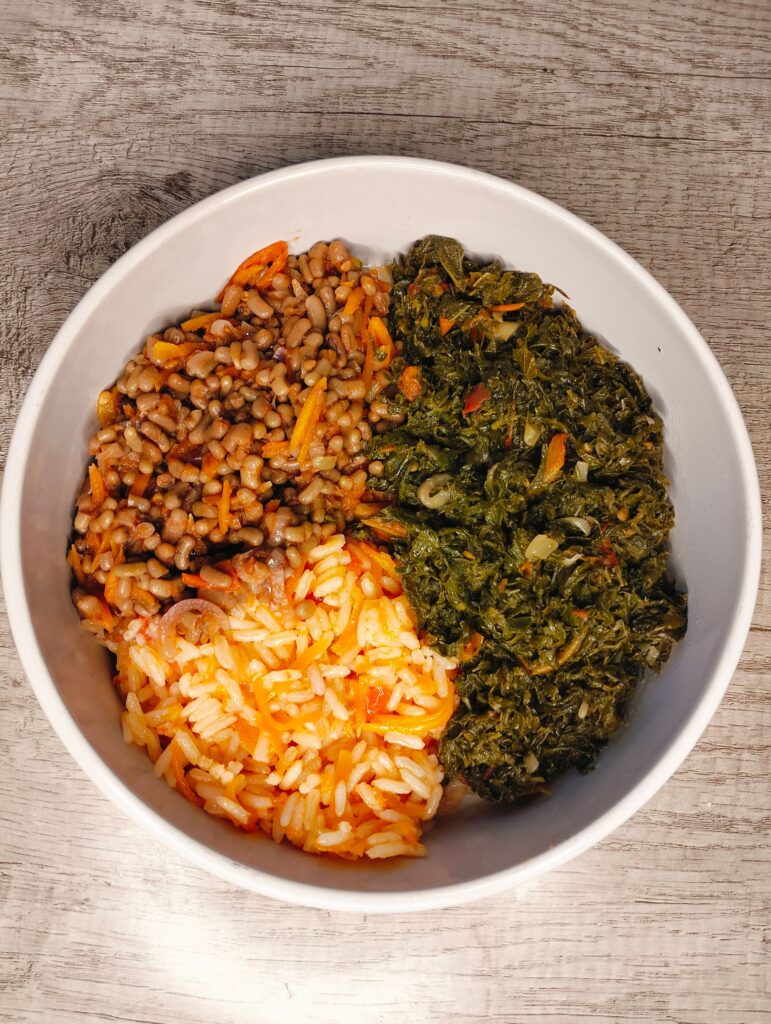
Maharage ya nazi (beans in coconut milk) and mbaazi wa nazi (pigeon peas in coconut milk) are everyday home cooking on Zanzibar. They come with coconut rice or chapati and cost a couple of dollars at local eateries. If you only try one local dish, make it this. Kisamvu, cassava leaves stewed in coconut milk, is another plant-based staple that most visitors never hear about.
Urojo and Zanzibar pizza: what to watch for
Urojo, or Zanzibar mix, is a thick, tangy mango and tamarind soup with potato pieces, chickpea-batter bhajia and cassava crisps. It is normally served with a hard-boiled egg and often with meat. Order it “bila mayai, bila nyama” (without eggs, without meat). Zanzibar pizza has nothing to do with Italian pizza. It’s thin dough filled with meat, egg, cheese and mayonnaise, folded into a square and fried, often in ghee or butter. Few stalls will make a vegan version, so this one is best left to your non-vegan travel companions.
For non-vegans: what to try together
If you’re travelling with someone who eats meat, coconut rice with beans is the easiest dish that will please you both. The other shared highlight is a spice tour, a walk around a spice farm inland where you taste fresh cloves, nutmeg, vanilla and tropical fruit. It is the most plant-focused thing you can do on the island, and nobody calls it vegan.
Skip the “Zanzibar chocolate” sold by vendors in Stone Town. It contains no chocolate at all. It’s sesame seeds bound with honey, so it isn’t vegan.
Forodhani Gardens food market, the vegan way
Forodhani Gardens is the waterfront park in Stone Town where a street food market opens every evening after sunset. Most stalls sell grilled fish, octopus, prawns and meat skewers. As a vegan you’re mainly there for freshly pressed sugarcane juice with lime and ginger, urojo without egg and fresh fruit.
What to order at Forodhani
Sugarcane juice is pressed on a hand-cranked mangle in front of you and it is the best drink at the market. Order urojo without eggs and meat and add extra bhajia. Some stalls also sell grilled plantain, corn or cassava. Food cooked in front of you is a safer choice than anything that has been sitting under a lamp for hours.
Prices and avoiding the tourist mark-up
Street food at Forodhani costs roughly 1 to 2 USD a portion according to recent guides. Always agree the price before you order, as visitors are often quoted more. Carry small Tanzanian shilling notes, because stalls don’t take dollars.
Fancy Asia instead?
Sri Lanka cooks with coconut and curry too, only there you watch out for dried fish instead of ghee. Read what to eat in Sri Lanka as a vegan and when to go.
Vegan Zanzibar restaurants: where to eat
Most of the verified places with vegan dishes are in Stone Town and Paje, with a few more in Jambiani. For each one we say whether it is vegetarian or simply has vegan options. None of them is fully vegan. We checked all of them in October 2026.
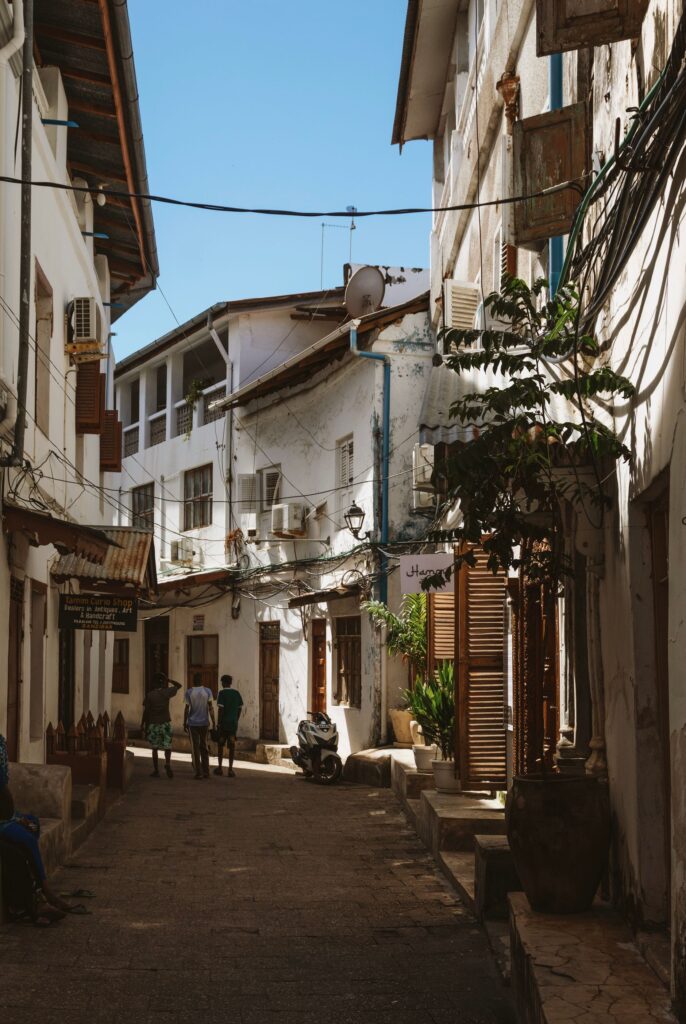
Stone Town: Indian and Swahili kitchens
Harbour Kitchen on Sokomuhogo Street is a vegetarian Indian restaurant that marks its vegan dishes on the menu. Try samosa chaat, aloo puri (fried bread with potato curry) or dal tadka. It’s open daily from the morning until 10pm, and reviewers describe the prices as fair. Naan in Indian kitchens is usually made with milk or yogurt, so go for chapati or rice, or ask.
Lukmaan is Stone Town’s best-known local eatery, where you pick from pots at the counter and pay first. Vegan dishes aren’t labelled, but staff will explain what’s in each pot. Ask for the pea or vegetable curries in coconut milk, the dal and the spinach. Lukmaan is one of the cheapest places to taste real Zanzibari cooking.
Krishna Food House (formerly Radha Food House), near the NBC bank, is a small pure vegetarian Indian restaurant serving thalis. Reviews are mixed, so treat it as a backup. Yeoyum, upstairs by the Shangani post office on Kenyatta Road, has clearly labelled vegan dishes, the best known being a bowl with sticky sesame cauliflower. It moved here from Paje, and the newest reviews we found are a year old, so check it’s open before you go.
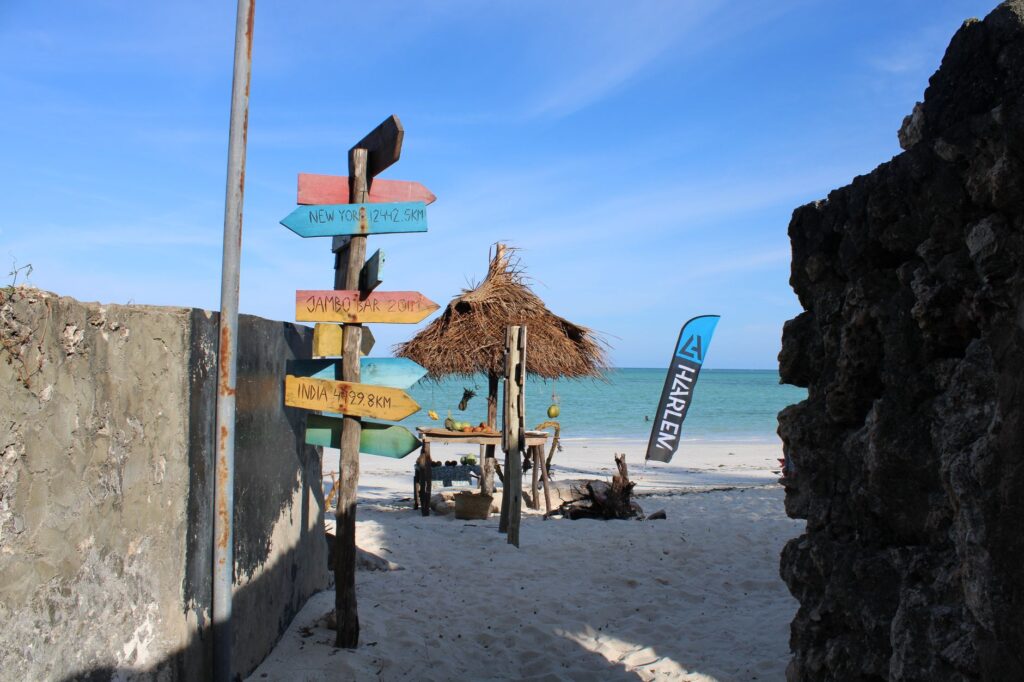
Paje: cafés for kitesurfers
The Plants on Paje’s main road has a mostly plant-based menu of African, Asian and Indian dishes, plus a small deli selling tofu, nut butters and plant milk. Note that it now also serves chicken and fish, and some dishes contain egg or cheese, so ask. Guests rate the chana dal and the pho. Mr Kahawa is a café with plant milk for your coffee, homemade toasted bread and dips, and a menu that says “ask for vegan options”. ZanziBarista on Paje beach does a vegan garlic avocado and mushroom toast, a Mediterranean hummus bowl and a couscous and sweet potato bowl.
Jambiani: Sativa Café
Sativa Café on the edge of Jambiani is a vegetarian, mostly vegan Rasta café that moved here from Paje. It serves Buddha bowls, pumpkin soup, hummus and dhal samosas with coconut chutney, and there’s usually a reggae night on Wednesdays. Jambiani is also worth the trip for the local beach eateries cooking vegetable curry, pilau and coconut beans.
| Place | Area | Type | What to order |
|---|---|---|---|
| Harbour Kitchen | Stone Town | vegetarian, vegan dishes labelled | samosa chaat, aloo puri, dal tadka |
| Lukmaan | Stone Town | local, vegan options | pea curry in coconut, dal |
| Krishna Food House | Stone Town | vegetarian | thali, ask for no ghee |
| Yeoyum | Stone Town | vegan options, labelled | sesame cauliflower bowl |
| The Plants | Paje | mostly plant-based, serves meat | chana dal, pho |
| Mr Kahawa | Paje | café, vegan versions on request | plant-milk coffee, salads |
| ZanziBarista | Paje | vegan options | avocado and mushroom toast |
| Sativa Café | Jambiani | vegetarian, mostly vegan | Buddha bowl, dhal samosa |
Where to stay in Zanzibar as a vegan
The most practical base for vegans is Paje or Jambiani, with vegan-friendly cafés and local eateries within walking distance. Stone Town is worth two or three nights for its history and Indian restaurants. Choose the north (Nungwi, Kendwa) if all-day swimming without the tide is your top priority.
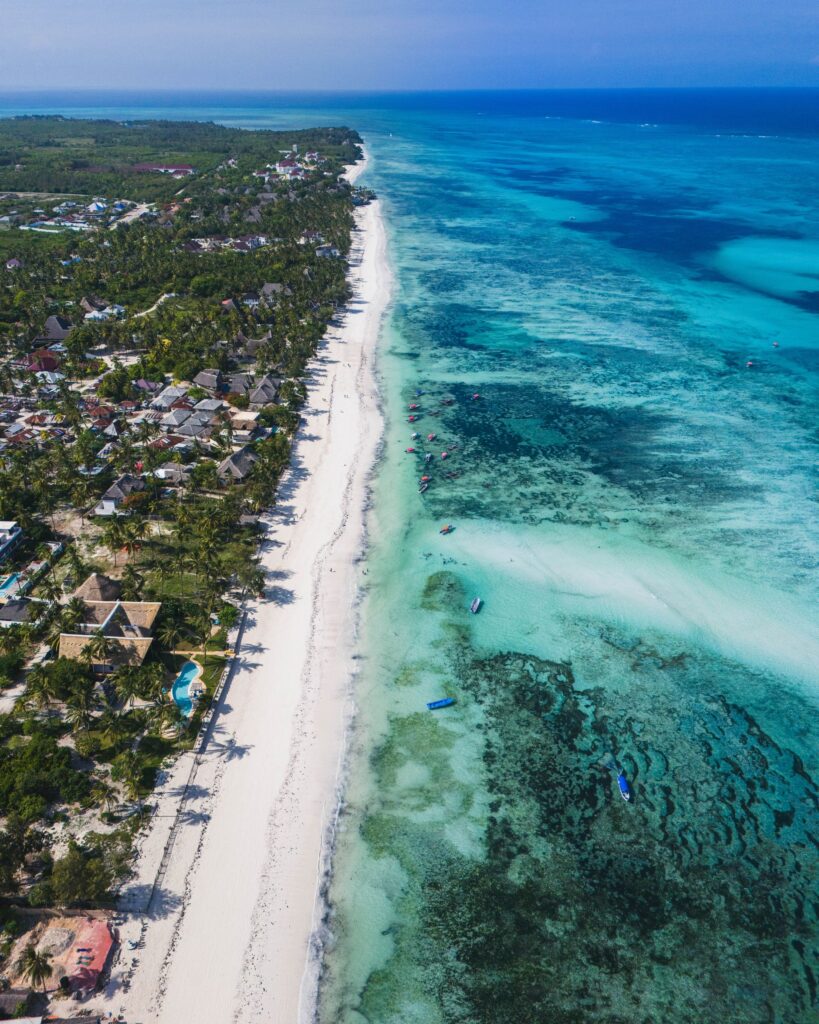
Is there a fully vegan hotel on Zanzibar?
Zanzest Beach Bungalows in Jambiani is described on booking sites as Zanzibar’s first vegan hotel, with a plant-based restaurant, juice bar and yoga, and no alcohol. We couldn’t find an official website or any 2025 or 2026 reviews, though, so we can’t recommend it as verified. If it tempts you, read the latest reviews and ask the owners directly whether the kitchen is still fully vegan. For verified fully vegan stays elsewhere, see our list of vegan hotels around the world.
Small hotel over big resort
Small hotels and guesthouses in Paje and Jambiani often offer breakfast only and a kitchen that cooks to order. For a vegan that’s an advantage, because you can talk to the cook in person. If you’re booking a package, look for hotels on the southeast coast and confirm by email what they’ll cook for you.
Getting around and day trips
Visitors mostly get around Zanzibar by taxi or with a hotel driver, while locals use dala dala minibuses. Always agree the taxi fare before you get in. From the airport near Stone Town it’s about 50 km to Paje on the southeast coast, roughly an hour to an hour and a half by car.
Day trips that are easy for vegans
A spice farm tour inland is the perfect vegan outing, because it’s all about plants. You’ll see how cloves, cinnamon, vanilla and nutmeg grow and taste fresh tropical fruit. Jozani-Chwaka Bay National Park is home to the Zanzibar red colobus, a monkey found only on Unguja, the main island. And even if you hardly leave the hotel, don’t skip a half day in Stone Town ending with an evening at Forodhani.
Day trips worth questioning
For boat trips with a beach lunch, order your vegan meal when you book. On dolphin trips to Kizimkazi, conservation groups and tour operators warn about unethical practices, with dozens of boats surrounding and chasing the animals. If animal welfare matters to you, skip this one or pick an operator that keeps its distance.
Local tips and cultural notes
Zanzibar is a mainly Muslim island, so cover your shoulders and knees away from the beach and the hotel. That goes for men and women, especially in Stone Town and in villages. Swimwear is for the beach and the pool only.
Money, tipping and shillings
Local eateries, markets and taxis expect Tanzanian shillings (TZS). Since 2025 Tanzanian law requires prices and payments in shillings. Dollars are still used mainly for hotels, trips and transfers paid through a tour operator. You’ll find ATMs mostly in Stone Town and the larger resort villages, and cards work in better restaurants and hotels. A tip of around 10% in restaurants is appreciated.
Plastic bags and water
Tanzania bans plastic carrier bags, including ones packed in your luggage, and Zanzibar has its own, even stricter ban. Pack a cloth bag. On the mainland, clear zip-lock bags for toiletries are allowed, but tour operators and airlines report that Zanzibar’s ban includes them, so pack your toiletries in a fabric pouch instead. Drink bottled or filtered water and only have ice in established places.
Stone Town beyond the food
Stone Town is on the UNESCO World Heritage list as an example of a Swahili trading town where African, Arab, Indian and European influences meet. Wander the lanes of carved wooden doors, visit Darajani market and the site of the former slave market. Then finish the evening at Forodhani.
Swahili phrases for vegans
The most useful Swahili word for vegans is “bila”, which means “without”. English is widely spoken in Stone Town and the resorts, but a few words of Swahili help most in local eateries and markets, and people appreciate the effort.
| English | Swahili |
|---|---|
| I only eat vegetables (I’m vegetarian). | Mimi ni mla mboga tu. |
| No meat. | Hakuna nyama. |
| Without fish. | Bila samaki. |
| Without eggs. | Bila mayai. |
| Without milk. | Bila maziwa. |
| Without ghee. | Bila samli. |
| Thank you. | Asante. |
You can pair “bila” with anything you don’t eat. A full order could be “Mimi ni mla mboga tu, bila samaki, bila mayai, bila maziwa”.
Vegan Zanzibar is easier than it looks
It works, as long as you get your expectations right. You won’t find a fully vegan restaurant. You will find an island where beans and pigeon peas in coconut milk are everyday food. Stone Town has vegetarian Indian kitchens, and Paje is full of cafés that label vegan dishes. The most important decision isn’t made at the buffet but when you choose the hotel. Go between June and October or in January and February, stay on the southeast coast if food matters to you, and email the hotel before you go. Then you’ll come home with more than beach photos.
Have you been to Zanzibar and know a place that belongs on this list? Tell us in the comments and we’ll check it out.
Frequently asked questions
Is Zanzibar vegan friendly?
Yes, though we couldn’t verify a single fully vegan restaurant in October 2026. Stone Town has vegetarian Indian restaurants such as Harbour Kitchen, and Paje has cafés with labelled vegan dishes. Local cooking offers beans and pigeon peas in coconut milk, coconut rice and cassava leaves.
What food do they eat in Zanzibar?
Everyday Zanzibar food is rice (often cooked in coconut milk), pilau, beans and pigeon peas in coconut sauce, cassava, plantain, chapati and a lot of fish and seafood. Street favourites include Zanzibar pizza and urojo soup. Indian dishes such as samosas and biryani are common too.
How much is food in Zanzibar?
Street food costs about 1 to 2 USD a portion and a local lunch of pilau and curry 2 to 4 USD. Dinner at a tourist restaurant runs 10 to 20 USD. Visitors at Forodhani are often quoted more, so agree the price first.
When is the best time to visit Zanzibar?
June to October is the best time, with dry weather and lower humidity. January and February are a good second window, hot and mostly dry. April and May are the wettest months, and some hotels close.
Is all inclusive worth it in Zanzibar for vegans?
It’s worth it if the hotel confirms in advance that it will cook vegan meals outside the buffet. Zanzibar buffets are smaller than in Egypt and heavy on fish. In Paje or Jambiani, half board plus eating out is often the better deal.
Newsletter
Get our free e-books
Join the newsletter and download Our Vegan Christmas Kitchen straight away, 10 recipes for Czech cookies, gingerbread and vánočka. Then once a month, new places from the vegan map and new articles. Unsubscribe with one click.