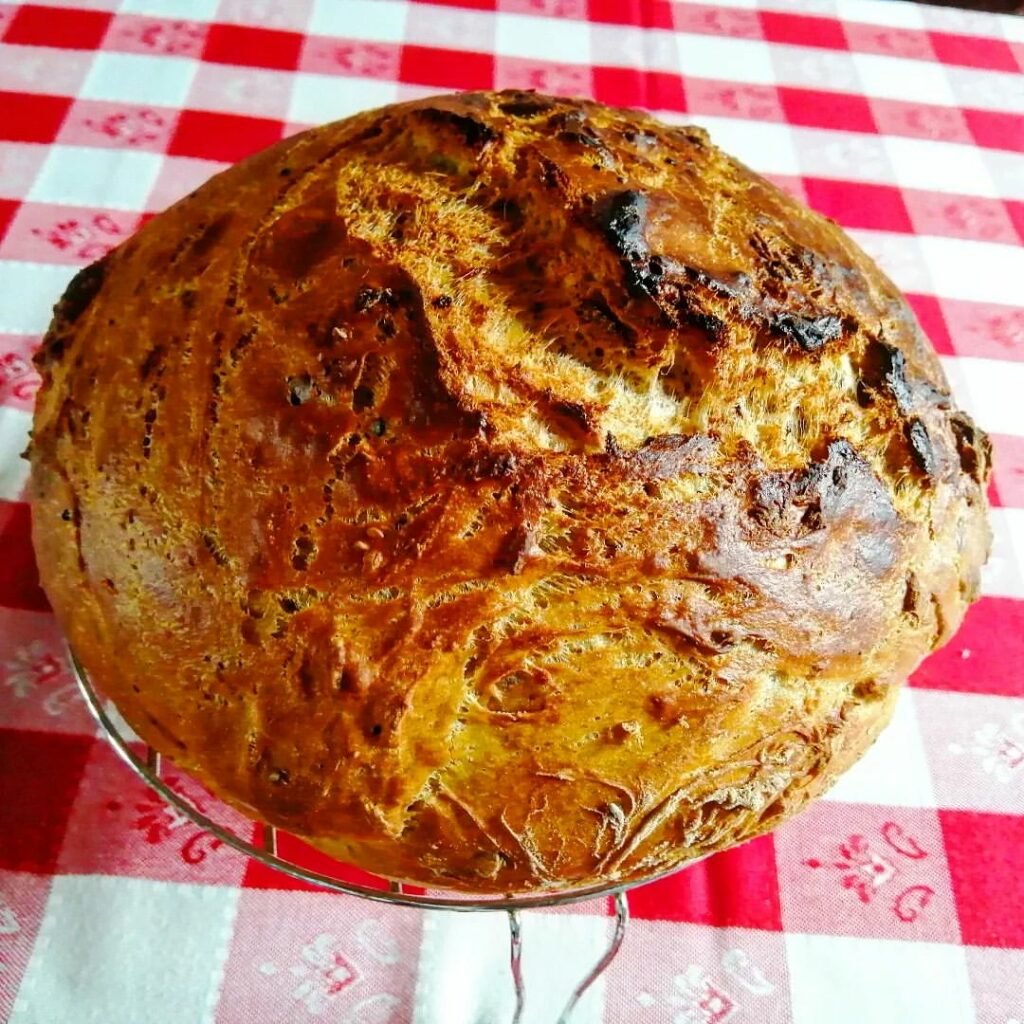
Vegan easy homemade bread is a recipe that truly anyone can make, even if you have never baked before. There is no kneading, no bread machine, and no special equipment needed. Just mix a few ingredients, let the dough rise overnight, and pop it in a hot oven in the morning. The result is a beautifully crusty loaf with a soft, fragrant centre and a rustic crust that you simply cannot buy in a shop.
Why does the bread need to rise for so long? Can you use wholemeal flour? How do you achieve that perfect crusty crust, and what if you do not have a cast iron pot? Here you will find the complete recipe, practical tips, interesting facts about homemade bread, and answers to the most frequently asked questions.
Why you will love this recipe
This bread proves that baking does not have to be complicated or time-consuming. Active work takes 10 minutes, and the rest is done by time and your oven.
- No kneading required, simply stir the dough with a spoon and let time and yeast do the work
- Only 4 basic ingredients (flour, water, yeast, salt), with seeds and oats as an optional bonus
- Overnight rise, prepare the dough in the evening and have fresh homemade bread after 50 minutes of baking in the morning
- Bakery-quality crust achieved by baking in a lidded cast iron pot, which creates a steam effect
- Naturally vegan, no eggs, butter or milk. Basic bread has always been plant-based
Once you bake it for the first time, you will never want to buy shop bread again.
Interesting facts about homemade bread
Bread is one of the oldest foods in the world and its story stretches back thousands of years. Here are a few facts that might surprise you.
The oldest known remains of bread are approximately 14,400 years old and were discovered at an archaeological site in Jordan. This means people were baking bread even before they started cultivating grain. The earliest versions were simple flatbreads made from crushed wild cereals mixed with water and baked on hot stones. Leavened bread, as we know it today, was discovered by the ancient Egyptians approximately 5,000 years ago.
The method of baking in a lidded cast iron pot, used in this recipe, simulates a professional bakery oven. In a regular home oven, moisture evaporates quickly, causing the crust to form too early and preventing the bread from rising properly. A cast iron pot with a lid traps steam from the dough and creates an environment similar to a professional steam-injected oven. After 30 minutes, you remove the lid and the crust turns beautifully golden and crispy.
Caraway seeds, an optional but traditionally Central European ingredient in this recipe, are one of the oldest spices in Europe. They were used by the ancient Romans and Greeks. In Czech cuisine, caraway is an essential part of bread and baked goods. Beyond flavour, caraway has practical benefits too, as it aids digestion and reduces bloating, which is why it has traditionally been added to heavier breads.
Health benefits of homemade bread
Homemade bread has several significant advantages over shop-bought loaves, mainly because you know exactly what goes into it.
Homemade bread contains no preservatives, emulsifiers, or added sugar, which are commonly found in commercially produced bread. The long rise (8-12 hours) also partially breaks down phytates in the flour, improving the absorption of minerals like iron and zinc. Slow rising also develops more complex flavours and better crumb texture.
Seeds that you add to the bread significantly boost its nutritional value. Flax seeds are one of the richest plant sources of omega-3 fatty acids. Sunflower seeds provide vitamin E and selenium. Pumpkin seeds are rich in magnesium and zinc. A single slice of bread with seeds can cover a significant portion of your daily requirement for these minerals.
Bread flour contains more gluten than plain flour, which is desirable in bread baking because gluten creates structure and an airy crumb. 100 g of bread flour contains approximately 340 kcal, 10 g of protein, and 2 g of fibre. If you want even more fibre and nutrients, you can replace some of the flour with wholemeal.
Nutritional values
Approximate nutritional information per slice (recipe makes 1 loaf, approximately 12 slices).
| Nutrient | Amount per serving |
|---|---|
| Calories | ~180 kcal |
| Protein | 6 g |
| Carbohydrates | 34 g |
| Fat | 2 g |
| Fibre | 2 g |
Approximate values per serving. Actual amounts may vary depending on specific ingredients and the amount of seeds added.

Vegan easy homemade bread
Ingredients
- 4 cups bread flour
- 2 cups warm water
- 2 tsp salt
- 1 packet dried yeast (7 g)
- 2 tsp caraway seeds
- 1 handful flax seeds optional
- 1 handful sunflower seeds optional
- 1 handful pumpkin seeds optional
- 1 handful oat flakes optional
Instructions
- Combine the bread flour with the yeast, seeds, and salt in a large bowl. Add the warm water and stir with a spoon until a shaggy dough forms. No kneading needed.
- Cover the bowl with a cloth and let the dough rise at room temperature for approximately 9 hours (or overnight).
- Gently separate the risen dough from the edges of the bowl and dust it with flour.
- Preheat the oven to 240 °C with a cast iron pot (and its lid) inside.
- Carefully transfer the dough into the hot pot. Cover with the lid and bake for 30 minutes. Then remove the lid and bake for another 20 minutes until the crust is golden and crispy.
Tips and variations
The base recipe is excellent on its own, but there are plenty of ways to customise it.
- Wholemeal version: Replace up to half of the bread flour with wholemeal flour. The bread will be denser and more flavourful with higher fibre content. We do not recommend replacing all the flour as the bread would be too compact.
- Without a cast iron pot: Bake on a tray with a bowl of hot water on the bottom of the oven. The steam will partially replicate the lid effect. The crust will not be quite the same, but the bread will still be excellent.
- Faster version: If you do not have time for an overnight rise, use double the yeast (14 g) and let the dough rise for 3-4 hours in a warm spot. The flavour will not be as complex, but the bread will still be much better than shop-bought.
- Storage: Homemade bread without preservatives stays fresh for 2-3 days at room temperature wrapped in a cloth. For longer storage, slice and freeze. Frozen slices can be defrosted directly in a toaster.
- Herb bread: Add dried rosemary, thyme, or oregano to the dough for an aromatic version that pairs beautifully with soups and salads.
Experiment with add-ins freely, as homemade bread takes well to almost anything.
Serving suggestions
Fresh homemade bread is best on its own with a drizzle of good olive oil, but here are a few more ideas.
- With vegan avocado hummus or classic hummus
- With vegan chickpea spread as a base for open sandwiches
- Alongside soup, such as vegan potato soup or lentil soup
- Toasted with avocado, cherry tomatoes, and a sprinkle of nutritional yeast
If you enjoy homemade baking, also try our vegan focaccia, which is equally simple and fills the whole kitchen with an incredible aroma.
Frequently asked questions
Why does the bread need to rise for 9 hours?
A long, slow cold rise allows the yeast to work gradually, developing more complex flavours and better texture. It also partially breaks down phytates, making the bread more digestible. If you are short on time, use double the yeast (14 g) and let the dough rise for 3-4 hours in a warm place, though the flavour will not be as rich.
Can I use plain flour instead of bread flour?
Yes, but the result will be different. Bread flour has a higher gluten content, which gives the bread better structure and an airier crumb. With plain flour, the bread will be more compact. If you do not have bread flour, mix plain flour with strong flour in a 1:1 ratio for a better result.
What if I do not have a cast iron pot?
You can bake on a tray or in a ceramic dish with a lid. Place a heatproof bowl of hot water on the bottom of the oven to create steam. Steam is key to achieving a crispy crust. Another alternative is a bread tin with a lid. The result will not be exactly the same as in a cast iron pot, but the bread will still be excellent.
How long does homemade bread stay fresh?
Homemade bread without preservatives stays fresh for 2-3 days at room temperature, wrapped in a cotton cloth or paper bag. Do not store it in a plastic bag as the crust will soften. For longer storage, slice the bread and freeze it. Frozen slices can be defrosted directly in a toaster.
Can I add wholemeal flour to this bread?
Yes, we recommend replacing a maximum of half the bread flour with wholemeal. With a higher proportion of wholemeal flour, the bread will be significantly denser and more compact because wholemeal flour contains bran particles that disrupt the gluten network. If you use more wholemeal flour, add an extra tablespoon of water as wholemeal flour absorbs more liquid.
Homemade bread is one of those things where simplicity wins. Four ingredients, a bit of patience, and a result that surprises every time. Prepare the dough tonight and tomorrow morning your home will be filled with the smell of freshly baked bread. If you are looking for more homemade baking recipes, check out our vegan rye bread without yeast, which is even simpler. Let us know in the comments how your bread turned out!
Newsletter
Get our free e-books
Join the newsletter and download Our Vegan Christmas Kitchen straight away, 10 recipes for Czech cookies, gingerbread and vánočka. Then once a month, new places from the vegan map and new articles. Unsubscribe with one click.