The vegan cities in Central Europe sit closer together than most travellers realise. From Prague, Dresden is two hours and twenty minutes away by train, Berlin and Vienna about four, and most of those tickets cost less than a pizza. If you eat plant-based, or you’re travelling with someone who does, there’s one more question on top of the timetable. Where do you actually eat when you get there?
The answer has changed a lot in the last few years. In Warsaw you can order a vegan schabowy (the Polish breaded cutlet) with mashed potatoes. In Munich it’s white sausages with a pretzel, and in Vienna a Wiener schnitzel in a restaurant where everything on the menu is plant-based.
At the same time, plenty of famous places have closed and the lists online haven’t noticed. Berlin’s Kopps shut in March 2024, Bratislava’s much-loved VíK in March 2026. In the Slovak mountains it takes even more planning, as our article on surviving as a vegan in Liptovský Mikuláš shows.
Which city in Central Europe is the easiest for vegans? Which ones can you reach from Prague by train in under three hours, and when is a night train the smarter move? Where is anything open on a Sunday? What should you order so your non-vegan travel partner tastes the local classics too, and which addresses from other people’s lists should you stop trusting? We go through it city by city.
Prague is home for us, and we’ve eaten our way through Vienna and Wrocław ourselves. For every other city we didn’t copy anyone’s list. In October 2026 we read each venue’s own menu and opening hours, and we checked the train times in the official Czech journey planner. Anything we couldn’t verify, we either left out or we tell you openly.
Which vegan cities in Central Europe we chose, and how we score them
We picked 16 cities in eight Central European countries and gave each one a TVTB vegan ease score from 1 to 5. There’s no single definition of Central Europe. WorldAtlas counts nine countries in Central Europe.
They are the Czech Republic, Slovakia, Poland, Hungary, Austria, Germany, Slovenia, Switzerland and Liechtenstein. That’s why Zürich is on the list, and you can reach it from Prague on a direct night train.
The TVTB vegan ease score is our own rating, and it looks at three things. First, how many fully vegan places we could verify on their own websites. Second, whether you can get a vegan version of a local dish. Third, whether you’ll still eat well on a Sunday.
A 5 means you barely need to plan. A 2.5 means that without some homework you’ll end up eating chips.
Fares are the cheapest we found with the operators on 9 October 2026 for Tuesday 10 November, in Czech crowns (CZK). Weekend and last-minute tickets cost more. The timetable changes on 13 December 2026, so recheck the times after that.
Vegan cities in Central Europe at a glance
Berlin, Vienna, Prague, Kraków and Warsaw are the easiest vegan cities in Central Europe, and Bratislava needs the most planning. The table shows the fastest connection from Prague, the cheapest ticket, our score, one dish worth ordering, and what Sundays look like.
| City | From Prague | Ticket from | TVTB score | Order this | Sunday |
|---|---|---|---|---|---|
| Prague | home base | 5 | svíčková, Vegan’s Prague, 348 CZK | no problem | |
| Brno | train 2 h 36 min, direct | 199 CZK | 4 | svíčková, Vegalité, 240 CZK | almost everything closed |
| Dresden | train 2 h 19 min, direct | 259 CZK (bus), train 272 CZK | 4 | solyanka, Falscher Hase, €7.30 | restaurants open |
| Berlin | train 3 h 58 min, direct | 379 CZK (bus), train 420 CZK | 5 | vegan currywurst, Curry 36 | restaurants open |
| Vienna | train 4 h 12 min, direct | 249 CZK (bus), train 299 CZK | 5 | Wiener schnitzel, Velani, €18 | restaurants open |
| Wrocław | train 3 h 57 min, direct | 349 CZK (bus) | 4 | tofu pierogi, Vega, 32 PLN | open |
| Bratislava | train 4 h 25 min, direct | 279 CZK | 2.5 | gyoza, Foodstock, €9.90 | Foodstock; Balans and Laf per delivery apps |
| Munich | bus about 4 h 45 min, train 5 h 43 min | 299 CZK (bus) | 4 | white sausages and pretzel, Max Pett, €16 | restaurants open |
| Salzburg | train 5 h 17 min, 1 change | not verified | 3 | vegan Leberkäse roll, LEKA | vegetarian places only |
| Kraków | train 5 h 58 min, direct | 279 CZK (bus), train 494 CZK | 5 | vegan kebab, Vegab, 30.90 PLN | open |
| Graz | bus 6 h 20 min, direct | 529 CZK | 4 | soy schnitzel, Café Erde, €14.50 | some places only |
| Budapest | train 6 h 51 min, direct | 399 CZK | 4 | bean goulash, Napfényes, from 1,400 HUF | open |
| Warsaw | train 8 h 18 min, direct | 499 CZK | 5 | soy schabowy, Lokal Vegan Bistro, 39 PLN | open |
| Gdańsk | flight about 1 h 20 min, train 8 h 40 min | about 365 CZK (flight, no bags) | 3.5 | vegan pierogi, Mandu, 43 PLN | open |
| Ljubljana | train from 9 h 48 min, 4 changes | 1,482 CZK | 3.5 | žlikrofi, Gaudi&Naan | closed |
| Zürich | direct ČD night train via Dresden and Basel | 699 CZK (night bus), sleeper from 2,430 CZK | 4 | Zürcher Geschnetzeltes, Hiltl, 36 CHF | vegetarian places only |
Prague, Brno and Dresden: vegan cities within 3 hours
Brno and Dresden are both under three hours from Prague, and either one works as a day trip. For food, there’s one big difference between them. In Dresden almost everything is open on a Sunday, in Brno almost nothing is.
1. Prague: svíčková with a view of the Castle
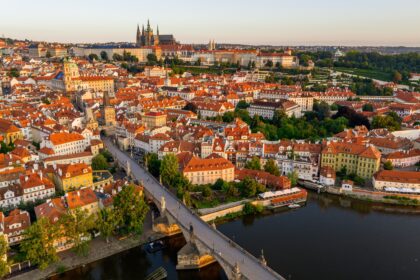
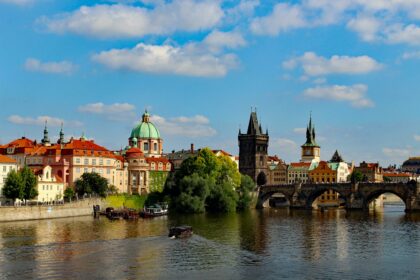
Prague is the easiest city for vegans in all of Central Europe, with fully vegan places in almost every neighbourhood. We live here, so we can promise that Sundays aren’t a problem. For the classics right below the Castle, head to Vegan’s Prague at Nerudova 36 in Malá Strana.
Svíčková is the Czech Sunday-lunch classic of braised meat in a creamy root-vegetable sauce. Here it comes with a meat-free slice, cranberries and bread dumplings for 348 CZK, and it’s where Elle tried svíčková for the very first time. They’re open every day from 11:30 to 21:30.
For Vietnamese food, go to Linh’s at Mánesova 7 in Vinohrady, where pad thai costs 245 CZK. Eaternia, in the old Eternia malthouse in Smíchov, cooks cheaper Czech classics, with a vegan langoš (deep-fried flatbread) for 130 CZK and svíčková for 240 CZK. Eaternia is closed on Sundays, though.
For breakfast, try the Krafin bakery at Voroněžská 19 in Prague 10, close to the Grébovka park. Their krafin, croissant dough rolled into a muffin shape, costs 100 CZK, and they’re open at weekends too.

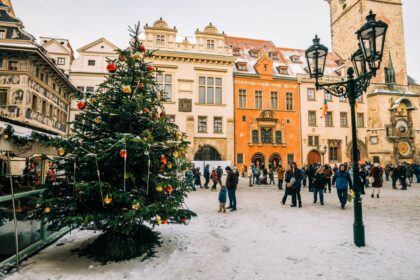
Prague is at its best in spring and in September and October. In winter, put 6 December 2026 in your diary. That’s when Veggie Vánoce, a vegan Christmas market, takes over the Mánes Gallery, and the awards for the best vegan restaurants in the Czech Republic are announced there too. More addresses by neighbourhood are in our article on the best vegan restaurants in Prague. For breakfast and weekend brunch, see where to have brunch in Prague.
2. Brno: vegan svíčková, just not on a Sunday
Brno has a surprising number of fully vegan kitchens for its size, but nearly all of them close on Sundays. The oldest is Vegalité at Slovákova 10, which opened in early 2009 as one of the first vegan restaurants in the Czech Republic. The house svíčková costs 240 CZK with five dumplings, and on weekdays there is a cheaper lunch menu.
They brew their own beer and bands play in the evenings, so nobody mistakes it for a health-food canteen. On Saturdays they open at 12:00 and cook from the regular menu only.
Fryends at Česká 31 makes smažák, the Czech fried cheese, as a vegan version in a bun with fries for 235 CZK, Monday to Saturday. Vegan AF Ramen at Marešova 14 is Brno’s first fully vegan ramen bar, and their main ramen costs 249 CZK. They cook from 11:00 to 21:00 on weekdays and from 12:00 on Saturdays. According to the delivery apps, Pizza Punk on Úvoz is open on Sundays, but it has no menu of its own online.
Watch out for old tips. The official tourism site Go To Brno still recommends Die Küche and Pilgrim in its vegan article, and both have since closed (Die Küche in summer 2024). The train from Prague takes 2 hours 36 minutes, and RegioJet tickets start at 199 CZK.
Brno also makes a great base for trips south. There’s more in our post on where to eat vegan in Brno.
3. Dresden: the vegan streets of Neustadt
Dresden is the closest big German city to Prague, and its Neustadt district has fully vegan places within a few streets of each other. For dinner, go to Steffenhagen at Schönfelder Straße 2. Their Schnitzel Vien with fried potatoes and aioli costs €18, and they’re open every day from 17:00. From Dresden you can carry on to Leipzig, where the old town has several fully vegan places, including the Katzentempel cat café. More in our guide to things to do in Leipzig.
Falscher Hase, in the Hechtviertel at Rudolf-Leonhard-Straße 3, has been cooking vegan since 2011. Their solyanka, a sour, spicy soup that’s a classic of East German cooking, costs €7.30 small and €9.50 large. They’re closed on Tuesdays.
For something quick, Der Dicke Schmidt at Rothenburger Straße 37 does vegan döner with soy gyros or seitan off the spit, every day from 11:30 to 21:30. A little further along, at Rothenburger Straße 14, V-Cake describes itself as Dresden’s first vegan café, open since 2013. Their scrambled tofu with rice-paper bacon costs €10.40.
At Bischofsweg 20 you’ll find Die Vegane Fleischerei, a vegan butcher’s shop that also has branches in Berlin and Munich. Around 70% of what it sells is handmade right here in Dresden. It’s closed on Sundays. Our full day-trip and weekend plan, with the sights and a Sunday table, is in things to do in Dresden and where to eat vegan.
The train from Prague takes 2 hours 19 minutes, with Czech Railways (ČD) tickets from 272 CZK. FlixBus takes about 1 hour 55 minutes and starts at 259 CZK. The Striezelmarkt Christmas market on the Altmarkt runs from 25 November to 24 December 2026. We explain why you should skip the stollen there in our roundup of the best Christmas markets in Europe for vegans.
Berlin, Vienna, Wrocław, Bratislava and Munich, 3 to 5 hours from Prague
The two best vegan cities in Central Europe, Berlin and Vienna, are both between three and five hours from Prague. Direct trains run from Prague to Berlin, Vienna, Wrocław and Bratislava. For Munich, the bus is faster. Taking the train is also the low-carbon choice, and we compare trains, buses and flights in our guide to the carbon footprint of food and travel.
4. Berlin: the easiest vegan city on the list
Berlin is the easiest city on this list for vegans, but its famous fine-dining names disappear fast. For German home cooking, go to Das Försters at Dunckerstraße 2A in Prenzlauer Berg. It’s a 100% vegan restaurant, open every evening from 16:00 to 22:00. For the sights, where to stay and which places have closed, see our full article on things to do in Berlin and where to eat vegan.
The autumn menu has a soy roulade in red wine sauce with roast pumpkin and potato gratin for €20. Monday is schnitzel day, with a Wiener schnitzel and cranberries for €17.
For Berlin’s classic street food, Curry 36 at Mehringdamm 36 in Kreuzberg sells a vegan currywurst alongside the regular one. According to its website, the vegan sausage is prepared separately from the meat. The ketchup is vegan, and you can ask for vegan mayo with your fries.
For something sweet there’s Brammibal’s Donuts, which says it opened Europe’s first fully vegan doughnut shop in 2016. It has nine branches in Berlin, including one at the main station (Hauptbahnhof) that’s open every day from 7:00 to 21:00. Brammibal’s gives €0.50 from every Strawberry Sprinkles doughnut to charity, and has raised more than €500,000 so far.
Some addresses from older lists are no longer valid. According to its own website, Kopps has been closed since 1 March 2024, and FREA stopped operating as a restaurant and now only does catering.
You’ll still find both in plenty of 2026 lists. It’s the other way round with Lucky Leek, which some lists say has closed. Its own website says it’s open Wednesday to Sunday from 6 pm. The train from Prague takes 3 hours 58 minutes, ČD tickets start at 420 CZK and the RegioJet bus at 379 CZK.
5. Vienna: schnitzel, strudel and Kaiserschmarrn, no compromises
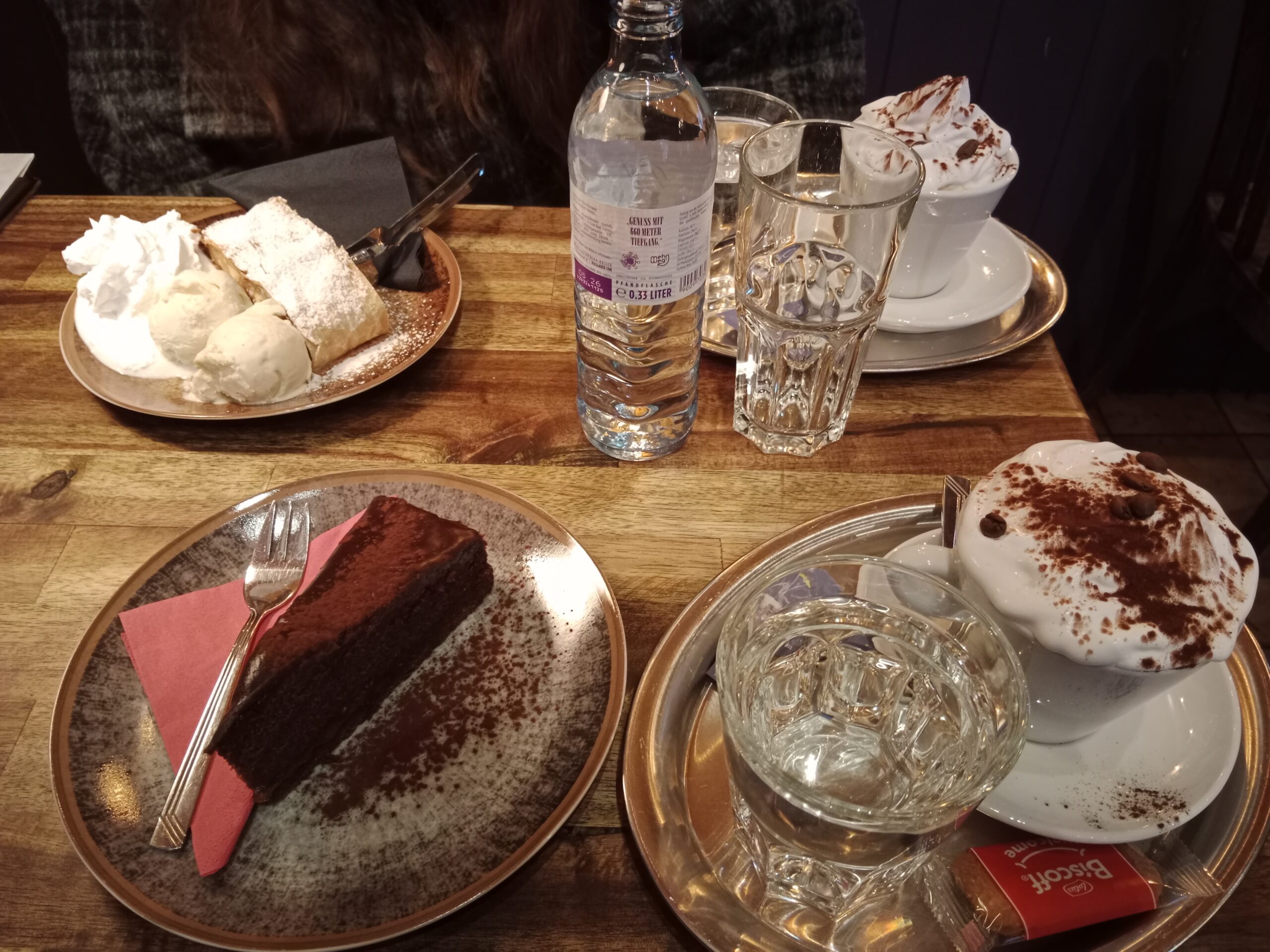
Vienna is as easy for vegans as Prague, with whole restaurants cooking Viennese classics entirely plant-based. We came in February and, frozen, ducked into Café Harvest at Karmeliterplatz 1 in Leopoldstadt. We had Irish coffee, apple strudel with ice cream and whipped cream and a slice of Sachertorte, and we left delighted.
Today the menu also has a soy schnitzel Wiener Art for €12.80 and Kaiserschmarrn (shredded, caramelised pancake) with plum compote for €11.80. At weekends they don’t open until 14:00.
The place that feels most like a classic Viennese inn is Velani, at Schönbrunner Straße 235 and now also at Laudongasse 48. It cooks Austrian food, 100% vegan. The Wiener schnitzel with potato salad costs €18 and the Kaiserschmarrn €11.50. They’re closed on Mondays, and from Tuesday to Friday they don’t open until 16:00.
Swing Kitchen, where we had burgers that February, has since gone through insolvency. In Vienna only the branches at Schwedenplatz 3–4 and Josefstädter Straße 73 are left.
Plant milk in a traditional coffee house still isn’t a given. One bakery refused to make us a coffee with plant milk, even though they had Alpro on display in the window.
The train from Prague takes 4 hours 12 minutes, with RegioJet from 299 CZK, and from Brno it’s just 1 hour 30 minutes. The Christmas market on Rathausplatz runs from 13 November to 26 December 2026. Our whole trip is in our weekend in Vienna.
Tip for mixed couples: Figlmüller at Bäckerstraße 6, Vienna’s most famous schnitzel house, has a vegan Planted schnitzel made from pea protein, served with salad, for €22.90. Your non-vegan partner orders the classic veal, you order the plant-based one, and you sit at the same table in the same famous dining room. The vegan schnitzel is only on the menu at Bäckerstraße, not at the other branches.
6. Wrocław: cheap, close and right on the Rynek
Wrocław is cheap and relaxed, and its oldest vegan restaurant sits right on the main square. Wrocław’s city hall describes Vega Bar Wegański, at Sukiennice 1/2, as the most popular and oldest vegan place in town. The ground floor cooks Polish classics.
Pierogi with tofu and potato plus a side salad cost 32 PLN, and kluski śląskie (Silesian potato dumplings) with mushroom sauce also 32 PLN. It’s open every day from 9:00.
We were in Wrocław in August 2025, and our favourite was Vegan AF Ramen at Oławska 12b. Elle ordered a ramen with Carolina Reaper, one of the hottest chillies in the world. It tasted fantastic, and she regretted it the next morning. The sauce is still on the menu as a 6 PLN add-on, and the ramen 2.0 itself costs 46.90 PLN.
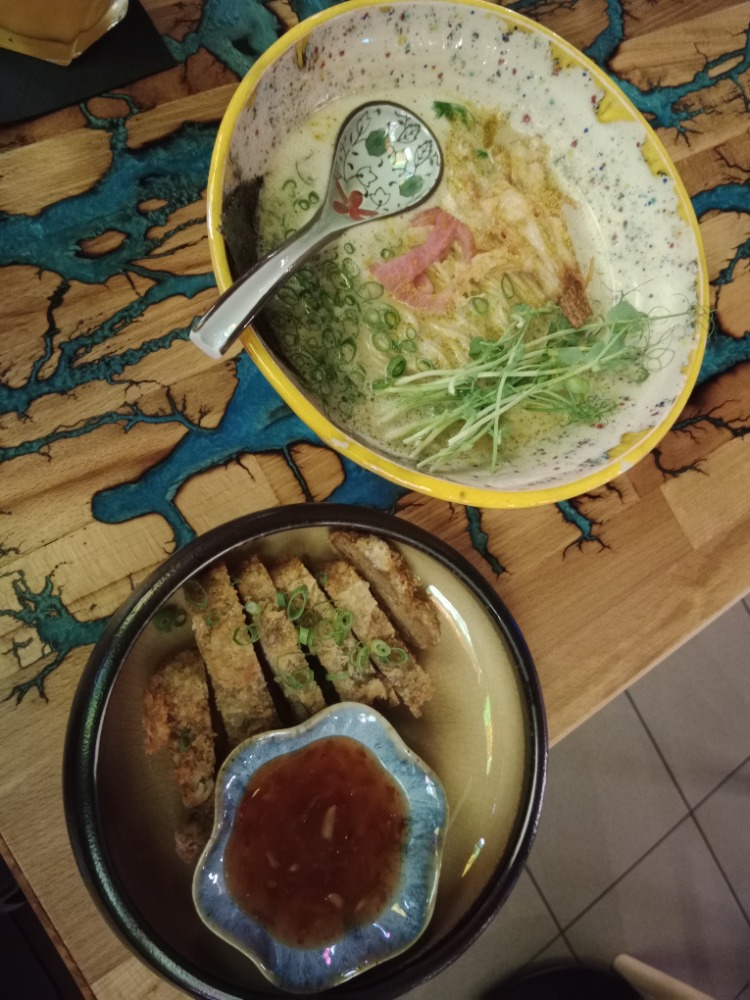
We also loved the Polish food at Bez Lukru, a fully vegan place at Igielna 14/15, a short walk from the Rynek. It has no website with a menu, though, so follow them on social media to see what’s cooking.
The direct Baltic Express train from Prague takes 3 hours 57 minutes. We couldn’t verify the train fare, but FlixBus takes about as long and starts at 349 CZK. Everything we ate in Wrocław is in our post on where to eat vegan in Wrocław.
7. Bratislava: the hardest capital on the list
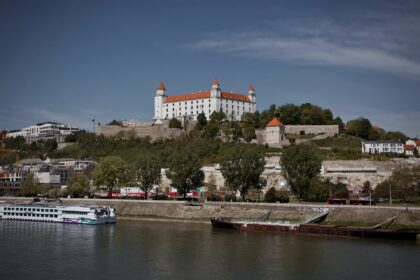
Bratislava is the hardest city on this list for vegans, and we give it just 2.5 points. VíK, a popular fully vegan bistro on Dunajská, closed on 29 March 2026 after three years. The team has promised a new place called VíK² for 2027 but hasn’t said where yet. Plenty of 2026 lists still recommend the old VíK.
The safe bet is Foodstock at Klobučnícka 6, right next to the Old Market Hall. It calls itself vegetarian, but everything on its current menu is plant-based. Crispy gyoza with a hint of truffle cost €9.90 and a small cup (200 ml) of laksa €4. It’s open on Sundays from 11:00 to 22:00.
The fully vegan bistros Balans at Jozefská 19 and Laf at Kýčerského 7a are both trading. Balans has a public online menu, and Laf posts its menu on Facebook. The apps also list both as open on Sundays. The old Made with Laf domain has even been taken over by an online casino site. Both Balans and Laf now make a vegan version of bryndzové halušky (potato dumplings with sheep’s cheese, Slovakia’s national dish), and Balans lists it on its menu for €12.90.
Bratislava works best as a day trip from Brno. The train takes 1 hour 40 minutes and starts at 129 CZK. From Prague, the direct train takes 4 hours 25 minutes, with RegioJet tickets from 279 CZK. For a one-day route with every vegan stop, see our list of things to do in Bratislava.
8. Munich: a Bavarian breakfast without the meat
Munich is much easier for vegans than its roast-pork reputation suggests, as long as you watch the opening hours. Max Pett at Pettenkoferstraße 8 serves a Bavarian breakfast at weekends from 10:00 to 12:30. Three vegan Weißwurst (white sausages), a pretzel and sweet mustard cost €16. It’s closed on Mondays and doesn’t open until 17:00 from Tuesday to Thursday.
You won’t get alcohol at Max Pett at all. It’s named after the hygienist Max von Pettenkofer, who according to the owners chaired a society against alcohol abuse, and that’s part of why they serve none.
For a classic Bavarian tavern that happens to be 100% vegan, go to bodhi at Ligsalzstraße 23 in the Westend district. Seitan “duck” with dark beer sauce and a dumpling costs €24.50, and they’re open on Sundays from 12:00 to 23:00. During the day, try Emmi’s Kitchen at Buttermelcherstraße 11–15 near Gärtnerplatz, open every day from 9:00 to 17:00, where a cinnamon roll costs €5.20. Near the Viktualienmarkt, at Frauenstraße 11, Die Vegane Fleischerei sells vegan Leberkäse (a Bavarian meatloaf) in a roll, but it closes on Sundays.
To Munich, the bus is quicker than the train. RegioJet takes about 4 hours 45 minutes and starts at 299 CZK, while the train via Plzeň takes 5 hours 43 minutes. What to see, the 2026 Christmas market dates and the December train change are all in things to do in Munich (and where to eat vegan).
Finding vegan food in Central Europe isn’t hard any more. Finding it on a Sunday is.
Salzburg, Kraków, Graz and Budapest, 5 to 7 hours from Prague
Salzburg, Kraków, Graz and Budapest are worth the five to seven hours on a train for a long weekend, not a day trip. Kraków and Budapest are almost as easy for vegans as Prague, while Salzburg and Graz need more planning.
9. Salzburg: fine for a weekend, weak on Sundays
Salzburg works for a vegan weekend, just not on a Sunday, because both of its fully vegan places are closed. Vegitalian has moved to Müllner Hauptstraße 26 in the Mülln district, about ten minutes’ walk from the old town. Older lists give its previous addresses, which are no longer valid. It’s open Monday to Saturday from 17:00 to 22:00, and the autumn menu has a chestnut carbonara with truffle for €18.90.
During the day, GustaV at Wolf-Dietrich-Straße 33 cooks, and calls itself Salzburg’s first vegan café and bistro. It’s open Wednesday to Saturday.
Our article on things to do in Salzburg covers the fortress, the Christmas market, lake trips and a plan for Sunday.
On Sundays you can eat at The Heart of Joy, a vegetarian café at Franz-Josef-Straße 3 that marks vegan dishes in green on the menu and is open every day. Or go to the LEKA bistro at Getreidegasse 47. Every Leberkäse roll there comes in a vegan version too, every day from 11:00 to 19:00. Some of the toppings contain dairy, so ask what changes in the vegan version.
You won’t get Salzburg’s famous Bosna, which Salzburg’s tourist board says the Bulgarian Zanko Todoroff invented here in 1949, because it’s made with pork sausages and we couldn’t find a vegan version.
The train takes 5 hours 17 minutes with a change in Linz, and we couldn’t verify the fare. Shops close on Sundays, but the Spar at the main station is open at weekends too, from 8:00 to 23:00. The Christmas market on Domplatz and Residenzplatz runs from 19 November 2026 to 1 January 2027.
10. Kraków: vegan kebab, udon and ramen within walking distance of the Rynek
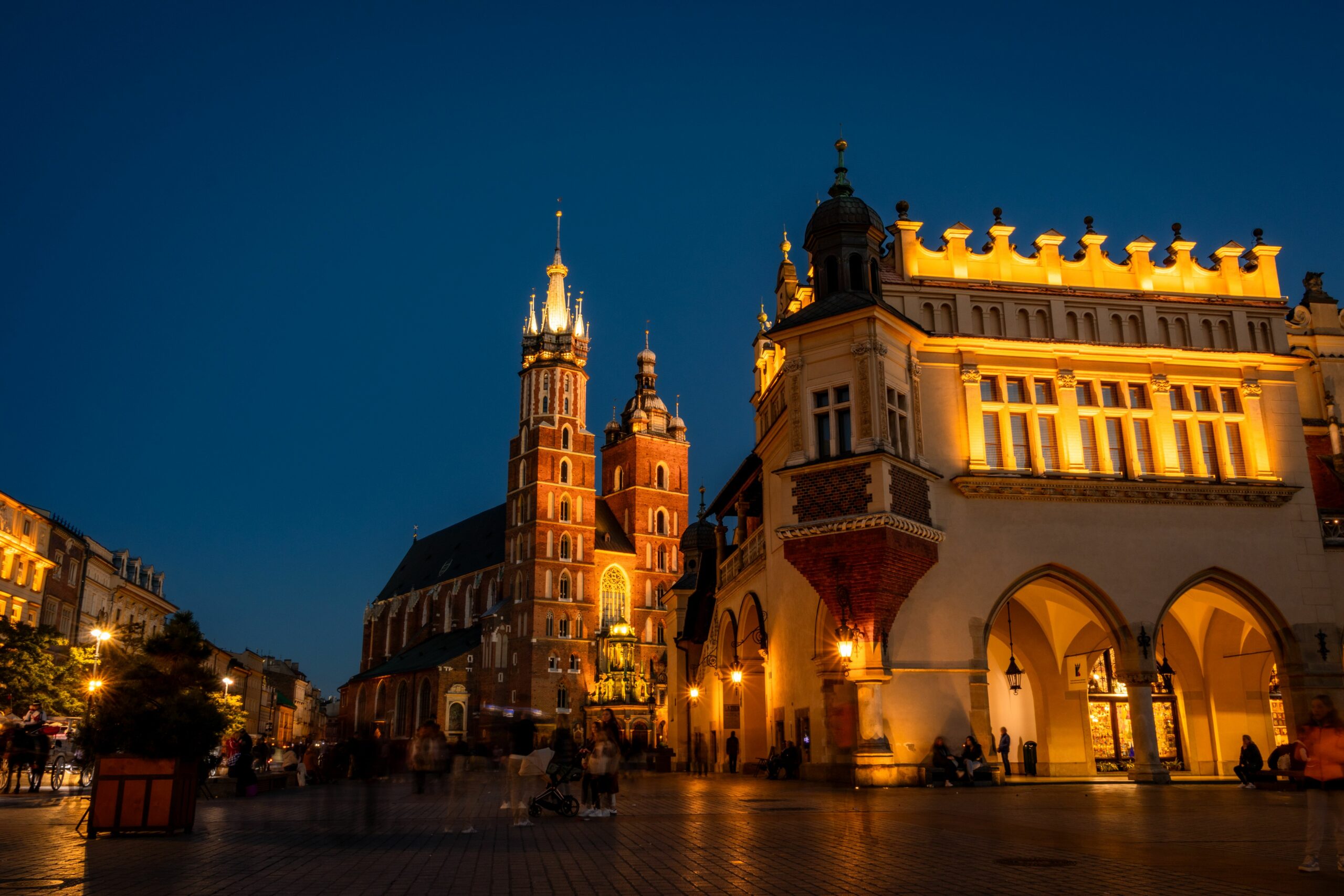
Kraków is one of the easiest cities in the region for vegans. Fully vegan places are within walking distance of both the Rynek (main square) and Kazimierz, and nearly all of them are open on Sundays. Vegab at Starowiślna 8 has sold vegan kebab since 2015 and says it was the first concept of its kind in Poland. Its own blend of wheat protein, legumes and tofu replaces the meat, and a classic portion costs 30.90 PLN.
Vegan AF Ramen at Krupnicza 28 is the chain’s very first branch. It opened on 15 October 2020, one week before a Covid lockdown, and the ramen 2.0 costs 46.90 PLN here.
Ka Vegan at Rakowicka 14a, right by the main station, calls itself the first vegan Japanese restaurant in Kraków. Their udon noodles are handmade following a method from Kagawa Prefecture in Japan. Turlaj Klopsa at Karmelicka 60 makes plant-based klopsy (meatballs) with grains and your choice of sauce, every day from 9:00 to 20:00.
The fastest direct train from Prague, the EC Silesia, takes 5 hours 58 minutes, with ČD tickets from 494 CZK and FlixBus from 279 CZK. The night train leaves at 22:16, but depending on the date it may involve a change in Katowice. There are more tips in our post on a vegan weekend in Kraków.
11. Graz: a small city with a long plant-based tradition
Graz is a small city with a long plant-based tradition, and we verified five fully vegan places on their own websites. The safest bet is Café Erde at Andreas-Hofer-Platz 3 by the River Mur, open every day from 11:30 to 22:00. The soy schnitzel with fries and cranberries costs €14.50. In October 2024 the same team opened Austria’s first vegan university canteen at the University of Graz.
Ginko at Grazbachgasse 33 runs a self-service buffet priced by weight. The owners’ family says its founder opened what was then Austria’s only vegetarian restaurant here in Graz in 1976, and since 2021 Ginko has been 100% vegan. It closes on Sundays, though.
Its sister café, Ginko Greenhouse at Herrengasse 7, a few steps from the main square, is open on Sundays from 10:00 to 18:00. For one special dinner, book Gerüchteküche at Gartengasse 28. It serves only a surprise menu of at least six courses for around €100, Monday to Friday from 18:30. The Gault&Millau guide gave it 15 out of 20 points for 2026.
The local bean salad, Käferbohnensalat with pumpkin seed oil, is vegan in its traditional recipe. We couldn’t find it on a vegan restaurant’s menu, though, so buy the beans and oil at the Kaiser-Josef-Markt, open Monday to Saturday from 6:00 to 13:00. The direct FlixBus from Prague takes 6 hours 20 minutes and starts at 529 CZK, and from Brno the train takes about 4 hours. The Advent markets run from 20 November to 24 December 2026.
12. Budapest: goulash and somlói galuska under one roof
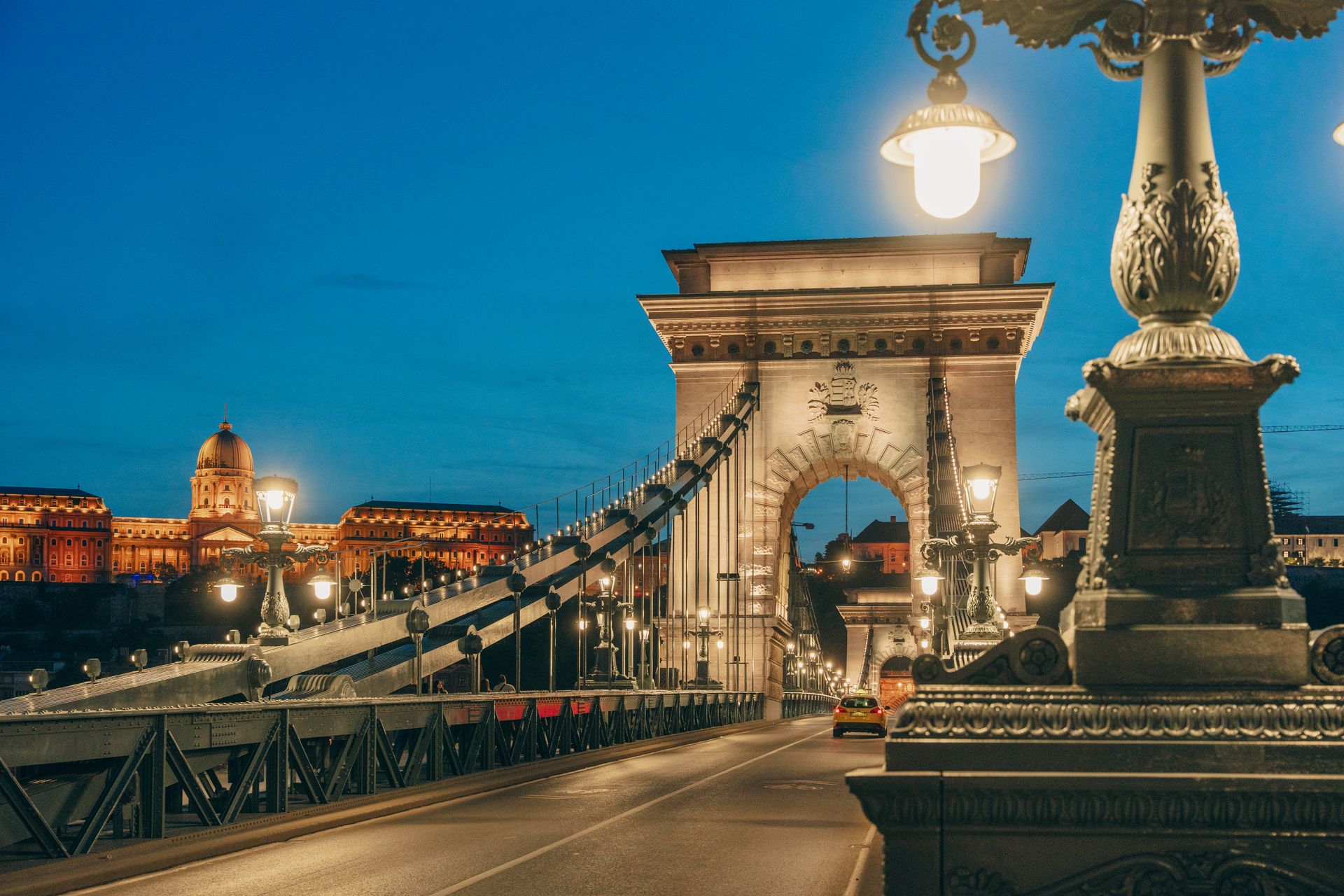
Budapest has a solid core of fully vegan restaurants cooking Hungarian classics, but the scene changes fast. When we researched our Budapest article, we found that 8 of the 15 most often recommended vegan places had closed. The safe bet is Napfényes at Curia utca 2 near Ferenciek tere, open every day from 11:30 to 21:00.
Bean goulash costs 1,400 HUF small and 2,600 HUF large, and somlói galuska (a layered sponge dessert with chocolate sauce) 2,400 HUF. They also run vegan cooking classes.
Vegan Garden at Király utca 8–10, in the Central Passage arcade, is 100% vegan and open on Sundays from 11:00 to 22:00. Szabad Bisztró, at Király utca 101 and Víg utca 30, describes itself as Budapest’s first gastropub using only plant-based ingredients. Vegacity, a cheap self-service buffet at Múzeum körút 23/25, is open only on weekdays from 11:00 to 17:00.
Don’t count on vegan lángos (Hungarian fried flatbread) in November. Láng-Fánk, which makes it, sells from event stands, and its permanent spot in Budapest Garden only opens in April 2027.
The direct train takes 6 hours 51 minutes, with RegioJet tickets from 399 CZK. The more comfortable option is the EuroNight Metropol night train, which leaves Prague at 21:58 and arrives at Budapest-Nyugati at 8:29, with couchettes from about €48. From Brno it’s 4 hours 10 minutes, from 249 CZK. There’s more in our post on whether Budapest is vegan friendly.
Warsaw, Gdańsk, Ljubljana and Zürich, the furthest from Prague
For Warsaw, Gdańsk and Zürich, the night train is the best way to go from Prague, and Gdańsk also has cheap flights. Ljubljana is the hardest city on the list to reach, with no direct train or flight from Prague.
13. Warsaw: Poland’s vegan capital
Warsaw is the strongest vegan city in Poland. Fully vegan Polish kitchens, bakeries and fast food are concentrated in the central Śródmieście district, and almost everything is open on Sundays. We’ve put the sights, the trains from Prague and where to eat into one place in things to do in Warsaw (and where to eat vegan).
Lokal Vegan Bistro at Krucza 23/31 is run by a social cooperative. A soy schabowy with mashed potatoes and mizeria (Polish cucumber salad) costs 39 PLN, exactly the way a Polish grandmother would serve it. It’s open on Sundays from 12:00 to 20:00, and they don’t take reservations.
Vege Miasto on Aleja Solidarności 60A makes pierogi with four savoury fillings for 35 PLN, plus seasonal blueberry ones. Classic pierogi ruskie are filled with twaróg, a Polish curd cheese, and here tofu replaces it. It’s open every day from 12:00, until 21:00 from Tuesday to Sunday and until 18:00 on Mondays.
For something sweet, go to Eter Vegan Bakery at Hoża 5/7, which bakes pączki (Polish doughnuts), croissants and bagels without eggs, milk or butter.
The direct RegioJet train takes 8 hours 18 minutes and starts at 499 CZK. The ČD EuroNight night train leaves Prague at 22:16 and arrives at Warszawa Centralna at 8:08, but depending on the date you may have to change in Ostrava. Polish shops are mostly closed on Sundays, but restaurants, cafés and bakeries work as normal.
14. Gdańsk: 3D-printed steak and pierogi by the sea
Gdańsk has a smaller vegan scene than Warsaw or Kraków, but two excellent fully vegan places plus a pierogi restaurant with a vegan menu. Manna 68 at Świętego Ducha 68 in the historic centre serves a 3D-printed steak made from soy and seitan for 124 PLN. It’s the best conversation starter you’ll find with any meat-eater. It’s open on Sundays too, from 9:00 to 21:00, and its sister restaurant Manna 2 is in Warsaw at Poznańska 2/4.
Avocado Vegan Bistro at Wajdeloty 25/1 in the Wrzeszcz district cooks Polish home food. A soy schabowy with mash costs 41 PLN, and it’s open every day from 11:00 to 19:00. On the same street they also run the Avocado Vegan Spot café and a small vegan shop.
Pierogarnia Mandu at Elżbietańska 4/8, near the main station, isn’t vegan but has a separate vegan section. Ten pierogi with potato, tofu and onion cost 43 PLN, and your non-vegan can order the classics at the same table.
Ryanair flies from Prague to Gdańsk in about 1 hour 20 minutes on Mondays, Fridays and Saturdays, and in November one-way fares start at around 365 CZK without luggage. The Baltic Express night train leaves Prague at 18:49 and reaches Gdańsk at 5:27. Gdańsk is at its best in summer, when you can head to the Baltic beaches. Our full guide to things to do in Gdańsk covers the sights, the vegan food and a Sopot and Gdynia day trip.
15. Ljubljana: Slovenian classics, weekdays only
Ljubljana is small, walkable and lovely, with a handful of fully vegan kitchens cooking Slovenian classics, but almost everything is closed on Sundays. Gaudi&Naan at Trubarjeva 7 cooks only with plant-based ingredients. The menu has žlikrofi (small dumplings from Idrija), a “Carniolan plate” with vegan sausage and sauerkraut, and prekmurska gibanica, a layered Slovenian cake. À la carte prices aren’t online, but the weekday lunch prices are, with a main course for €12 and a three-course lunch for €16. They’re open Monday to Friday from 11:00 to 22:00 and on Saturday evenings only.
Veganika at Gornji trg 33, below the castle, calls itself a vegan tavern. On weekdays it serves dinner only, from 17:00, on Saturdays from noon, and from June to September it doesn’t take reservations. Grashka Deli, in the Center Rog cultural centre at Trubarjeva 72, does its own fermenting, smoking and drying, and is closed on Sundays.
For a quick juice or soup, there’s Barbarella Juicebar at Slovenska 38. Ljubljana was European Green Capital in 2016, and green space covers three quarters of the city.
The train from Prague takes 10 hours 15 minutes with three changes, or 9 hours 48 minutes if you don’t mind four, and ČD tickets start at 1,482 CZK. There’s no direct flight from Prague. Ljubljana works better as part of a longer trip, for example combined with Lake Bled. We cover both in vegan Ljubljana and Bled.
16. Zürich: the oldest vegetarian restaurant in the world
Zürich is expensive, but vegans and vegetarians eat together here better than anywhere else in the region. That’s because the oldest vegetarian restaurant in the world is here. Hiltl at Sihlstrasse 28 has been running since 1898, and the Hiltl family has run it since 1904. In the early days locals nicknamed it the “Wurzelbunker”, the root bunker.
Hiltl is vegetarian, not vegan, but every dish on the menu is marked if it’s vegan. The Zürcher Geschnetzeltes (Zürich-style sliced meat in cream sauce) made with planted. plant-based meat, mushrooms, white wine and rösti costs 36 CHF. Ask for the vegan cream. They’re open on Sundays from 10:00 to 22:00.
Fully vegan and organic, The Sacred buffet at Müllerstrasse 64 calls itself the first vegan organic restaurant in Switzerland. You pay 4.90 CHF per 100 g, and the buffet often includes a Zürcher Geschnetzeltes with mushroom sauce. Marktküche at Feldstrasse 98 describes itself as Switzerland’s first vegan gourmet restaurant, since 2014, and a four-course menu costs 98 CHF.
For a full weekend in Zürich, with the old town, the Uetliberg and a day’s budget in francs, see our things to do in Zurich.
Both are closed on Sundays, so on a Sunday you’ll eat at vegetarian Hiltl or the tibits chain. According to the tibits website, more than 80% of its dishes are plant-based.
The best way there is the direct ČD night train (EN 458), which runs via Dresden, Leipzig and Basel all the way to Zürich. It leaves Prague in the early evening, and a berth in a three-bed compartment costs from 2,430 CZK (€98) including the reservation, according to Czech Railways. Check the exact departure time when you book. The RegioJet night bus takes 9 hours 35 minutes and starts at 699 CZK. Bellevue Noël, the successor to the long-running Wienachtsdorf market, runs from 19 November to 23 December 2026. To turn Zurich into a full trip with the Alps, read our Switzerland holiday guide to where to go, costs and vegan food.
Sundays in Central European cities: where you can eat and where you can’t shop
On a Sunday you can eat almost anywhere in Central Europe, but you can only shop in some places. In Poland, Germany, Austria and Switzerland, ordinary shops are closed on Sundays. Restaurants and cafés aren’t affected, and those are what you can rely on. If you’re stocking up in Germany anyway, here’s what we buy in German supermarkets.
Poland, Germany, Austria and Switzerland
Poland has restricted Sunday trading by law since 2018. According to the Polish government’s Zielona Linia portal, the ban doesn’t apply to restaurants, cafés, bakeries and patisseries, or to shops where the owner serves behind the counter. That’s why most Żabka convenience stores are open on Sundays. Only three shopping Sundays are left in 2026, on 6, 13 and 20 December.
In Germany, Austria and Switzerland, the shops that open on Sundays are mostly at stations, airports and petrol stations. At Salzburg’s main station that’s the Spar, and in Zürich it’s the Shopville underground shopping arcade below the main station.
Where vegan places close on Sundays
The toughest Sundays for vegans are in Brno, Ljubljana, Salzburg and Zürich. In Zürich and Salzburg vegetarian places with vegan dishes will save you, while in Brno and Ljubljana it’s best to plan your big meals for another day. The table sums up the places in this article.
| City | Open on Sunday | Closed on Sunday |
|---|---|---|
| Prague | Vegan’s Prague, Linh’s, Krafin | Eaternia |
| Brno | Pizza Punk (according to delivery apps) | Vegalité, Fryends, Vegan AF Ramen |
| Dresden | Steffenhagen, Falscher Hase, Der Dicke Schmidt, V-Cake | Die Vegane Fleischerei |
| Berlin | Das Försters, Brammibal’s, Curry 36 | Die Vegane Fleischerei |
| Munich | Max Pett, bodhi, Emmi’s Kitchen | Die Vegane Fleischerei |
| Bratislava | Foodstock; Balans and Laf (according to delivery apps) | none found |
| Salzburg | The Heart of Joy (vegetarian), LEKA | Vegitalian, GustaV |
| Graz | Café Erde, Ginko Greenhouse | Ginko, Gerüchteküche |
| Ljubljana | nothing verified | Gaudi&Naan, Veganika, Grashka Deli |
| Zürich | Hiltl, tibits (vegetarian) | The Sacred, Marktküche |
Tip for Poland: In Polish Żabka convenience stores, staff will heat up a vegan burger or nuggets from the fridge and hand them to you hot. We tried it in Wrocław. Żabka is usually open on Sundays too, so it rescues early mornings and late evenings in all four Polish cities.
How to travel between Central European cities by train
The three best vegan train routes in Central Europe are Brno as a base for the south, Prague to Dresden and Berlin, and night trains for the longer trips. We checked all the times for November 2026.
Brno as a base for Vienna, Bratislava and Budapest
From Brno, the southern cities are surprisingly close. Vienna is 1 hour 30 minutes by train from 149 CZK, Bratislava 1 hour 40 minutes from 129 CZK, and Budapest 4 hours 10 minutes from 249 CZK. Graz is about 4 hours with one change in Břeclav, with ČD tickets from 741 CZK. Just remember that Brno’s vegan places close on Sundays, so spend your Friday or Saturday night in Brno.
Prague, Dresden and Berlin on one train
The Berliner train runs from Prague to Dresden in 2 hours 19 minutes and carries on to Berlin, arriving 3 hours 58 minutes after leaving Prague. That makes it easy to split the trip into two stops. Have dinner in Dresden’s Neustadt and carry on to Berlin in the morning.
Night trains to Budapest, Warsaw, Gdańsk and Zürich
Night trains run from Prague to Budapest, Warsaw, Gdańsk and Zürich, and each one saves you a hotel night and a whole day of travel. They are the EuroNight Metropol to Budapest, a ČD EuroNight to Warsaw, the Baltic Express to Gdańsk and direct ČD sleeper and couchette cars to Zürich. There’s a night train to Kraków too, and on some dates the Kraków and Warsaw services involve a change in Katowice or Ostrava. Don’t expect vegan food on board, so buy your snacks before you leave.
Ticket tip: A new timetable starts on 13 December 2026, and night trains are what changes most often. Before you buy, always check the connection in IDOS, the official Czech journey planner, which covers ČD, RegioJet, Leo Express and the foreign operators.
Where to stay and what vegan food costs
Stay close to the vegan places, because then you won’t end up eating whatever happens to be nearby at 10 pm. In Dresden that means Neustadt, in Berlin Prenzlauer Berg, in Kraków the Old Town and in Warsaw Śródmieście. In Wrocław we stayed at the Puro Hotel near the centre, and it was one of the most comfortable hotels we’ve ever stayed in.
Accommodation usually costs more than food. In Vienna that February we were surprised by how cheap the journey was and how expensive the stay, and €10 for instant noodles caught us off guard. A main course in a fully vegan restaurant costs roughly 240 to 348 CZK in Prague and 235 to 249 CZK in Brno, with cheaper weekday lunch menus on top.
In Poland you’ll pay 30 to 47 PLN, and in Vienna, Dresden and Munich roughly €13 to €25. Zürich is the most expensive, with a main course at Hiltl costing 36 CHF and the buffets 4.70 to 5.90 CHF per 100 g.
Read next
Travelling abroad as a vegan for the first time, or with someone who eats that way? We’ve put together how to travel vegan without going hungry, from packing snacks to ordering in a foreign language.
When to visit vegan cities in Central Europe
For food, spring and September to November are the best times, and Advent is best for atmosphere. In spring and autumn every place is open, it’s pleasant to walk between restaurants, and hotels aren’t charging peak-season prices. By October 2026 many places are already cooking autumn menus with pumpkin and chestnuts, from Vegitalian in Salzburg to Das Försters in Berlin.
In Advent it’s worth timing your trip with the markets. Vienna’s Rathausplatz opens on 13 November, Salzburg and Zürich on 19 November, Graz on 20 November and Dresden’s Striezelmarkt on 25 November 2026. Prague has the Veggie Vánoce vegan market on 6 December. Vegan stalls at Christmas markets are still rare, so go to the market for the atmosphere and eat in town.
Summer suits Gdańsk and the Baltic beaches best. Salzburg, on the other hand, is at its most expensive in summer, when the Salzburg Festival takes over every July and August. And if Munich during Oktoberfest tempts you, Die Vegane Fleischerei sells plant-based versions of the beer-tent classics there, white sausages and Leberkäse included.
Vegan phrases for Central Europe
In every country, three phrases will get you a long way. No meat, no milk, no eggs. You’ll manage in English in the big cities, but in smaller pubs and bakeries the local language helps.
Remember that vegetarian doesn’t mean vegan. Polish “wegetariańskie” or German “vegetarisch” often includes cheese, eggs or butter.
| Language | I’m vegan (male / female) | No meat, no milk, no eggs | Is this vegan? |
|---|---|---|---|
| Czech | Jsem vegan / veganka | bez masa, bez mléka, bez vajec | Je to veganské? |
| German (Germany, Austria, Zürich) | Ich bin Veganer / Veganerin | ohne Fleisch, ohne Milch, ohne Ei | Ist das vegan? |
| Polish | Jestem weganinem / weganką | bez mięsa, bez mleka, bez jajek | Czy to jest wegańskie? |
| Hungarian | Vegán vagyok | hús nélkül, tej nélkül, tojás nélkül | Ez vegán? |
| Slovak | Som vegán / vegánka | bez mäsa, bez mlieka, bez vajec | Je to vegánske? |
| Slovenian | Sem vegan / veganka | brez mesa, brez mleka, brez jajc | Ali je to vegansko? |
Looking beyond Central Europe?
Berlin and Prague also feature in our list of the top 10 vegan-friendly cities in the world, alongside London, Amsterdam and Barcelona.
Which vegan city in Central Europe should you pick?
If it’s your first vegan city break in Central Europe, go to Vienna or Berlin. You can eat anything at any time there, from schnitzel to currywurst, and the train goes direct.
If you want cheap food and Polish classics, choose Kraków or Warsaw. Plan Brno, Ljubljana and Salzburg for weekdays, and Bratislava as a day trip.
Above all, don’t blindly trust any list, ours included. Places in Central Europe open and close faster than anyone can update a list, so check the venue’s own website before you travel.
Which Central European city surprised you most as a vegan, and which one would you add to our list?
Frequently asked questions
Which city in Central Europe is best for vegans?
Berlin is the best city in Central Europe for vegans, followed closely by Vienna, Prague, Kraków and Warsaw. All five have plenty of fully vegan restaurants, vegan versions of local dishes, and places open on Sundays. Bratislava is the hardest, with the fewest vegan places, although even there you can now get vegan halušky.
Is Central Europe vegan friendly?
Yes, Central Europe is vegan friendly in 2026, especially the big cities. In Vienna, Berlin, Prague and the Polish cities, fully vegan restaurants cook the local classics, from schnitzel to pierogi. Smaller cities and Sundays are the weak spots, when fully vegan places in Brno, Ljubljana and Salzburg are closed.
Which countries are in Central Europe?
In the broad definition, Central Europe is the Czech Republic, Slovakia, Poland, Hungary, Austria, Germany, Slovenia, Switzerland and Liechtenstein. There’s no single agreed definition, though, and narrower ones include only the Czech Republic, Slovakia, Poland and Hungary, sometimes with Austria and Germany.
What are the best weekend trips from Prague by train?
The best weekend trips from Prague by train are Dresden (2 hours 19 minutes), Brno (2 hours 36 minutes), Berlin (3 hours 58 minutes), Wrocław (3 hours 57 minutes) and Vienna (4 hours 12 minutes). Direct trains run to all five, and the cheapest train or bus tickets cost roughly 199 to 420 CZK. For a long weekend, a night train to Budapest, Warsaw or Zürich is worth it.
Are restaurants open on Sundays in Poland?
Yes, restaurants, cafés, bakeries and patisseries are open on Sundays in Poland, because the Sunday trading ban doesn’t apply to them. Ordinary shops and supermarkets are closed. Most Żabka convenience stores still open on Sundays, because the operator serves behind the counter.
Featured photo: Alex Does Pictures, Pexels.
Newsletter
Get our free e-books
Join the newsletter and download Our Vegan Christmas Kitchen straight away, 10 recipes for Czech cookies, gingerbread and vánočka. Then once a month, new places from the vegan map and new articles. Unsubscribe with one click.