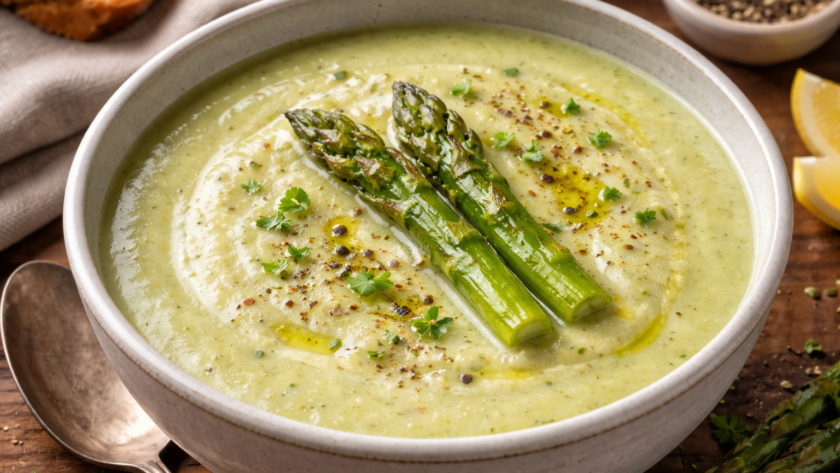
Vegan asparagus soup is one of the most satisfying spring recipes you can make, and it takes under 30 minutes from chopping board to bowl. Tender asparagus, creamy potatoes and silky soy cream come together into a smooth, pale green soup that tastes like the season itself. No butter, no dairy, no flour thickener. Just ten spears of asparagus, a couple of potatoes and a splash of plant-based cream, and you have a soup that feels genuinely luxurious and surprisingly light.
Which asparagus works best, white or green? Why pour the soy cream in before the broth? How do you get a silky texture without thickeners? Below you’ll find the full recipe, interesting facts about asparagus, its nutritional benefits, a nutrition table and answers to the questions people ask most often about creamy vegan asparagus soup.
Asparagus soup is the spring pick in our seasonal guide to vegan soups, which also covers autumn and winter soups.
Why you’ll love this soup
Asparagus soup is a spring classic, and the vegan version might actually be better than the traditional one. The asparagus flavour stays front and centre instead of being buried under butter and heavy cream.
- Ready in 30 minutes, with minimal washing up
- Naturally creamy thanks to potatoes, no flour or cornstarch needed
- Soy cream gives a silky texture and softens the slight bitterness of asparagus
- Works with both white and green asparagus, fresh or slightly older spears
- Keeps 2-3 days in the fridge and arguably tastes even better the next day
When you look at this soup, you’d struggle to tell it’s vegan. That’s exactly why we serve it to non-vegan friends without a second thought.
Interesting facts about asparagus
Asparagus has one of the shortest and most anticipated seasons in European cooking. In Czech Republic and across Central Europe it runs roughly from mid-April to 24 June, the feast of St. John, when tradition dictates that harvesting stops so the plants can rebuild strength for the following year. That’s why the vegetable feels special. You wait for it, cook obsessively with it for a few weeks, and then it’s gone.
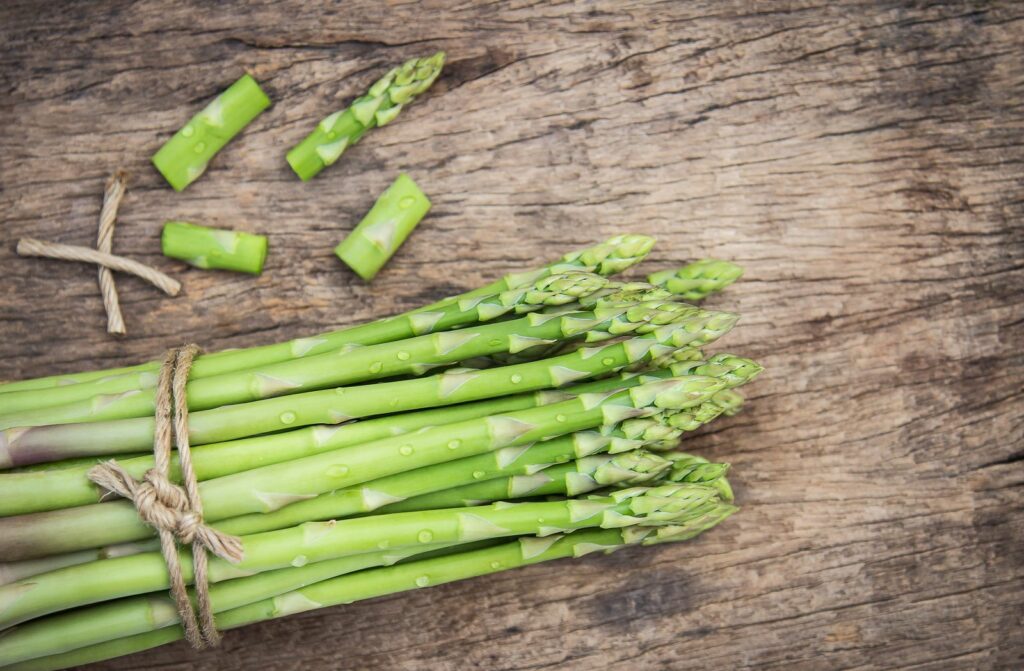
White and green asparagus are actually the same plant. The only difference is how they’re grown. White asparagus is kept underground, away from sunlight, so it never produces chlorophyll, while green asparagus is allowed to break the surface and colour in the sun. Green has a stronger, slightly sweet flavour and doesn’t need peeling, just snap off the woody ends. White asparagus is milder but fussier. Its skin is fibrous and you have to peel almost the entire spear up to the tip.
Historically, asparagus was food for aristocracy. In ancient Rome it was considered a medicinal plant and emperor Augustus supposedly kept a fleet of ships just to transport fresh asparagus from Germany to Rome. In Czech Republic the main growing region is Ivančice in South Moravia, which calls itself the asparagus capital and hosts an annual asparagus festival every May.
If you’ve ever noticed a strange smell in your urine after eating asparagus, you’re not alone and it’s nothing unhealthy. Asparagus contains asparagusic acid, which breaks down into sulphur compounds during digestion. The curious part is that roughly 40 % of people can’t smell it at all. It comes down to genetics.
Health benefits of asparagus
Asparagus isn’t just a seasonal treat, it’s also one of the most nutrient-dense spring vegetables. At just 20 calories per 100 g, you can eat it freely, and it’s a concentrated source of vitamins and minerals.
Asparagus is an excellent source of folate (vitamin B9), important for new cell formation, especially during pregnancy. Half a cup covers about 35 % of the daily recommended intake, making it one of the richest plant sources of folate. For vegans this is great news, as folate is a nutrient that deserves attention on a plant-based diet.
Asparagus is also rich in vitamin K, which supports healthy blood clotting and bone metabolism. One serving covers more than 50 % of the daily need for vitamin K. It also provides vitamin C, vitamin E, potassium, magnesium and antioxidants like saponins and flavonoids, which help protect cells against oxidative stress.
Thanks to its high content of soluble and insoluble fibre, asparagus supports healthy digestion and the growth of beneficial gut bacteria. It also acts as a natural diuretic, helping the body flush out excess water and salt, which is why it’s often recommended for urinary tract health and in detox-style meal plans.
Nutrition per serving
| Nutrient | Amount per serving |
|---|---|
| Calories | ~185 kcal |
| Protein | 5 g |
| Carbohydrates | 22 g |
| Fat | 8 g |
| Fibre | 4 g |
| Sugar | 4 g |
Approximate values per one serving (¼ of the recipe). Will vary based on the size of the potatoes and the brand of soy cream.
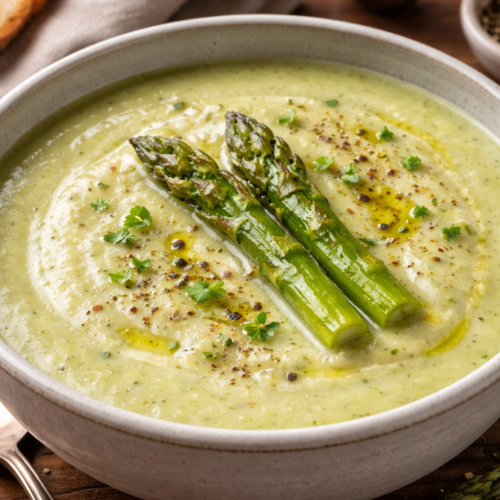
Vegan Asparagus Soup
Ingredients
- 10 spears asparagus (white or green)
- 2-3 larger potatoes peeled and diced
- 750 ml vegetable broth about 3 cups
- 200 ml soy cream about ¾ cup, cooking or whipping
- 3 cloves garlic
- 1 onion
- 2 tbsp vegan butter for sautéing
- 1 tsp herb salt
- 1 tsp nutritional yeast
- 0.5 tsp garlic powder
- freshly ground black pepper
- 2 tbsp roasted seeds pumpkin, sunflower or flax, to garnish
Instructions
- Wash the asparagus, snap off the woody ends and cut the spears into 2 cm pieces. Keep a few tips aside for garnish. Peel the potatoes and cut them into small cubes.
- Finely chop the onion and garlic. Melt the vegan butter in a large pot and sauté the onion, garlic and asparagus for 3-4 minutes, until the onion is translucent.
- Pour in the soy cream, then immediately add the hot vegetable broth, potatoes, herb salt, nutritional yeast, garlic powder and pepper. Bring to a simmer and cook gently for 12-15 minutes, until the potatoes and asparagus are tender.
- Blend the soup smooth with an immersion blender. If it feels too thick, add a splash more broth. Taste and adjust the salt and pepper.
- Ladle into bowls, garnish with roasted seeds and the reserved asparagus tips. Serve hot with a slice of fresh bread.
Notes
Tips and variations
The basic recipe is intentionally simple, so the asparagus can shine, but you can adapt it to whatever you have at home.
- Swap the soy cream: oat cream (neutral), coconut cream (slightly sweet, pairs well with white asparagus) or a homemade cashew cream (100 g soaked cashews blended with 200 ml water) all work beautifully.
- Low-carb version: replace the potatoes with cauliflower florets or white beans. Both add creamy texture without the starch.
- With fresh herbs: chives, parsley, dill or tarragon pair perfectly with asparagus. Add them just before serving so they keep their aroma.
- Storage: keeps in an airtight container in the fridge for 2-3 days. Freezing isn’t ideal, creamy soups can split on thawing, so cook fresh where possible.
- Make it heartier: top with pan-fried tofu cubes, crispy vegan bacon, roasted chickpeas or homemade croutons to turn it into a full meal.
If the soup feels too thick, loosen it with a splash of broth. If it’s too thin, let it simmer uncovered for a few extra minutes to reduce.
What to serve with asparagus soup
This soup shines as a starter or a light lunch, but a couple of simple additions turn it into a full meal.
- A slice of homemade vegan bread or crispy croutons
- A spoon of wild garlic pesto, another spring ingredient that pairs incredibly well with asparagus
- Toasted almonds or pumpkin seeds for crunch
- A drizzle of good olive oil and a squeeze of lemon to brighten everything up
For a spring lunch, pair the soup with a light salad or roasted seasonal vegetables. It’s also filling enough on its own for a quick dinner, thanks to the potatoes and soy cream.
A spring classic ready in half an hour
Asparagus season arrives fast and disappears just as quickly, so when the first fresh spears show up at the market, don’t wait. This soup is one of the best ways to enjoy asparagus because its flavour stays front and centre, nothing covering it up. Try it for a spring Sunday lunch or as a quick weeknight dinner, and you’ll probably come back to it every year. For more spring inspiration, take a look at our vegan Czech Easter recipes, which fit perfectly into the same season.
If you give the soup a try, let us know in the comments which asparagus you used and what you served it with. And feel free to share the recipe with friends who still think vegan creamy soup can’t taste this good.
Frequently asked questions
Is white or green asparagus better for soup?
Both work beautifully but they taste different. Green asparagus has a stronger, slightly sweet flavour and doesn’t need peeling, just snap off the woody ends. White asparagus is more delicate and gives the soup an elegant pale colour, but you have to peel it almost entirely. If you want a more pronounced flavour, go green. For something subtler, try white.
What can I use instead of soy cream in vegan asparagus soup?
Oat cream works great (neutral taste), coconut cream gives a slightly sweet finish that pairs well with white asparagus, and homemade cashew cream (100 g soaked cashews blended with 200 ml water) is the richest option. You can also use plant-based milk for a lighter soup, but it won’t be as silky.
How long does asparagus need to cook in soup?
Chopped asparagus cooks through in about 12-15 minutes, the same time as the potatoes. If you’re saving some tips for garnish, blanch them separately for 3-4 minutes in salted water or add them at the very end of cooking so they stay firm and bright green.
Can you freeze creamy asparagus soup?
Technically yes, but creamy soups often lose their silky texture and can split on thawing. It’s better to eat the soup fresh or store it in the fridge for up to 2-3 days. If you do want to freeze it, freeze before adding the soy cream and stir the cream in when reheating.
When is asparagus season in Europe?
Asparagus season in most of Europe runs from mid-April to 24 June, the feast of St. John, when tradition dictates harvesting stops. In Germany, Austria and Czech Republic you’ll find fresh local asparagus at markets and supermarkets throughout this window. Outside the season only imported asparagus is available, which tends to be less fresh.
Newsletter
Get our free e-books
Join the newsletter and download Our Vegan Christmas Kitchen straight away, 10 recipes for Czech cookies, gingerbread and vánočka. Then once a month, new places from the vegan map and new articles. Unsubscribe with one click.