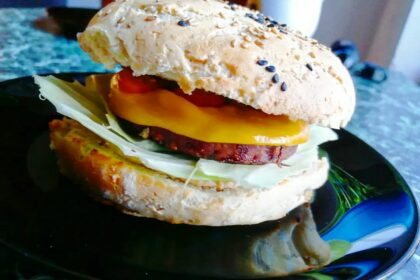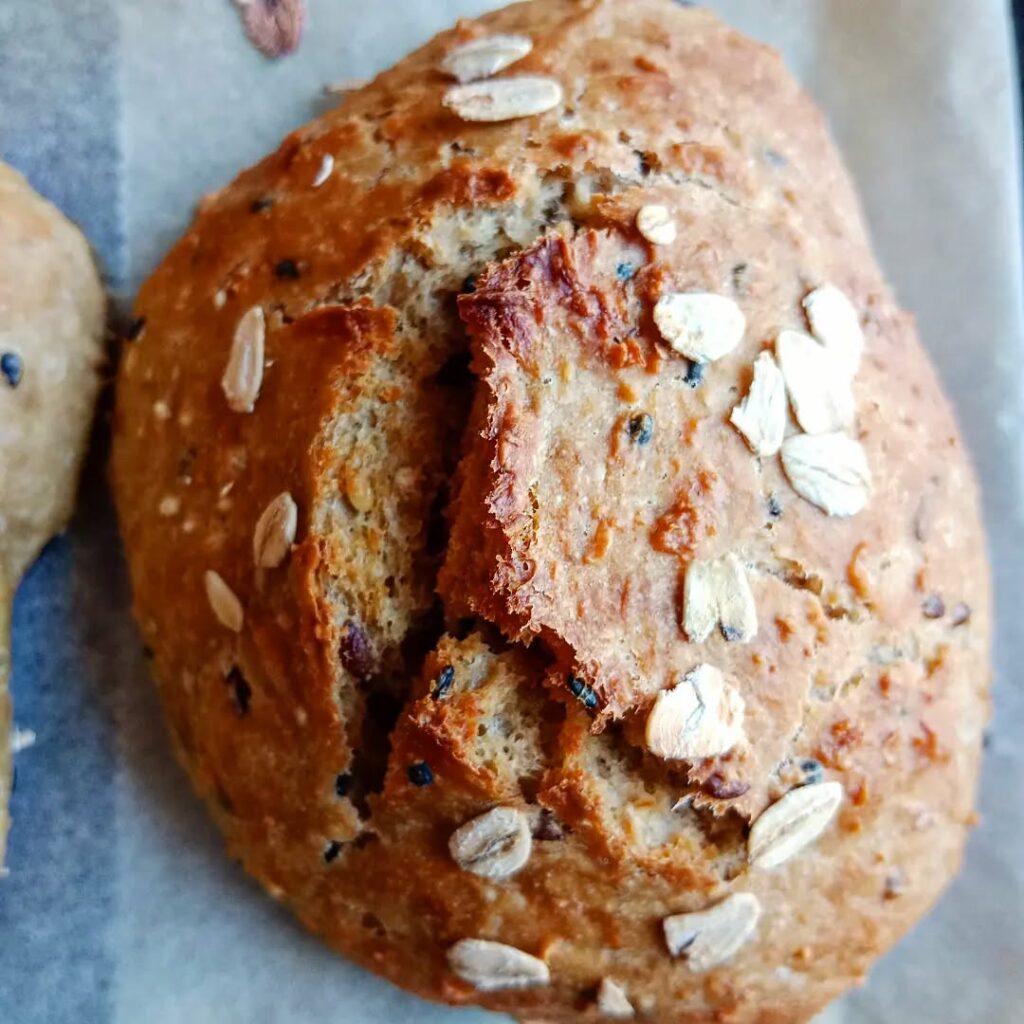
These vegan overnight oat buns are not your average bread rolls. They are made with a triple flour blend of bread flour, oat flour, and wholegrain flour, brought together with vegan yogurt, olive oil, and a generous handful of mixed seeds. The overnight cold fermentation method means you do ten minutes of work the evening before and wake up to rolls that smell extraordinary before they even come out of the oven. The result is a golden, seeded bun with a crisp crust and a soft, slightly nutty crumb that no supermarket loaf can replicate.
In this article we walk you through the recipe and explain the reasoning behind it. Why use three different flours? What does vegan yogurt actually do inside a bread dough? And is overnight proving in the fridge really worth the wait, or is it just a trend? Whether you are a confident home baker or someone who has never made bread from scratch, these vegan oat buns are the recipe to start with. They are completely plant-based, naturally dairy-free and egg-free, and the ingredient list contains nothing unusual or hard to find.
Why You Will Love This Overnight Oat Buns Recipe
These buns reward a little patience with an exceptionally good result. Here is exactly what makes them worth making.
- Overnight convenience with zero morning effort: Mix everything in 15 minutes before bed, refrigerate overnight, and bake straight from the fridge in the morning. No waiting around for dough to prove while you are half asleep.
- Triple flour for genuinely complex flavour: The combination of bread flour for structure, oat flour for nuttiness and nutrition, and wholegrain flour for depth gives these rolls a flavour you cannot replicate with a single-flour recipe. Each flour plays a different role.
- Seeds for nutrition and visual appeal: Flaxseeds, sesame seeds, and black sesame seeds are not just sprinkled on for looks. They add omega-3 fatty acids, lignan antioxidants, and healthy fats that make these genuinely nutritious rolls rather than just another bread recipe.
- Naturally vegan with no obvious substitutes: No egg replacers, no dairy alternatives that taste like compromise. Vegan yogurt, olive oil, and seeds are familiar ingredients anyone can cook with. Guests will not guess these are plant-based unless you tell them.
- Great for sharing beyond the vegan table: These buns contain no obvious vegan ingredient swaps. Bake them for non-vegan friends or family and watch them disappear without a single question about what is in them.
A practical bonus: one batch makes approximately 18 buns. They keep well for 3-4 days in a sealed container, and they freeze perfectly, meaning you can always pull a few from the freezer and have fresh buns on demand.
Interesting Facts About Oat Baking and the Key Ingredients
There is genuinely interesting food science behind why this recipe is built the way it is. Here is what makes the technique and the ingredients worth understanding.
Why oat flour cannot work alone in a yeast bread
Oats contain no gluten. More precisely, they do not contain gliadin and glutenin, the proteins that form the gluten network when flour meets water. This means a dough made entirely from oat flour cannot trap the carbon dioxide produced by yeast during fermentation, and without that gas being held in the structure, the bun simply will not rise. The solution is to blend oat flour with bread flour, which is high-protein wheat flour (typically 12-14% protein content). The bread flour builds the structural gluten network that holds the bun together and gives it its chewiness. The oat flour contributes flavour, natural sweetness, moisture retention, and nutritional value. The wholegrain flour adds fibre, depth of aroma, and additional minerals. This triple blend is technically well-reasoned, not just a random combination.
Overnight cold fermentation: more than a trend
Leaving bread dough in the fridge overnight (at 4-10°C) does several things that a quick room-temperature prove simply cannot. The slow yeast activity gives enzymes in the flour time to break down starches and proteins over 8-16 hours, developing a more complex, slightly tangy flavour that bread proved quickly never achieves. Lactic and acetic acids formed during the long fermentation act as natural dough conditioners, extending the shelf life of the baked bread. Professional bakers call this technique “retarding” the dough, and it is used in artisan bakeries precisely because the result is measurably better: more flavour, softer crumb, crisper crust, and longer freshness after baking. For home bakers, it also solves a practical problem: you do all the work in the evening, and the baking happens at a relaxed pace in the morning.
Flaxseeds: one of the richest plant sources of antioxidants
The flaxseeds in this recipe are not merely decorative. Research shows that flaxseed contains between 75 and 800 times more lignans than any other plant food. Lignans are phytoestrogen antioxidants with documented anti-inflammatory properties and links to reduced cardiovascular disease risk in multiple peer-reviewed studies.
Each tablespoon of ground flaxseed also delivers approximately 1.8g of plant-based ALA omega-3 fatty acids. In baked goods, ground or milled flaxseeds are bioavailable, meaning the nutrients are actually absorbed by the body. Whole flaxseeds pass largely undigested, so the way they are incorporated here (mixed into the dough and pressed into the surface) makes a real nutritional difference.
Health Benefits of These Overnight Oat Buns
The nutritional case for these oat buns goes well beyond simply being plant-based. Here is what makes them genuinely worth eating regularly.
Oat beta-glucan and heart health: backed by clinical evidence
Oat flour contains beta-glucan, a soluble fibre found in very few grains. The US Food and Drug Administration formally approved a heart health claim for oat beta-glucan in 1997, based on a review of 33 clinical trials. Meta-analyses of randomised controlled trials consistently show that oat beta-glucan consumption is associated with a 5-7% reduction in total and LDL cholesterol levels.
Every 100g of oat flour contains approximately 4-5g of beta-glucan. Even a single bun from this recipe contributes meaningfully to your daily intake of this protective fibre.
Vegan yogurt as a functional baking ingredient
The vegan yogurt in this recipe is not just a binding agent. The lactic acid in yogurt activates the yeast, tenderises the gluten network, and improves moisture retention in the baked bun, keeping it soft for days after baking without the need for preservatives. Many vegan yogurts (particularly soy-based ones) also contain live probiotic cultures that support gut health.
Fermented foods in bread dough have been shown to improve the bioavailability of minerals from the grains, so the yogurt here serves both a technical purpose and a nutritional one.
More protein per roll than anything from a supermarket
The triple flour blend combined with the seed topping makes these buns meaningfully more nutritious than a standard white bread roll. Each bun contains approximately 7-8g of protein, compared to the typical 2-3g in a shop-bought white roll. The wholegrain flour adds magnesium, zinc, and B vitamins that are stripped out during the refining process for white flour.
For anyone following a plant-based diet and monitoring protein intake, a bread that delivers 7-8g per serving is a genuinely useful daily staple rather than empty calories.
Nutritional Values (per bun)
Estimated values per serving, based on 18 buns from one batch. Actual values vary depending on specific brands and portion sizes used.
| Nutrient | Amount per serving |
|---|---|
| Calories | ~227 kcal |
| Protein | ~7-8g |
| Carbohydrates | ~38-40g |
| Fat | ~5-6g |
| Fibre | ~3-4g |
| Saturated fat | less than 1g |
Approximate values per serving. Depends on specific ingredients and quantities used.
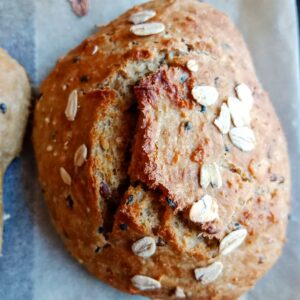
Vegan Homemade Oat Buns
Ingredients
- 3 cups bread flour
- 2 cups oat flour
- 1 cup wholegrain flour
- 2 cups cold water
- 300 g vegan yogurt
- 60 g sunflower protein powder optional
- handful flaxseeds
- handful sesame seeds
- handful black sesame seeds
- 1 tbsp olive oil
- 2 tsp instant yeast
- 2 tsp salt
Instructions
- Mix all dry ingredients in a large bowl. Add the vegan yogurt, cold water, and olive oil. Stir until a rough dough forms. Cover and refrigerate overnight (8-16 hours).
- Line a baking sheet with parchment paper. Using a large spoon or ice cream scoop, place portions of dough onto the parchment.
- Shape into approximately 18 small rolls. Sprinkle generously with oat flakes and additional seeds if desired.
- Bake at 225°C (435°F) for approximately 25-35 minutes, until golden brown. Tap the bottom of a bun — it should sound hollow when done.
Notes
Tips and Variations
This recipe is intentionally designed as a flexible base. Here are the best ways to adapt it to what you have available or prefer.
- Skip the sunflower protein: The sunflower protein powder is optional. Without it, the buns will be slightly less high in protein, but the texture and flavour remain the same. You can replace it with a tablespoon of tahini stirred into the dough, or simply leave it out.
- Mix up your seeds: Black sesame seeds can be replaced with regular sesame, or you can add pumpkin seeds, chia seeds, or poppy seeds. Press the seeds onto the surface just before baking so they stick properly.
- Make your own oat flour: If you do not have commercial oat flour, blend rolled oats in a food processor or blender for 30-60 seconds until a fine powder forms. No need to sieve it. The result is almost identical to shop-bought oat flour.
- Freezing and reheating: Freeze the baked and cooled buns individually wrapped. Defrost at room temperature for 1-2 hours, or reheat for 5-8 minutes in an oven set to 180°C. The texture stays almost identical to fresh-baked.
- Fan oven adjustment: If using a fan-assisted oven, reduce the temperature by 15-20°C (so approximately 205-210°C) and check about 5 minutes earlier. The crust will colour more evenly but monitor it closely.
One rule applies to every version of this recipe: give the dough enough time to prove. Overnight in the fridge (8-16 hours) is the minimum for full flavour development and an airy crumb. A shorter prove at room temperature will work, but the result will taste noticeably different and less complex.
What to Serve with Overnight Oat Buns
These buns are versatile enough to work at breakfast, lunch, or as a side with soup. Here are our favourite combinations.
- Avocado and tomato breakfast: Slice the bun, spread with mashed avocado seasoned with lemon juice and salt, and top with sliced tomato or radish. A complete breakfast in under three minutes.
- Tofu pesto sandwich: For a satisfying lunch, use these buns as the base for a vegan tofu pesto sandwich. The soft oat bun and the crispy tofu are a genuinely good combination.
- Alongside soup: Oat buns are excellent with a thick, creamy soup. They hold up to dipping and soak up broth beautifully. Try them with a warming carrot and sweet potato soup for a full meal.
- Sweet toppings at breakfast: These buns work equally well with almond butter and jam, peanut butter and banana slices, or a generous spread of your favourite fruit preserve. Do not limit them to savoury.
If you enjoy baking your own bread, you might also want to try our vegan Czech Easter mazance, another yeast-based bun recipe that proves how versatile plant-based baking can be.
Frequently Asked Questions
Can I make vegan oat buns without a stand mixer?
Yes, absolutely. This dough is mixed by hand and does not require kneading in the traditional sense. You simply combine all ingredients, stir until everything comes together into a rough dough, and refrigerate. The overnight fermentation does the structural work that kneading would normally do. A large mixing bowl and a wooden spoon or spatula are all you need.
Why add vegan yogurt to bread dough?
Vegan yogurt serves multiple functions in this recipe. The lactic acid activates the yeast and kickstarts fermentation, while also tenderising the gluten network for a softer crumb. The moisture from the yogurt keeps the buns soft for 2-3 days after baking without any preservatives. Many vegan yogurts also contain live probiotic cultures, which improve the digestibility of the bread and contribute to gut health.
How long do homemade oat buns stay fresh?
Stored in a sealed container at room temperature, these buns stay fresh for 3-4 days. The yogurt and overnight fermentation both help extend freshness compared to a standard quick bread. For longer storage, freeze them individually wrapped immediately after cooling. They reheat perfectly from frozen in a 180°C oven for 5-8 minutes.
Are oat buns gluten-free?
This recipe as written is not gluten-free. It contains bread flour (wheat) and wholegrain flour (wheat), which are the main sources of gluten. Oats themselves are naturally gluten-free, but this recipe relies on wheat flour for structure. For a truly gluten-free version, you would need to replace both wheat flours with a certified gluten-free baking blend and adjust the liquid ratio, as gluten-free flours absorb moisture differently.
What is the difference between oat flour and ground oat flakes in baking?
For practical purposes in this recipe, there is almost no difference. Commercial oat flour is simply finely milled rolled oats. You can make your own by blending rolled oats in a blender or food processor for 30-60 seconds until a fine powder forms. The texture and flavour in baking are essentially identical. The only advantage of commercial oat flour is consistency of particle size, but for buns like these, home-ground oat flour works perfectly.
How do I know when the buns are properly baked through?
A properly baked oat bun should be golden brown on the outside and sound hollow when you tap the bottom. If you have a kitchen thermometer, the internal temperature should read around 90-94°C. If the tops are browning too quickly before the inside is cooked through, cover loosely with foil and bake for another 5 minutes. Every oven is slightly different, so check the first batch carefully and adjust timing accordingly.
These vegan homemade oat buns prove that plant-based baking does not require complicated techniques or specialist ingredients. Ten minutes of mixing the night before, and by mid-morning you have a tray of fresh, golden, seed-topped buns that smell as good as they taste. If you make them, share your results with us on Instagram @thevegantravelbible. We love seeing what you create. And if you are looking for more plant-based baking inspiration, check out our guide to plant-based protein sources to understand exactly how well these buns fit into a balanced vegan diet.
Newsletter
Get our free e-books
Join the newsletter and download Our Vegan Christmas Kitchen straight away, 10 recipes for Czech cookies, gingerbread and vánočka. Then once a month, new places from the vegan map and new articles. Unsubscribe with one click.