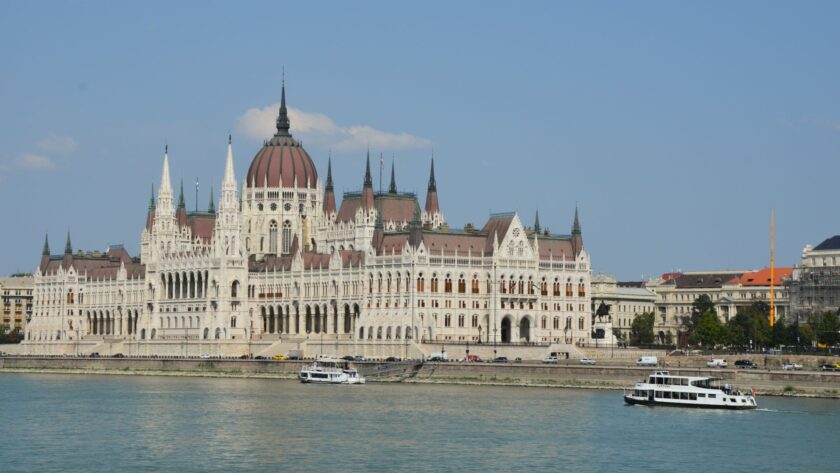
Budapest is one of those cities that gives you far more than you paid for. Thermal baths inside a neo-baroque palace, the Danube lit up under the Chain Bridge, ruin bars built into crumbling apartment blocks, and a cuisine that smells of paprika from three streets away. And then comes the question every vegan asks before booking. What am I actually going to eat in a country whose national dish is beef, fried in lard and finished with sour cream?
The good news is that Budapest is far better prepared for you than its goulash reputation suggests. The bad news is that a large share of the vegan restaurants recommended by the articles ranking at the top of Google have not existed for years. While we were checking every single address for this guide, we found something that genuinely stopped us. Eight of the fifteen most commonly recommended vegan restaurants in Budapest are closed. Several of them still appear in guides proudly stamped “updated 2026”.
So is Budapest vegan friendly, really? Where can you eat without wasting a meal on a sad side salad? Which thermal bath should you choose now that Gellért has shut for renovation? And can you eat the Hungarian classics, the goulash, the lángos, the chimney cake, without any animal products at all? We checked everything, and it is all below. This guide works whether you are vegan yourself or travelling with someone who is.

Is Budapest vegan friendly? The short answer
Yes, and there is a lovely paradox in it. A country whose national dish starts with onions sizzling in lard has around fifteen fully vegan places in its capital. A vegan patisserie, vegan street food and a vegan pub with proper beer. Hungary is also the fastest-growing country in Europe for vegan interest, climbing eighteen places since 2016. That is a bigger jump than anywhere else in the dataset.
Let’s be honest though, because that is what this site is for. Budapest is not Prague. Prague has more vegan restaurants and a denser network, and Budapest is still catching up. The practical difference is that Budapest’s vegan places cluster into a handful of districts, and between them are long stretches where the only thing for you is chips. Know where to go and you will eat brilliantly and cheaply. Don’t, and you will walk past a lot of sausage.
One more thing you need to know before you trust any older article. The scene has been shaken hard over the past two years. Kozmosz, an eleven-year-old institution that still sits at the top of half the lists out there, closed at the end of August 2025. Édeni Vegan closed in 2024. Las Vegan’s, a chain described not long ago as the fastest-growing vegan brand in Hungary, disappeared entirely in early 2025. Treat every list you read, including the ones dated this year, with suspicion.
Budapest on our vegan map
20 places, 14 fully vegan. Tap a pin to see the details.
Loading the map…
- 100% vegan
- Vegetarian
- Vegan options
- Sanctuaries & charities
See every place from this article on our vegan map.
Hungarian food and vegans: the problem is the fat, not the meat
This is the most useful thing in this article and almost nobody tells you. Hungarian cooking has two invisible traps, not one. You can see the meat coming. What you cannot see is zsír (lard) used as the default frying base, and tejföl (sour cream) stirred in or spooned over at the end. Both are so ordinary in a Hungarian kitchen that nobody bothers writing them on the menu. A dish can be made entirely of vegetables and still be neither vegan nor vegetarian.
Which brings us to the three dishes every travel blog waves through as “safe for vegans”. None of them are.
| Dish | Vegan? | What to do about it |
|---|---|---|
| Lecsó | Often, but never assume | The base of tomatoes, peppers and onion is plant-based, but it is commonly fried in lard or bacon fat, often has sausage in it, and is frequently served with egg. Always ask. |
| Főzelék and tökfőzelék | Usually not | A thick vegetable stew, but it is thickened with a lard roux and sour cream, and tökfőzelék is cooked in milk. Only reliable in a vegan restaurant. |
| Rétes (strudel) | Conditional | The pastry sheets are often vegan, but fillings are frequently curd cheese and the layers are brushed with butter. Apple or poppy seed is your best bet, and ask about the brushing. |
| Nokedli (dumplings) | No | Egg noodles, full stop. They are the default side for stews. Ask for rice or bread instead. |
| Gulyás | No | In Hungary it is a soup, made with beef and onions fried in lard. Look for the vegan version, babgulyás (bean goulash), in vegan restaurants only. |
| Kürtőskalács (chimney cake) | No, unless stated | The traditional dough contains egg, milk and butter. Vegan versions exist but you have to ask for one specifically. |
| Savanyúság | Yes | Pickled and fermented vegetables, a whole basement of them at the Great Market Hall. Accidentally vegan and very good. |
Lángos deserves its own paragraph, because it is the dish most people come for. The dough itself is usually vegan, made from flour, water, yeast and sometimes potato. But some recipes add milk or sour cream, so “usually” is not “always”. These days it is mostly fried in sunflower oil, though the traditional method is lard and plenty of places still use it. And the standard topping is sour cream and grated cheese, which is dairy twice over. Your safest order at an ordinary stall is fokhagymás lángos, with garlic and nothing else. If you would rather make the real thing at home, here is our vegan lángos recipe.
Vegan restaurants in Budapest that are actually open
Every place below was checked against current reviews, the restaurants’ own channels and Hungarian sources, most recently in July 2026. Restaurants close and prices rise, so before you set off, check the venue is still trading on its own website or social media. Prices are approximate and refer to a main course. For quick conversion, 1,000 Ft is roughly €2.50.
Napfényes: Hungarian classics, minus the animals
A fully vegan restaurant and patisserie at Curia utca 2, on the corner of Ferenciek tere in District V, a short walk from the Danube. This is where you take a non-vegan and watch them enjoy themselves, because the cooking is Hungarian, just plant-based. Order the babgulyás (bean goulash), the seitan Brassói, or the Napfényes platter at 5,950 Ft. Above all, save room for somlói galuska at 2,400 Ft, the most famous Hungarian dessert and one you will never get to try as a vegan in an ordinary café. Mains run 3,600 to 5,950 Ft (roughly €9 to €15). Open daily 11:30 to 21:00.
Vegan Garden: the most Hungarian classics under one roof
Király utca 8 to 10, District VI. Contrary to what older articles claim, this is not a street food yard. It has been a sit-down restaurant since 2021. It is also the single best address for eating your way through Hungarian cuisine in one go. Goulash, mushroom paprikás, Hortobágyi pancakes, somlói galuska and even a vegan chimney cake. Mains 3,890 to 5,390 Ft. Two things to know, a 13.5% service charge is added automatically, and your table is yours for two hours.
Szabad Bisztró: the vegan pub
A fully vegan gastropub with two branches, Király utca 101 (District VII) and Víg utca 30 (District VIII). Bean goulash, jackfruit “notfish and chips”, Balkan non-meatballs, dirty fries. Mains around 3,000 to 4,500 Ft. This is your evening spot when you want beer and something fried and you have run out of decision-making energy.
Vegacity: the best value in the city
A self-service vegan buffet at Múzeum körút 23 to 25, District V. You load a plate and pay somewhere between 2,000 and 4,000 Ft, which for central Budapest is almost suspiciously cheap. Hungaroburger, cabbage kofta, subji. Open weekdays 11:00 to 17:00 and closed at weekends, which is precisely when most visitors turn up. Plan around it.
Vegan Love, Tökmag and Vegazzi
Vegan Love (Bartók Béla út 9, District XI) does vegan burgers, hot dogs and gyros, with burgers at 1,490 to 2,600 Ft, around €4 to €6.50. Open daily. Their downtown branch has closed, so go to Bartók Béla út. Tökmag Vegan Street Food (Hollán Ernő utca 5, District XIII) does pea and mushroom burgers with sweet potato fries. For pizza, Vegazzi (Jókai utca 7) has a long list of plant-based pizzas, but it now serves dairy-cheese pizzas too, so order from the vegan side of the menu. It opens Wednesday to Sunday and wants a reservation.
Where to go with a non-vegan
We get asked this constantly, and Budapest has an unusually good answer. Mazel Tov (Akácfa utca 47) is a ruin bar in the Jewish Quarter where more than half the menu is meat-free and every dish is clearly labelled, so a vegan and a non-vegan can sit at the same table and both order happily. Hummus Bar, a chain dotted across the city, marks every item as vegan or vegetarian on the menu. The Hummus Masabacha or the falafel plate come in around 3,000 Ft. Skip the sabich and the shakshuka, both have egg.
Where to find vegan lángos and vegan chimney cake
Two foods people travel to Hungary for, and two foods that are normally off limits. Here are the actual addresses.

Vegan lángos. The surest bet is Láng-Fánk at Budapest Garden in District III, which makes an explicitly vegan (and gluten-free) lángos. The catch is that it is a seasonal outdoor stall, running roughly from late March to late October, closed on Mondays, and closed altogether when it rains. Your other option is Retró Lángos Büfé (Bajcsy-Zsilinszky út 25), which serves a lángos with plant-based sour cream and vegan cheese for around 3,490 Ft. The good news is that they now confirm the dough itself is vegan too (no milk or egg) and that it is fried in sunflower oil.
Vegan kürtőskalács. The safest is the one at Vegan Garden, because the whole restaurant is vegan and there is nothing to get wrong. Street stalls are a lottery, since the classic dough contains egg, milk and butter. Some guides also mention a vegan version at Gelateria Pichler (Kossuth Lajos utca 4), and Pichler’s own website now says it offers a vegan chimney cake made with plant-based ingredients. Ask separately about fillings and gelato. Its Prague cousin has its own article, vegan trdelník in Prague.
One honest note to finish. The Great Market Hall appears on every list as a vegan paradise, and we could not verify a single vegan stall in it. Go for the paprika, the spices, the pickles and the souvenirs. Eat lunch somewhere else.
Thermal baths: Gellért is closed, here’s what to do instead
This is the bit that will save your trip, because hardly anyone has updated it. The Gellért Baths closed on 1 October 2025 for a major restoration and are not expected to reopen until around 2028. If they were on your list, cross them off. Király Bath is also closed. That leaves three real choices, and each is good at something different.
| Bath | From (weekday, locker) | Who it’s for |
|---|---|---|
| Széchenyi | 13,200 Ft (~€33) | The icon. A vast yellow neo-baroque palace, eighteen pools, and the old men playing chess in the steam. First time in Budapest, come here. |
| Rudas | 12,000 Ft (~€30) | The best views. A 16th-century Ottoman bath plus a rooftop pool looking straight up the Danube at Parliament. |
| Lukács | 7,000 Ft (~€18) | The quietest and cheapest. This is where Hungarians go, not tourists. |
| Palatinus | 3,600 Ft (~€9) | A big outdoor lido on Margaret Island. A lifesaver in the July heat. |
A few practical things. Every ticket includes either a locker in a communal changing room or a cabin, a private cubicle, which costs about 1,000 Ft more and is worth splitting between two people. Both open with a wristband you wear all day. Bring a towel, flip-flops and a swimming costume, because renting is expensive and involves queueing. A swimming cap is required in the lap pools, though not in the thermal pools. And skip the bath buffets, the food is greasy, meaty and bleak. Eat before or after.
What to see, getting around, and money
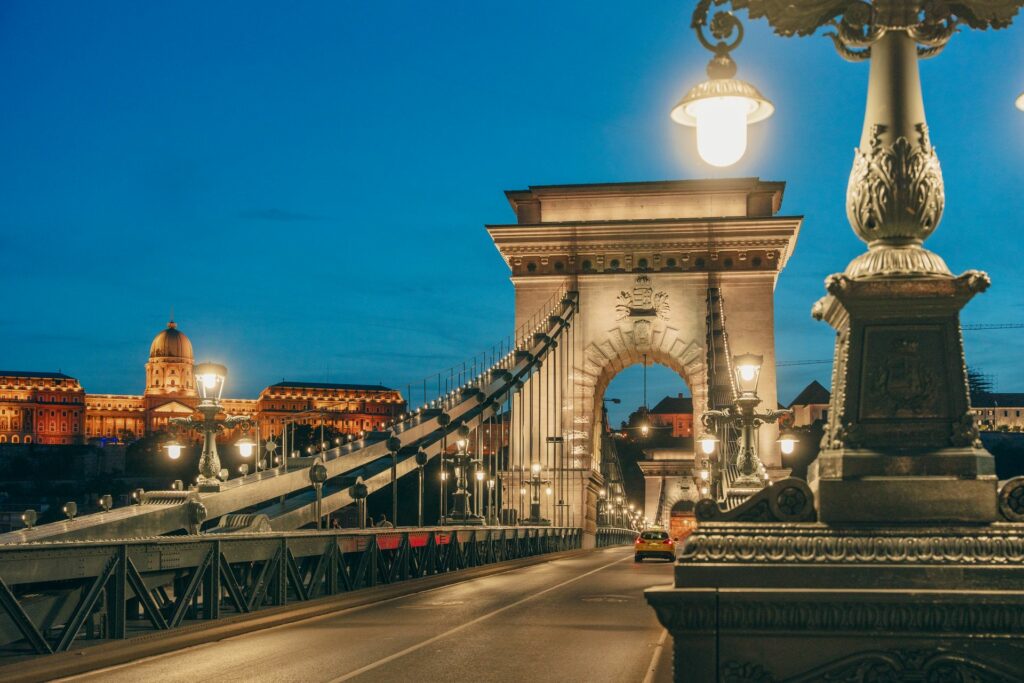
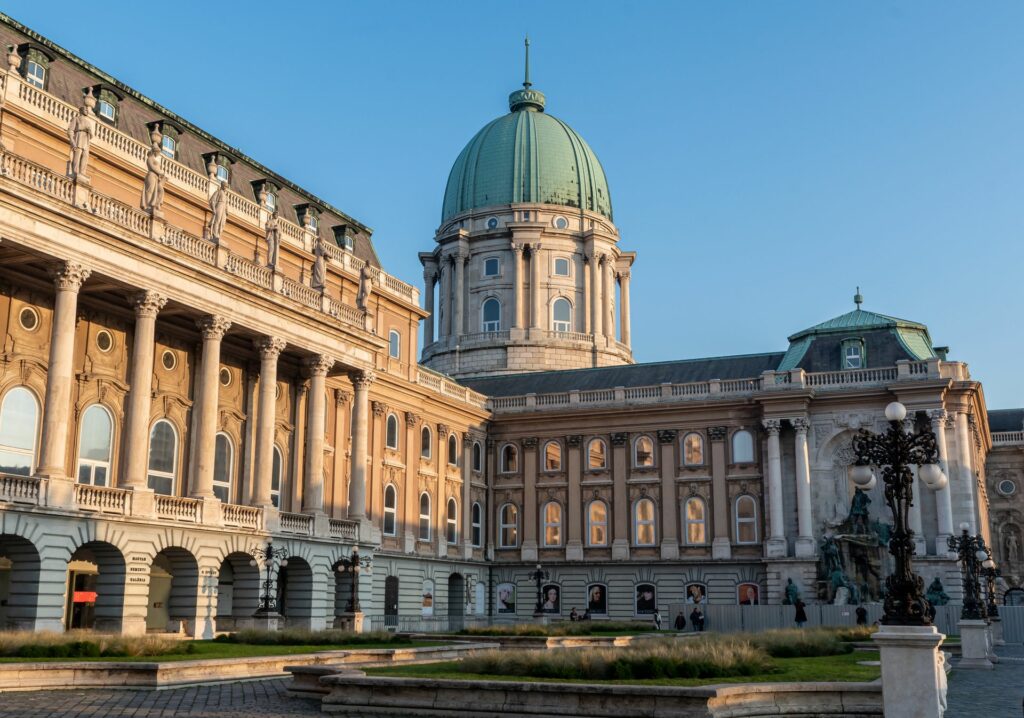
Budapest is walkable but bigger than it looks. Pest is flat and holds most of what you will want to see and eat. Buda is hilly, historic and has the castle. The Danube runs between them, crossed by the Chain Bridge, which looks exactly as good at night as you are hoping.
The one thing you must book ahead is the Hungarian Parliament, which sells out two to four weeks in advance in high season. Book only through the official seller, Jegymester. Note the two-tier pricing, EEA citizens pay 7,000 Ft and everyone else pays 14,000 Ft, and you will need ID at the door to get the lower rate. Everything else is easier. The lower terraces of the Fisherman’s Bastion are free (only the upper towers are ticketed, and outside their opening hours even those are free), the Chain Bridge is free, Margaret Island is free, and Szimpla Kert costs nothing to walk into.

Do not miss the M1 metro line. Opened in 1896, it is the oldest electric underground on the European continent, it turns 130 this year, it is UNESCO-listed, and it runs just below Andrássy Avenue with tiny wood-trimmed stations. It also happens to take you to Heroes’ Square and straight to Széchenyi. Ride it as a sight, not as transport.
From the airport, the 100E bus runs 24 hours, takes about 40 minutes and costs 2,500 Ft, but it needs its own dedicated ticket and a standard single will not work. Hungary uses the forint, not the euro. Cards work almost everywhere, including taxis and ticket machines. Some places accept euros but at a rate that hurts, so pay in forints. Avoid the airport exchange booths and the brightly coloured kiosks around Váci utca, where spreads can run twenty percent worse than the bank rate, never change money with anyone on the street, skip Euronet ATMs, and always decline the machine’s offer to convert to your home currency.
Where to stay
The short answer is District VI (Terézváros). It is central, wrapped around Andrássy Avenue, full of good restaurants and bars, sits on the M1, and is noticeably cheaper and calmer than District V. District V (Belváros) is closest to the sights and the most expensive. District IX is quieter and cheaper, near the Great Market Hall, and good for families.
There is no vegan hotel in Budapest, at least none we could verify. Several hotels reportedly do a vegan breakfast on request, but we would not stake a morning on it. Our honest advice is to stay anywhere central and eat breakfast out, because vegan breakfast in Budapest is cheaper and better than anything a hotel will bring you. If you are still in the planning stage, here is our guide to how to travel vegan and what to pack.
Language note: Hungarian phrases for vegans
Hungarian looks terrifying and is actually kind to you, because it is read exactly as written and the stress always falls on the first syllable. The rules worth knowing: s sounds like “sh”, sz like “s”, zs like the “s” in pleasure, cs like “ch”, and gy roughly like the “d” in “duke”.
| Hungarian | English | Say it like |
|---|---|---|
| Vegán vagyok. | I am vegan. | VEG-aan VOD-yok |
| Nem eszem húst. | I don’t eat meat. | nem ESS-em hoosht |
| Nem eszek tojást és sajtot. | I don’t eat eggs or cheese. | nem ESS-ek TOY-aasht aysh SHOY-tot |
| Tejföl és sajt nélkül, kérem. | Without sour cream and cheese, please. | TAY-feul aysh shoyt NAYL-kool, KAY-rem |
| Van húsmentes ételetek? | Do you have any meat-free dishes? | von HOOSH-men-tesh AY-teh-leh-tek |
| Van ebben tej? | Is there milk in this? | von EB-ben tay |
And now the phrase no other guide will give you, the one that will save more meals than all of the above combined. Olajban vagy zsírban? (“OH-loy-bon vodge ZHEER-bon”), meaning “in oil or in lard?”. If you memorise one Hungarian word for this trip, make it zsír. One warning to close on. “Vegetáriánus” is the same trap in Hungary as it is everywhere else. You will be handed sour cream and cheese and nobody will think twice. Lead with “vegán vagyok” and follow it immediately with what you don’t eat.
In central Budapest, English is widely spoken and menus are usually translated, so relax. You need these phrases precisely where there is no menu at all, at the lángos stalls and in the markets. Which is exactly where you need to ask about the lard.
When to go
The best months are May, June and September. Warm without being punishing, and far less crowded. July and August are the hottest and busiest, regularly above 30°C and pushing past 35°C in a heatwave. If you go in summer, do the baths early or late, hide in the shade at midday, and head to Margaret Island or the Palatinus lido.
The Christmas markets deserve a mention of their own, because Budapest’s are among the best in Europe. The biggest is at Vörösmarty tér and the most atmospheric is at St Stephen’s Basilica, where a light show is projected onto the facade. The season usually opens in mid-November and runs into early January, and in 2026 both markets open on 13 November. For vegans it is also a good hunting ground for that milk- and egg-free chimney cake. For what to eat at other markets, see our roundup of the best Christmas markets in Europe for vegans.
Budapest is better for vegans than you expect and trickier than you expect, at the same time. You will eat well, cheaply, and you will get to try Hungarian classics you cannot get anywhere else, from bean goulash to somlói galuska. You will also, at some point, be handed a plate of entirely plant-based food that was fried in lard by someone who sees no contradiction in that. Know what to ask, keep a few addresses in your phone, and ignore any list that hasn’t been updated in three years.
Take the train, buy the travelcard, skip the Budapest Card, do Széchenyi early in the morning, and finish the day with a bean goulash at Napfényes. And if anyone tells you a vegan can’t eat in Hungary, send them this. And if Budapest is one stop on a longer rail trip, our round-up of vegan cities in Central Europe compares it with fifteen other city breaks. Have you been to Budapest? Where did you eat, and what have we missed? Tell us in the comments and we’ll keep this updated.
FAQ
Is Budapest vegan friendly?
Yes. Budapest has around fifteen fully vegan venues, including a restaurant serving veganised Hungarian classics, vegan street food and a vegan pub. Hungary is also the fastest-growing country in Europe for vegan interest. Prague still has a denser scene, but Budapest is catching up quickly.
Is Hungarian lángos vegan?
Usually not. The dough is often vegan, but the classic topping is sour cream and cheese, and it may be fried in either oil or lard depending on the stall. Ask “olajban vagy zsírban?”. For a guaranteed vegan lángos, go to Láng-Fánk at Budapest Garden, or Retró Lángos Büfé, where the dough and the plant-based topping are both vegan.
Is Hungarian goulash ever vegan?
Not in a conventional restaurant. Traditional gulyás is a beef soup with onions fried in lard. However, vegan restaurants including Napfényes, Vegan Garden and Szabad Bisztró serve babgulyás, a bean goulash, which is the genuine Hungarian version you can actually eat.
Are the Gellért Baths open?
No. The Gellért Baths closed on 1 October 2025 for a major renovation and are expected to stay closed until around 2028. Király Bath is also closed. Go to Széchenyi (the iconic one), Rudas (the best views) or Lukács (the quietest and cheapest) instead.
Is the Budapest Card worth it?
For most people, no. The 72-hour Budapest Card costs 29,990 Ft while a 72-hour transport travelcard costs 5,750 Ft. You would need to visit several paid museums, take a Danube cruise and ride the funicular just to break even. For a weekend built around baths, walking and food, the plain travelcard wins easily.
Where can I eat in Budapest with non-vegans?
The easiest pick is Mazel Tov (Akácfa utca 47). It’s a ruin bar in the Jewish Quarter where more than half the menu is meat-free and every dish is labelled, so you can both order happily. For something quicker, the Hummus Bar chain marks every item as vegan or vegetarian. Just skip the sabich and the shakshuka, which both contain egg.
Where can I buy vegan groceries in Budapest?
The supermarkets will feel familiar (Lidl, Tesco, Spar, Aldi, Penny, CBA and the dm drugstore), and plant milks, tofu and vegan yoghurts are easy to find. The organic shop right next to Vegacity is worth a detour for vegan Hungarian sausages, salami and cheese. Don’t leave without a vegan Túró Rudi, the chocolate-covered curd bar Hungarians grow up on, now sold in a tofu version in several supermarkets.
Featured photo: Samuel Hájnik, Pexels.
Newsletter
Get our free e-books
Join the newsletter and download Our Vegan Christmas Kitchen straight away, 10 recipes for Czech cookies, gingerbread and vánočka. Then once a month, new places from the vegan map and new articles. Unsubscribe with one click.