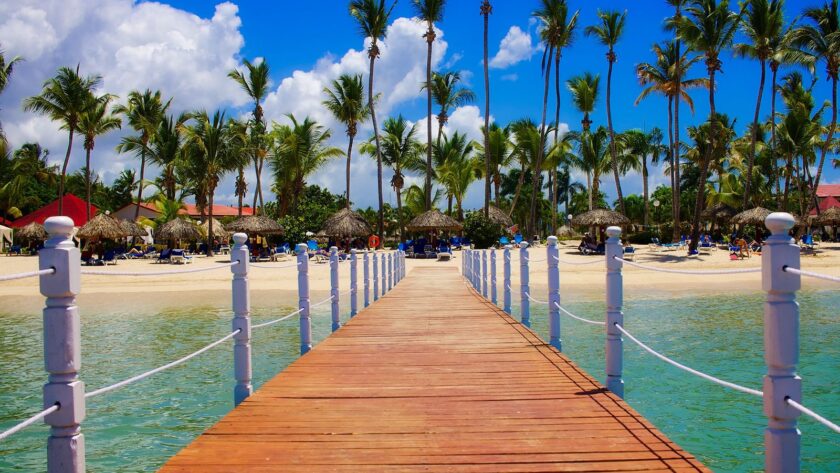
Vegan Punta Cana is a slightly different trip from vegan Lisbon or vegan Bangkok. You fly into one of the Caribbean’s busiest resort coasts, in the Dominican Republic, and check into an all-inclusive.
For most of your holiday, the hotel kitchen is the only kitchen you’ll see. The beaches are long and white, the sea is warm all year, and the local food is built on rice, beans and plantains. The catch for anyone avoiding animal products is invisible, a chicken stock cube called caldito that goes into almost every pot of rice and beans.
So can you actually eat well as a vegan in Punta Cana? Which resorts say anything useful about plant-based food, and what should you email them before you pay? Which Dominican dishes are vegan or easy to adapt, when is the best time to visit, and how do you dodge both the hurricane season and the seaweed?
We haven’t been to the Dominican Republic yet, so this isn’t a trip diary. It’s a research guide built on sources we checked at the end of October 2026. Those include resort websites, tour operators, the official Dominican tourism site and UK government travel advice.
For every place we name, we say whether it’s fully vegan, vegetarian, or simply has vegan options. And we’ll be upfront about one thing. We could not confirm a single fully vegan restaurant in Punta Cana that is definitely open right now. That’s why this guide is mostly about choosing the right resort and eating well inside it.
Is Punta Cana vegan friendly?
Punta Cana is vegan friendly if you choose your resort carefully, because almost your entire holiday happens inside it. Large all-inclusive hotels here run buffets with plenty of fruit, salads, rice, beans and fried plantains, plus several à la carte restaurants. When you tell the kitchen early and clearly what you don’t eat, they will usually cook for you.
Outside the resorts it’s thinner. According to the official Dominican Republic tourism website, the country’s biggest vegan scene is in the capital, Santo Domingo, not in the beach resorts on the east coast.
Why there’s no vegan café round the corner in Punta Cana
Punta Cana isn’t a town with a centre and streets of cafés. It’s a strip of resorts along the beaches, with shopping malls in between and a few streets of restaurants in Bávaro. Plenty of guests barely leave their hotel because everything is already paid for, which makes life hard for small independent places, vegan ones included.
One name keeps coming up on English-language vegan lists for Punta Cana, AmaLuna Vegan Lab in Bávaro. It made its own tofu and seitan, cooked Italian-style, and was once praised by the official tourism site too.
When we checked in October 2026, the trip planner Wanderlog listed it as temporarily closed, and the newest reviews we could find were several years old. Pranama, an Indian restaurant in Coral Village that also appears on those lists, is marked temporarily closed as well. We don’t recommend either until they show current opening hours on their own website or profile.
A handful of other restaurants in Bávaro have vegan dishes according to reviews, but we couldn’t find their own website or menu. Without that, they don’t go into our articles. When we make it to Punta Cana ourselves, we’ll add them.
What that means for your trip
In practice it means one thing. What you eat in the Dominican Republic is decided the moment you choose your hotel. Look for a resort with several à la carte restaurants, ideally including Indian or Asian, and a kitchen that answers your vegan email with specifics. That beats a resort with one more star and one buffet.
Our general method for eating plant-based on any all-inclusive holiday lives in a separate post, how to eat well as a vegan at an all-inclusive resort. Here we stick to what’s specific to the Dominican Republic.
Dominican Republic on our vegan map
1 place. Tap a pin to see the details.
Loading the map…
- Vegan options
See every place from this article on our vegan map.
Where to stay in the Dominican Republic: Punta Cana, Bávaro or La Romana
For a first all-inclusive in the Dominican Republic, most people choose between two areas. One is Punta Cana and Bávaro on the east coast, the other La Romana and Bayahibe on the south coast. The choice isn’t only about the beach. The sea, the day trips and how far you can walk outside your hotel all change.
Punta Cana sits on the easternmost tip of the island of Hispaniola. The beaches north of the cape at Cabo Engaño (Uvero Alto, Macao, Arena Gorda, Bávaro, El Cortecito, Los Corales and Cabeza de Toro) face the Atlantic. The beaches south of the cape, including Punta Cana itself, Cap Cana and Juanillo, curve towards the Caribbean Sea. Bayahibe and La Romana are on the Caribbean south coast.
| Area | Sea | Best for | Outside the resort |
|---|---|---|---|
| Bávaro, El Cortecito, Los Corales | Atlantic, sheltered by reef | first-timers, families, people who like to walk | the most shops and restaurants nearby |
| Uvero Alto, Macao | Atlantic, more waves | peace and quiet, big resorts | very little, taxis only |
| Cabeza de Toro | Atlantic | adults and couples, quieter beaches | a few smaller places |
| Cap Cana, Juanillo | where Atlantic turns Caribbean | luxury, golf, bigger budgets | gated area, marina restaurants |
| Bayahibe, La Romana | Caribbean Sea | calm water, snorkelling, Saona trips | small village, more local food |
Bávaro, if you want to leave the hotel
Bávaro is the most practical area for vegans. From many resorts you can walk to supermarkets and malls to stock up on fruit, nuts, plant milk or hummus for day trips. The official tourism site notes that big supermarkets in the larger towns carry plant milks, meat alternatives and vegan snacks. Bávaro also has the most restaurants where you can order meat-free and ask for changes.
Uvero Alto and Cap Cana, if you never plan to leave
Uvero Alto in the north and Cap Cana in the south are home to large, often pricier resorts where nothing is within walking distance. For a vegan that only works if the hotel confirms in writing, before you book, what it will cook for you. There’s no popping round the corner for dinner, only a taxi.
La Romana and Bayahibe, if you want calmer water
La Romana airport puts you close to Bayahibe. The sea here is Caribbean, calmer and without the Atlantic swell, and Bayahibe is where boats leave for Saona Island. There are fewer resorts and a smaller village, which means fewer restaurants too, so you lean on your hotel even more.
How to choose a vegan-friendly all inclusive in Punta Cana
The best all-inclusive for a vegan in Punta Cana is the one that answers a vegan question with specifics and names what it will cook for you. Stars, pool size and the number of bars tell you nothing about that. We suggest choosing in two steps, first by what the resort says on its own website, then by its reply to your email.
What Punta Cana resorts say about plant-based food
On official resort websites around Punta Cana the word “vegan” is surprisingly rare. You’ll more often find “vegetarian” or “plant-based”. Here are a few concrete examples we read on the hotels’ own sites in October 2026.
- Catalonia Royal Bávaro (adults only, Cabeza de Toro, about 20 km from the airport) has a restaurant called Barcelona Origens serving Catalan vegetarian dishes. It’s vegetarian, not vegan, so ask about cheese and eggs. The resort says its BLoved restaurant also has vegetarian options.
- Excellence Carmen Punta Cana has an Indian restaurant, Basmati, which the resort describes as having extensive plant-based offerings. Indian kitchens are usually the safest bet for vegans in resorts, just ask about ghee and cream.
- Excellence Punta Cana promises vegetarian-friendly menus across its restaurants and chefs who are happy to help with special dietary needs.
You’ll eat elsewhere too, these hotels just put plant-based food in writing themselves. For any other resort, check by email.
What to email your resort before you pay
Write in English or Spanish, keep it short, and send it before you pay for the holiday. Ask specific questions rather than “do you have vegan food?”. Almost every hotel will say yes to that.
- Can you label the vegan dishes at the buffet, or prepare some separately for me?
- Do you cook rice and beans with chicken stock or a stock cube (caldito)? Can you make mine without?
- Which à la carte restaurants have vegan dishes, and do they need booking?
- Do you have plant milk for coffee and breakfast?
- Can I meet the head chef at the start of my stay?
The reply tells you a lot. Picture two replies.
One hotel says it can cook rice without stock, names a restaurant with vegan dishes and invites you to meet the head chef when you arrive. The other sends a generic paragraph about “a wide choice for every guest”. Book the first one.
Save the hotel’s reply on your phone or print it. If nobody at reception or the buffet knows about your arrangement, showing a specific email from the hotel works far better than explaining from scratch.
Last-minute deals: what you can still do
You can manage a last-minute Dominican Republic all-inclusive as a vegan too, you just won’t have time to choose by the hotel’s reply. Send the same email straight after booking so you at least have it in writing before you land. And pick a resort with several restaurants rather than the cheapest one on the list with a single buffet.
How to eat at the buffet and the à la carte restaurants
You’ll eat at the buffet every day, but the best vegan meals usually come from the à la carte restaurants or straight from the chef on request. The buffet is the foundation. The restaurants are what you’ll remember.
At the buffet: what to ask and what’s nearly always safe
Breakfast at a Dominican resort usually means a lot of fresh fruit, such as pineapple, papaya, mango, bananas and chinola, the local name for passion fruit. Add a salad bar, bread, oats and often a station with boiled and fried plantains.
Be more careful with hot dishes. Dominican rice and beans look like the perfect vegan lunch, but they’re very often cooked with caldito, a chicken stock cube. The official Dominican tourism site points out that many locals wouldn’t even think of it as an animal product, because it’s such a kitchen staple. So ask directly, ideally the cook at the buffet, and say “sin caldito, sin caldo de pollo”.
Watch the word “carne” as well. On the island it mostly means red meat. Say only “sin carne” and you might get chicken or fish.
At the à la carte restaurants: where your odds are best
Resorts in Punta Cana typically have several à la carte restaurants, usually Italian, Asian, Mexican, a steakhouse and seafood. For vegans the first three are the best bets, plus Indian if your hotel has one.
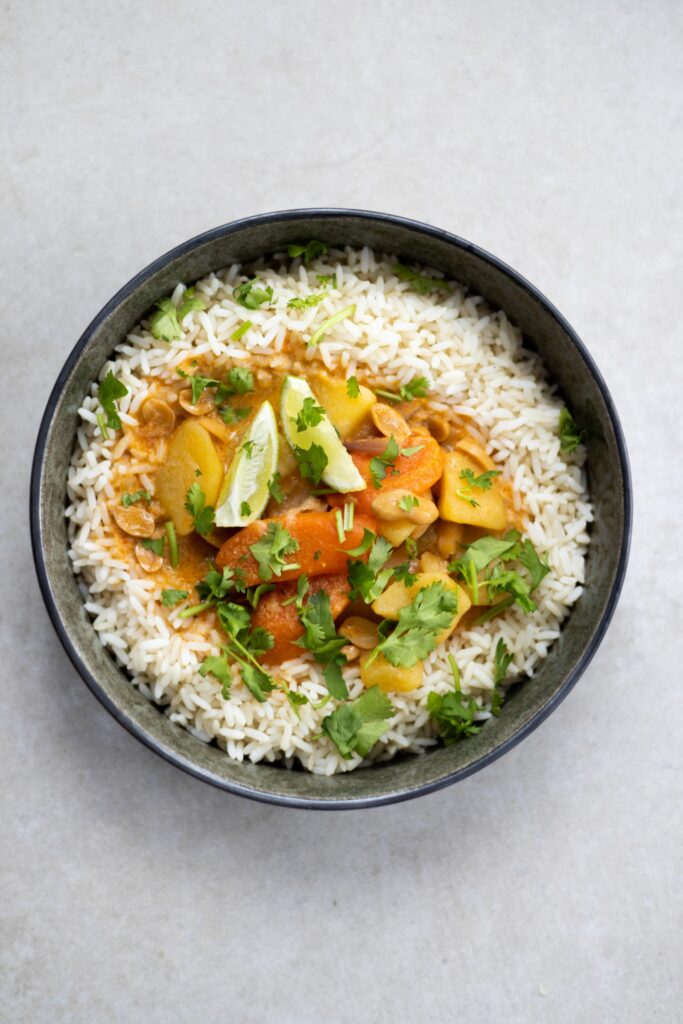
- Indian: dal, chana masala, aloo gobi or vegetable curry. Ask whether it’s cooked in oil or ghee, and whether there’s cream in the sauce.
- Asian: fried rice and noodles with vegetables or tofu, without egg or fish sauce.
- Italian: pasta with tomato sauce or aglio e olio, and pizza without cheese. Ask about egg in fresh pasta.
- Mexican: vegetable fajitas, beans, guacamole and tortillas. With the beans, ask about lard and stock again.
Many resorts ask you to book à la carte restaurants in advance, sometimes on your first day. Add a note for the kitchen that you eat vegan when you book. At your first dinner, ask for the chef or restaurant manager and agree a plan for the whole stay.
What a vegan day at a Punta Cana resort can look like
Breakfast is fruit, oats with plant milk if the hotel has it, avocado toast and fried sweet plantains. Lunch is the salad bar, tostones, rice and beans you’ve confirmed are stock-free, and grilled vegetables. In the afternoon, a coconut or pineapple by the beach. For dinner, a booked à la carte restaurant, maybe an Indian curry with rice, or tomato pasta at the Italian.
It won’t be a gourmet experience every day, but over two weeks you’ll eat well and plenty. It turns into a great food holiday once the chef starts cooking off-menu dishes for you after that first conversation. In good resorts that happens more often than you’d expect, and it helps to ask the chef what they would recommend.
In the Dominican Republic, rice and beans look like a ready-made vegan lunch. Until you’ve asked about the chicken stock cube, you don’t know.
Dominican food for vegans: what’s safe and what to ask
Dominican food is built on rice, beans, plantains, cassava and root vegetables, so a lot of it is plant-based at heart. The problem is what it’s cooked with, not what it’s made of. Meat, chicken stock, lard or butter go in during cooking.
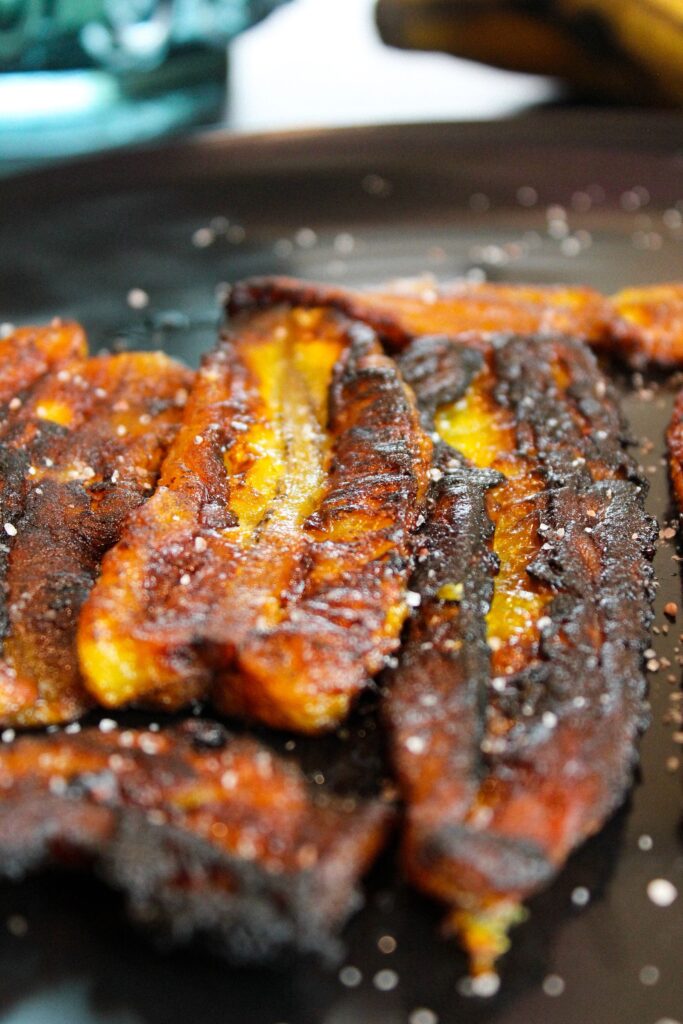
The national lunch is called la bandera, “the flag”. It’s white rice, stewed beans and stewed meat, usually chicken, pork or beef, often with a salad. Skip the meat, check the beans for stock, and it becomes a vegan plate.
| Dish | What it is | For vegans |
|---|---|---|
| Mangú | mashed boiled green plantains, a classic breakfast | the base, yes; ask about butter and the sides (salami, cheese, egg) |
| Tostones | fried slices of green plantain | usually yes, ask about the oil |
| Plátanos maduros | fried ripe sweet plantains | usually yes |
| Moro | rice cooked with beans or pigeon peas | ask about stock and bacon |
| Habichuelas guisadas | stewed beans served with rice | ask about caldito |
| Casabe | cassava flatbread from the Indigenous Taíno tradition | mostly yes, check the label |
| Sancocho | thick stew of root vegetables, plantains and meat | traditionally no; vegan versions exist in the capital |
| Habichuelas con dulce | sweet cream of red beans with coconut milk and spices, usually also evaporated or condensed milk | usually no, it normally contains dairy milk (often butter) and is topped with milk biscuits; ask if a coconut-milk-only version is available |
| Majarete | corn pudding | no, contains milk |
For non-vegans who want to try something local
Tostones are the Dominican answer to chips. Crunchy, salty, served with garlic sauce or just a squeeze of lime.
Order a plate at a beach lunch and everyone at the table will dig in. Chinola (passion fruit) turns up as juice, in cocktails and in sorbets. If you see a vendor opening fresh coconuts with a machete, say yes.
Travelling with someone who eats meat? Order tostones and fresh chinola juice for lunch together, and have your mangú without butter or salami at breakfast. These are everyday Dominican dishes, not a “diet menu”, and everyone likes them.
Best time to visit Punta Cana and the Dominican Republic
The best time to visit Punta Cana is December to April. It’s the dry season, temperatures sit around 27 to 29 °C, and February and March are among the driest months, according to Czech travel guides cestujlevne and levnocestovani. It’s also high season, so prices peak, especially around Christmas and New Year.
The month to avoid, according to the same guides, is October, the wettest of the year. The UK government’s travel advice gives the Caribbean hurricane season as June to November.
| Months | Weather | Prices and crowds | Keep in mind |
|---|---|---|---|
| December to April | dry, roughly 27 to 29 °C | high season, most expensive | resorts are full, book à la carte restaurants on day one |
| May to June | more showers and storms, around 30 °C | cheaper | more sargassum seaweed on beaches |
| July to September | hot and humid, 30 °C plus, peak hurricane months | cheapest | sargassum, storm risk |
| October to November | wettest in October, improving from mid-November | cheaper packages at the start of winter | direct winter charters from Prague start late October |
Hurricane season and summer weather
The Dominican Republic sits in the zone where hurricanes form in summer and autumn. At that time of year, a tropical storm could bring several days of rain during your trip. UK government advice recommends following local news and warns that the sea gets dangerous during hurricane season. If you travel then, get travel insurance that covers weather-related cancellations and delays.
Sargassum: the brown seaweed on the beaches
Sargassum is a brown seaweed that has been washing up on Caribbean beaches in large amounts in recent years. Local news and travel guides describe it mainly as a spring and summer problem.
In winter, Punta Cana’s beaches tend to be clearer, and resorts rake them in the mornings. Dominican media reported 2026 as a heavy year. Boat trips and snorkelling offshore are rarely affected, it’s mostly a shoreline issue.
Getting to Punta Cana
Punta Cana International Airport is the busiest airport in the Dominican Republic, and most all-inclusive holidaymakers fly straight into it. If you’re travelling from Central Europe, Czech tour operators run direct winter charters from Prague between 23 October and 26 March, according to cestujlevne.com.
Čedok flies to Punta Cana with Neos, while Fischer and Exim Tours fly to La Romana with TUI. Expect roughly 10 to 12 hours in the air. From elsewhere, check direct routes with your airline or tour operator, or plan on one change at a major hub.
On a flight that long, pre-ordering a vegan meal is worth it. How that works on charter and scheduled airlines, and what to pack in case the meal doesn’t turn up, is in our guide to the vegan airline meal.
Entry, money and water
The Dominican Republic requires an online entry and exit form, the e-ticket. According to UK government advice, you can fill it in up to 7 days before you arrive. You then get a QR code to show at check-in or at the airport. Check the current rules for your passport with your own government before you go.
The currency is the Dominican peso (DOP). In the tourist zone, US dollars are widely used too, and tips are usually given in dollars. Outside your hotel, in shops and taxis, small peso notes are handy.
Tap water in the Dominican Republic is not drinkable. Stick to bottled or filtered water from your resort, and be wary of ice outside the hotel.
What to pack from home
A few things are worth putting in your suitcase because your resort may not have them. Protein bars or nuts for travel days and for excursions where the included lunch is built around fish. A bag of oats or granola for breakfast in case there’s no plant milk, it works with juice too. A small bottle of soy sauce or your favourite spice mix for when the buffet vegetables start to taste the same.
And a printed card in Spanish listing what you don’t eat, including caldito. Show it to the cook at the buffet and you don’t need to explain anything.
Something like “Soy vegano. Sin carne, pollo, pescado, leche, huevo ni caldito. Gracias.” does the job.
Things to do in Punta Cana beyond the pool
The most popular trip from Punta Cana is Saona Island. It’s part of Cotubanamá National Park, and boats and catamarans head there from Bayahibe. Tours usually include a beach lunch, which for vegans usually means rice, salad and fruit and not much else, so ask the operator what’s served and bring snacks.
A few more full-day ideas close to the resorts follow here.
- Scape Park, Cap Cana: a nature adventure park with zip lines, cenotes (freshwater sinkhole pools) and lagoons. According to the park’s website, you can repeat the attractions at your own pace with no fixed schedule.
- Macao beach: an Atlantic beach north of Bávaro, good for a full day outside the resort bubble.
- Santo Domingo: the capital, with the Zona Colonial, home of the first cathedral in the Americas, and the country’s widest choice of vegan restaurants. It’s a full-day trip, several hours each way from Punta Cana.
For every excursion, take fruit and bread from the resort and grab nuts or peanut butter from a supermarket. Included lunches on Dominican tours revolve around fish and chicken, and vegans often get only the side dishes.
How safe is Punta Cana?
Punta Cana is a mainstream tourist area, but UK government advice says the crime rate in the Dominican Republic is high overall. It recommends not wearing expensive jewellery or carrying large amounts of cash, not leaving bags on chairs in restaurants, and using authorised airport or hotel taxis. Lifeguards may not be present on every beach, and the sea gets dangerous, especially in hurricane season. In an emergency outside Santo Domingo, call the tourist police, Politur, on +1 809 200 3500.
Useful Spanish phrases for vegans in the Dominican Republic
Spanish is the language of the Dominican Republic. You’ll get by in English at resorts, but in a village, at a market or with the cook at the buffet, a few Spanish phrases go a long way. The official Dominican tourism site recommends naming animal products specifically, because “carne” usually means beef and pork only.
| English | Spanish |
|---|---|
| I’m vegan. | Soy vegano / vegana. |
| No meat, no chicken, no fish, no seafood. | Sin carne, sin pollo, sin pescado, sin mariscos. |
| No milk, no cheese, no egg, no butter. | Sin leche, sin queso, sin huevo, sin mantequilla. |
| Is there chicken stock or a stock cube in it? | ¿Tiene caldo de pollo o caldito? |
| Without the stock cube, please. | Sin caldito, por favor. |
| Is it made with lard? | ¿Está hecho con manteca? |
| Just vegetables, please. | Solo vegetales, por favor. |
More winter sun for vegans
The Dominican Republic is only one of the long-haul winter escapes. Which ones are easiest for vegans, and where you can actually eat outside your hotel, is in our guide to the best winter sun destinations for vegans. For a resort holiday with a shorter flight from Europe, see our guide to Cape Verde all inclusive for vegans.
Vegan Punta Cana comes down to the hotel you pick
The Dominican Republic isn’t a destination you’d fly to for vegan restaurants. In October 2026 we couldn’t confirm a single fully vegan restaurant in Punta Cana that is definitely open. And yet it’s still a brilliant place for a plant-based all-inclusive holiday.
Choose a resort with several à la carte restaurants, ideally Indian or Asian. Send the hotel a specific email before you pay, and don’t be shy about asking for “sin caldito” at the buffet. The sea, the beaches and a plate of tostones at lunch will take care of the rest.
Have you been to Punta Cana? Did you find a resort or restaurant that cooks really good vegan food? Tell us in the comments, and we’ll check it and add it.
Frequently asked questions
Is Punta Cana vegan friendly?
Yes, if you stay at an all-inclusive resort with several à la carte restaurants and agree your meals with the kitchen in advance. Outside the resorts there are very few vegan places in Punta Cana; Santo Domingo has the country’s biggest vegan scene. Always ask about caldito, the chicken stock cube used in most rice and bean dishes.
What is the best time to visit Dominican Republic Punta Cana?
December to April is the best time to visit Punta Cana, during the dry season with temperatures around 27 to 29 °C. February and March are among the driest months. Hurricane season runs from June to November, and October is usually the wettest month.
What sea is Punta Cana on?
Punta Cana sits where the Atlantic Ocean meets the Caribbean Sea. The beaches north of Cabo Engaño, including Bávaro, Macao and Uvero Alto, face the Atlantic, while those to the south, such as Cap Cana and Juanillo, turn towards the Caribbean.
What is the currency in Punta Cana, Dominican Republic?
The currency is the Dominican peso (DOP). US dollars are widely accepted in Punta Cana’s tourist zone, especially for tips. Carry some small peso notes for shops and taxis outside your resort.
How safe is Punta Cana, Dominican Republic?
Punta Cana is a mainstream resort area, but UK government advice says crime in the Dominican Republic is high overall. Don’t flash valuables, use authorised hotel or airport taxis, and don’t drink tap water. In an emergency outside Santo Domingo, call the tourist police, Politur, on +1 809 200 3500.
Newsletter
Get our free e-books
Join the newsletter and download Our Vegan Christmas Kitchen straight away, 10 recipes for Czech cookies, gingerbread and vánočka. Then once a month, new places from the vegan map and new articles. Unsubscribe with one click.