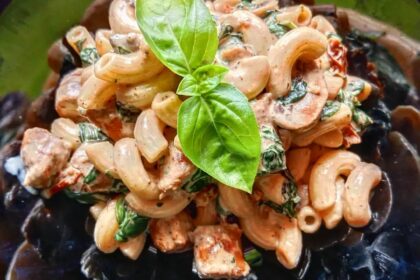
Most vegan curry recipes reach straight for coconut milk. This one does not. This vegan roasted aubergine curry gets its rich, creamy texture from soy cream (sójová smetana), a European alternative that delivers a lighter, less sweet base than coconut milk. Combined with oven-roasted aubergine, crispy tofu, and a spice blend built around turmeric, smoked paprika, and cumin, the result is a deeply flavoured curry that tastes like it took far longer to make than it actually did. Roasted aubergine and tofu also work brilliantly in our vegan spaghetti with aubergine and pesto.
The key to this recipe is one step that most home cooks skip: the aubergine (eggplant) and tofu are roasted separately in the oven before being added to the sauce. At high temperature, the Maillard reaction transforms the aubergine into something smoky, caramelised, and intensely savoury, a character that simply cannot be replicated by frying or simmering. In this article we explain exactly why that matters, and how to make a vegan curry with aubergine that genuinely outperforms a takeaway.
Why You Will Love This Vegan Curry Recipe
This is not a mild, gentle curry. It is rich, layered, and built around real technique rather than a jar of paste. Here is exactly what makes it worth making.
- Creamy without coconut milk: Soy cream gives the sauce a velvety texture while adding a little protein. Coconut milk would make the sauce sweeter and mask the depth of the spice blend.
- Roasted aubergine as the flavour foundation: Oven-roasted aubergine loses over 60% of its volume but gains concentrated, smoky, umami-rich flavour through the Maillard reaction. In the curry, it forms the backbone of the dish rather than just another vegetable in the pot.
- Tofu as a proper protein source: Oven-baked tofu with spices does not stay rubbery. It develops a golden, slightly crispy exterior and a firm texture. Each serving delivers approximately 11-13g of protein.
- Nutritional yeast for genuine depth: Nutritional yeast releases glutamic acid (the same compound responsible for umami in parmesan and dashi), which rounds and deepens the sauce without dominating the flavour. It also supplies B vitamins.
- Accessible ingredients throughout: Everything in this recipe comes from a standard supermarket. No specialist pastes, no hard-to-find ingredients, just fresh vegetables and spices from the shelf.
The curry reheats beautifully and improves overnight as the spices deepen. Leftovers the next day are arguably better than the first serving.
Interesting Facts About the Key Ingredients
There is real food science behind why this curry works the way it does. Here is what makes the technique and the ingredients worth understanding.
Why roasting aubergine changes everything
When aubergine is placed in a high-temperature oven (around 200°C) with olive oil, the Maillard reaction occurs: the amino acids and sugars on the surface of the aubergine combine under heat to produce hundreds of new aromatic compounds with deep, smoky, nutty, and umami-rich flavours.
This process cannot be replicated by frying in a pan (which introduces too much moisture too quickly) or by simmering directly in sauce (which never reaches the necessary temperature without moisture). The result of roasting is aubergine with a silky, caramelised texture and an intensely savoury depth that forms the flavour foundation of the entire dish.Aubergine from the oven is also the star of our baked aubergine with hummus and tomatoes, a main course ready in under thirty minutes.
Roasting also eliminates the need to salt and drain aubergine: modern aubergine varieties have had the bitterness bred out of them, so that step is no longer necessary.
Turmeric: the most-researched spice in the world, with a practical cooking note
Turmeric is one of the most scientifically studied spices in existence. Its active compound, curcumin, has been the subject of hundreds of clinical trials. A 2018 study found that 90mg of curcumin twice daily for 18 months measurably improved memory performance in adults without dementia.
Curcumin has documented anti-inflammatory, antioxidant, and anti-cancer properties. The practical cooking note: curcumin’s bioavailability when eaten alone is very low. Combining turmeric with black pepper (which contains piperine) and a fat source dramatically increases curcumin absorption. This curry, which uses olive oil and a small amount of pepper alongside the turmeric, is therefore significantly better for curcumin uptake than a water-based turmeric tea or golden milk without fat.
Aubergine: remarkably low in calories and high in antioxidants
Aubergine (eggplant) is one of the least calorie-dense vegetables you can cook with: 100g of fresh aubergine contains approximately 24 calories, around 2.5g of dietary fibre, and virtually no fat. Its distinctive deep purple colour comes from nasunin, a specific anthocyanin that has been shown in research to protect cells against oxidative damage during ageing.
The total antioxidant capacity (ORAC value) of aubergine reaches 993 µmol TE per 100g. Adding a whole aubergine to this curry contributes fibre, antioxidants, and significant volume to the dish without meaningfully increasing the calorie count.
Health Benefits of This Vegan Curry
This curry is more nutritious than it might initially appear. Here are the key benefits from the main ingredients.
Tofu as a complete plant-based protein
Firm tofu made from fermented soybeans is one of the few plant foods that provides all nine essential amino acids in a useful ratio. 100g of firm tofu contains approximately 8-10g of protein and around 120 calories. In this recipe, tofu, nutritional yeast and soy cream together give each portion approximately 11-13g of protein. For more ways to cook with tofu, see our best tofu recipes guide.
Nutritional yeast: the vegan kitchen’s hidden multitasker
Nutritional yeast (often called “nooch”) works in curry because it naturally releases glutamic acid during processing, the same compound responsible for the umami quality in parmesan cheese and Japanese dashi broth. This gives it the ability to deepen and round out the spice-heavy sauce without adding fat or changing the flavour character in any obvious way. Nutritional yeast is also a complete protein containing all nine essential amino acids and one of the few reliable plant-based sources of B vitamins including B12 in fortified versions. Adding a tablespoon to a curry is therefore both a flavour decision and a nutritional one.
The vegetable base and fibre content
The combination of roasted aubergine, red bell pepper, carrot, leek, and shallots provides a broad spectrum of vitamins and minerals. Red bell pepper is one of the richest dietary sources of vitamin C: approximately 128mg per 100g, around 140% of the recommended daily intake. Carrot contributes beta-carotene (a precursor to vitamin A) with protective effects on vision and immune function. The overall fibre content per serving is approximately 6-8g, which is a third of the recommended daily fibre intake, from a single meal.
Nutritional Values (per serving, without rice)
Estimated values per serving based on four portions from one batch. Actual values depend on specific brands and the fat content of the soy cream used.
| Nutrient | Amount per serving |
|---|---|
| Calories | ~280-320 kcal |
| Protein | ~11-13g |
| Carbohydrates | ~20-25g |
| Fat | ~12-15g |
| Fibre | ~6-8g |
Approximate values per serving. With a side of rice (75g dry per serving), add approximately 200 kcal and 42g carbohydrates.

Vegan Roasted Aubergine and Tofu Curry
Ingredients
- 250 ml soy cream
- 180 g firm tofu pressed and cubed
- 1 red bell pepper diced
- 1 aubergine (eggplant) cubed
- 1 can diced tomatoes 400g
- 1 carrot sliced
- 1/2 leek sliced
- 2 shallots diced
- 4 cloves garlic minced
- 1 tbsp chicory syrup or agave
- 1 tsp cumin
- 2 tsp curry powder
- 1 tsp dried garlic
- 1 tsp turmeric
- 1/2 tsp chilli flakes or to taste
- 1 tsp herb salt
- 2 tbsp nutritional yeast
- to taste black pepper
- 1 tsp smoked paprika
- 2 tbsp soy sauce use tamari for gluten-free
- 2 tbsp olive oil
Instructions
- Preheat oven to 200°C (390°F). Cube the aubergine and tofu. Season with herb salt, pepper, nutritional yeast, dried garlic, and a drizzle of olive oil. Spread on a baking sheet and roast for 20-25 minutes until golden.
- Heat olive oil in a large pan. Sauté the leek, garlic, red pepper, and carrot over medium heat for 5-7 minutes until softened.
- Add the canned tomatoes, soy cream, curry powder, cumin, turmeric, chilli, smoked paprika, chicory syrup, and soy sauce. Stir and simmer for 10-15 minutes.
- Add the roasted aubergine and tofu to the sauce. Stir gently and heat through for 2-3 minutes. Serve with rice or flatbread.
Notes
Tips and Variations
This curry is designed to be flexible. Here are the most useful ways to adapt it to what you have available or prefer.
- No tofu: Replace the tofu with a drained 400g tin of chickpeas or butter beans. Chickpeas add even more protein and a slightly firmer texture, but need less roasting time than tofu.
- Soy cream versus coconut milk: If you prefer coconut milk, replace the soy cream with 400ml of full-fat coconut milk. The sauce will be sweeter, richer, and have a tropical character. Both versions work well, they just taste different.
- Add greens at the end: In the last 2 minutes of cooking, stir in a large handful of baby spinach, chopped kale, or frozen peas. They will wilt just enough without losing their structure or colour.
- Adjust the heat level: The chilli in this recipe gives a moderate heat. Reduce or omit it for a milder curry, or add fresh chilli slices for more intensity. Smoked paprika on its own is not spicy, so the heat is fully controllable.
- Storage and reheating: The curry keeps for 3-4 days in a sealed container in the fridge. Reheat in a pan with a splash of water or in the microwave. It freezes well for up to 3 months. Always cook fresh rice.
One reliable rule: the curry always tastes better the next day. The spices deepen overnight and the aubergine fully absorbs the sauce. If you have time, make it the evening before and reheat it before serving.
What to Serve with This Vegan Curry
This curry is satisfying on its own, but the right accompaniment makes it a complete meal. Here are our favourite combinations. If this curry wins you over, there are three more in our vegan curry recipes and creamy sauces without cream.
- Basmati or white rice: The classic pairing. Basmati has a lower glycaemic index than standard white rice and a distinctive floral aroma that complements the spice blend without competing with it.
- Brown rice or quinoa: For more fibre and protein, brown rice or quinoa work well. Quinoa adds another 4-5g of protein per serving and has a nutty flavour that holds up to the curry sauce.
- Flatbread or naan: Serve with warm naan or a simple flatbread for scooping up the sauce. If you enjoy making your own bread, the technique is very similar to our yeast-based bun recipes.
- Fresh coriander and lemon juice: Finish with fresh coriander leaves and a squeeze of lemon or lime juice immediately before serving. The acidity wakes up the spices and the contrast with the creamy sauce is excellent.
If you enjoy aubergine as an ingredient, our vegan Easter mazance are a completely different direction but show the same principle: simple ingredients handled well produce something genuinely special. For a lighter aubergine dish, look out for our roasted aubergine pasta with pesto coming soon.
Frequently Asked Questions
Do I need to salt and drain aubergine before adding it to curry?
No, not with modern aubergine varieties. The old practice of salting and draining aubergine was designed to remove bitterness from older cultivars. Modern aubergines available in most supermarkets have had the bitterness bred out of them. Simply cube the aubergine, season it, and roast it. The high oven temperature will drive off excess moisture and caramelise the surface without any pre-treatment needed.
Can I make this curry without an oven?
Yes, though the result will be slightly different. Without an oven, slice the aubergine thinly or cut into small cubes and pan-fry in olive oil over medium-high heat for 8-10 minutes until golden. The aubergine will not have the same deep, caramelised character as oven-roasted, but it will still taste good. Pan-fry the tofu separately until golden on all sides. Then proceed with the sauce as normal.
Is this curry gluten-free?
The recipe as written is not fully gluten-free because standard soy sauce contains wheat. For a gluten-free version, replace the soy sauce with tamari (a naturally gluten-free alternative with a very similar flavour). Also check the nutritional yeast and soy cream labels, as most brands are gluten-free but it is always worth verifying. Tofu and all the vegetables are naturally gluten-free.
Can I use coconut milk instead of soy cream?
Yes, absolutely. Replace the soy cream with 400ml of full-fat coconut milk. The sauce will be noticeably sweeter, richer, and have a tropical coconut flavour. This is a valid and popular direction for an aubergine curry. The soy cream version is lighter and lets the spices come through more clearly. Both work well, they just produce different results.
How long does the curry keep and can it be frozen?
The curry keeps well in a sealed container in the fridge for 3-4 days and reheats easily in a pan or microwave with a splash of water. It freezes well for up to 3 months. Defrost overnight in the fridge and reheat gently. The texture of the tofu may soften slightly after freezing, but the flavour is unaffected. Always cook fresh rice rather than reheating it from frozen.
This vegan roasted aubergine curry is one of those recipes that earns a permanent spot in your cooking rotation. It is rich without being heavy, with good protein from the tofu, and the combination of roasted aubergine and layered spices gives it a depth that keeps it interesting every time you make it. If you cook it, share the result with us on Instagram @thevegantravelbible. And for more plant-based protein ideas to go alongside dishes like this, take a look at our best tofu recipes.
Newsletter
Get our free e-books
Join the newsletter and download Our Vegan Christmas Kitchen straight away, 10 recipes for Czech cookies, gingerbread and vánočka. Then once a month, new places from the vegan map and new articles. Unsubscribe with one click.