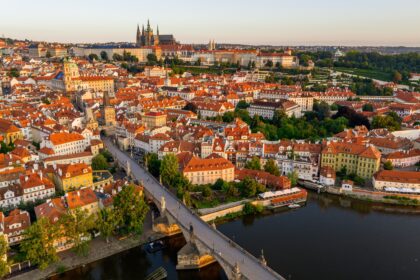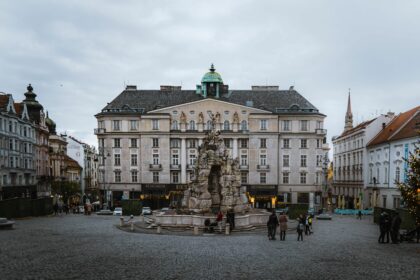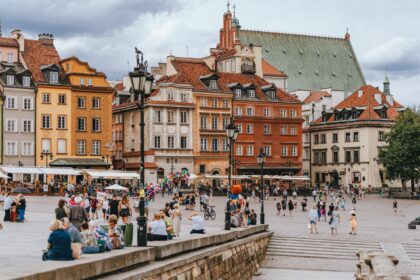
When we drive over the Czech border into Germany, we don’t go for electronics or toiletries. We go for vegan cheese and ready meals. Traditional German food, meanwhile, has a reputation as a meat lover’s menu. Pork knuckle, white sausages, schnitzel, currywurst and a litre of beer to wash it down. And yet Germany is one of the easiest countries in Europe to eat vegan, even in an ordinary supermarket in a small border town.
So what is traditional German food, really, and which classics are vegan without anyone changing a thing? What should you ask at a bakery counter before you buy a pretzel?
Where in Germany will you find the most vegan restaurants, and what’s worth bringing home from a German supermarket? And is Germany vegan friendly outside Berlin? We answer all of it below, with a dish-by-dish table you can use at the table.
We live in Czechia and do our grocery shopping across the border in Germany regularly, in the Bavarian villages of Waidhaus and Eslarn. That part is first-hand. For the dishes, the regional food and the statistics, we spent October 2026 reading German sources, the German agriculture ministry’s own nutrition report and the chains’ official menus. Where something comes from a source rather than from us, we say so.
Is Germany vegan friendly?
Yes, Germany is one of the most vegan-friendly countries in Europe. Every supermarket stocks plant-based products, the big cities have dozens of vegan restaurants, and the word “vegan” on a label is completely normal. It isn’t vegan, though, so in a classic pub you’ll need to ask questions.
According to the German agriculture ministry’s Nutrition Report 2025, based on a forsa survey for the ministry, 2% of Germans eat vegan and 7% vegetarian. Another 37% call themselves flexitarian, meaning they eat meat only occasionally. 24% eat meat or sausage every day, down from 34% in 2015.
For travellers, that means two things. First, demand for plant-based food is big enough that shops and chains take it seriously. Second, most Germans still eat meat, so a traditional restaurant in the countryside won’t offer you a vegan dish unprompted. You have to ask.
In Germany, finding vegan food is rarely the problem. Spotting which traditional dish only looks vegan is.
Traditional German food: what’s vegan and what isn’t
Traditional German food is built on potatoes, cabbage, bread, noodles and meat. The side dishes look vegan, but they often hide egg, butter, lard or meat stock. Below are the main groups of dishes, with what to watch for in each.
Bread and pretzels (Brezel)
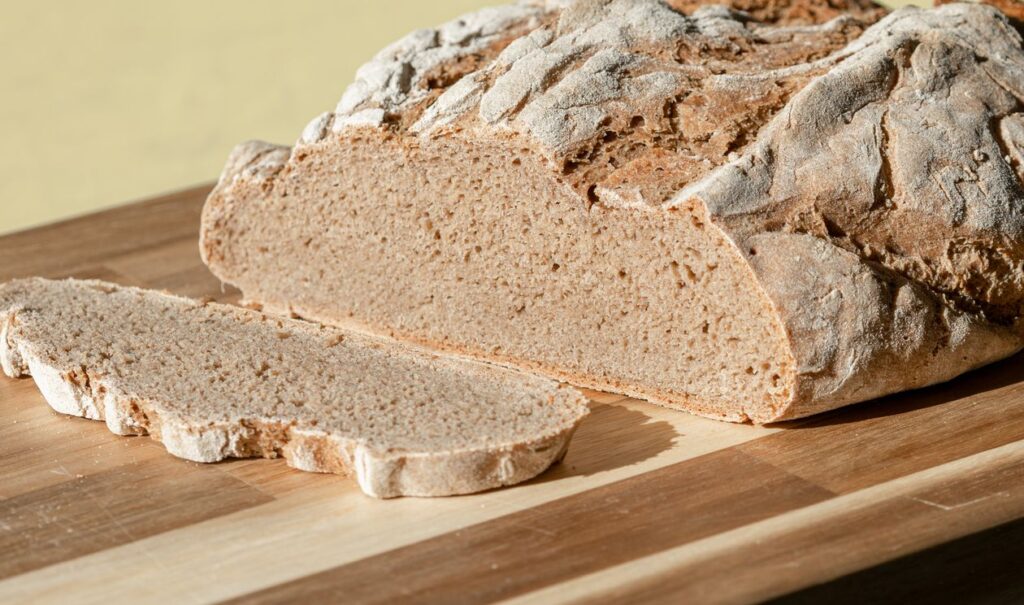
Most plain German bread is vegan, but pretzels often aren’t. Loaves are dark, dense and often rye, and bread rolls (Brötchen, or Semmel in Bavaria) are crisp. Rye and sourdough bread is usually just flour, water, salt and starter, but at a bakery you only know for sure by asking.
The pretzel (Brezel, or Brezn in Bavaria) looks like a safe vegan snack, but often isn’t. According to German Wikipedia’s pretzel entry, a Swabian pretzel contains 3 to 10% butter relative to the flour, and a Bavarian one up to 3%. According to Utopia, bakeries use butter, lard or vegetable fat, so the only way to be sure is to ask.
Tip: At the counter, ask “Ist da Butter drin?” (Is there butter in it?). And skip the Butterbrezel, which is a pretzel sliced open and spread with butter. Ask for a plain one (“eine normale Brezel, bitte”).
Potatoes, dumplings and noodles
Potatoes are everywhere in German cooking, but they’re usually made with butter, eggs or bacon. Bratkartoffeln, pan-fried potatoes, are traditionally fried in butter and often with bacon, according to German Wikipedia on Bratkartoffeln. Potato pancakes (Kartoffelpuffer, called Reibekuchen in the Rhineland) are mixed with egg and fried in lard, clarified butter or oil.
The potato dumpling is the good news. Thuringian dumplings (Thüringer Klöße) are made from just raw grated and cooked potatoes, according to German Wikipedia on Thuringian dumplings, so the dough itself is usually vegan. Watch out for the croutons inside, which are often toasted in butter. The bread dumpling (Semmelknödel), on the other hand, contains egg, roughly one for every two bread rolls, and the bread is sometimes toasted in butter first.
Spätzle, the soft egg noodles of Swabia, are made from flour, eggs and water, sometimes with milk. Käsespätzle are layered with cheese on top of that. Maultaschen, large Swabian pasta pockets, have a filling of minced meat, or a vegetarian one with cheese and spinach.
Potato salad is the trap almost nobody warns you about. In southern Germany it isn’t made with mayonnaise but with vinegar, oil, mustard and warm stock. According to German Wikipedia on potato salad, that’s usually meat stock. In the north, the mayonnaise version with apple and boiled egg is more common. At home, you can make it egg-free with our vegan potato salad.
Cabbage and sides
Sauerkraut is vegan in itself. It’s simply cabbage preserved by lactic fermentation, and despite the name, lactic acid has nothing to do with milk. A restaurant may still cook it with lard, bacon or stock, and the same goes for red cabbage (Rotkohl). Ask what it was cooked in.
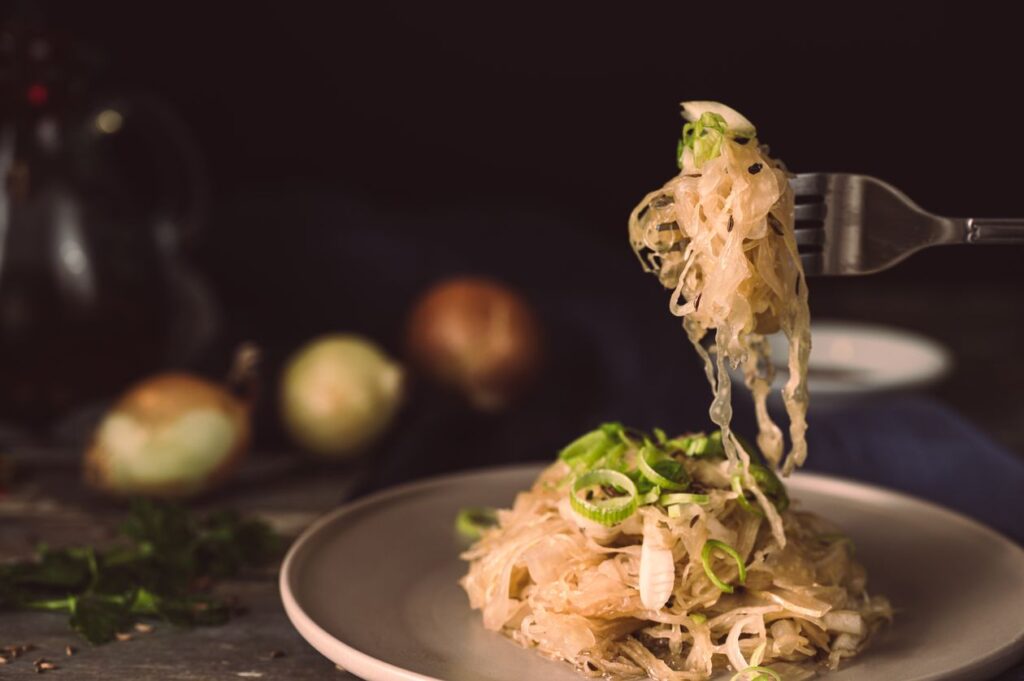
White asparagus (Spargel) is close to a national obsession in spring. The vegetable itself is vegan, but it’s classically served with hollandaise sauce (butter and egg yolk), ham and buttered potatoes. Ask for it with oil, vegan butter or a herb vinaigrette instead.
Main courses and street food
Most classic German main courses are meat. Sauerbraten (marinated pot roast), Schweinshaxe (pork knuckle), Rouladen (beef rolls), schnitzel and sausages. Vegan versions are common, though, from vegan schnitzel to vegan currywurst.
Currywurst is a sliced, fried sausage with a ketchup-style sauce and curry powder. German Wikipedia on currywurst notes the widely held view that it was born in post-war West Berlin. In Berlin you can now order a vegan one at well-known stands. Always check that the sauce is vegan too and whether the fries share a fryer.
Flammkuchen, a thin tart from Alsace and south-west Germany, is traditionally topped with sour cream, onion and bacon. For a vegan version in Alsace itself, see our Strasbourg Christmas market article. Himmel und Erde (heaven and earth) from the Rhineland is mashed potato with apple, but it’s often served with black pudding. Frankfurt’s famous Grüne Soße, a green sauce of seven herbs, is usually made with sour cream or yoghurt and served with boiled eggs.
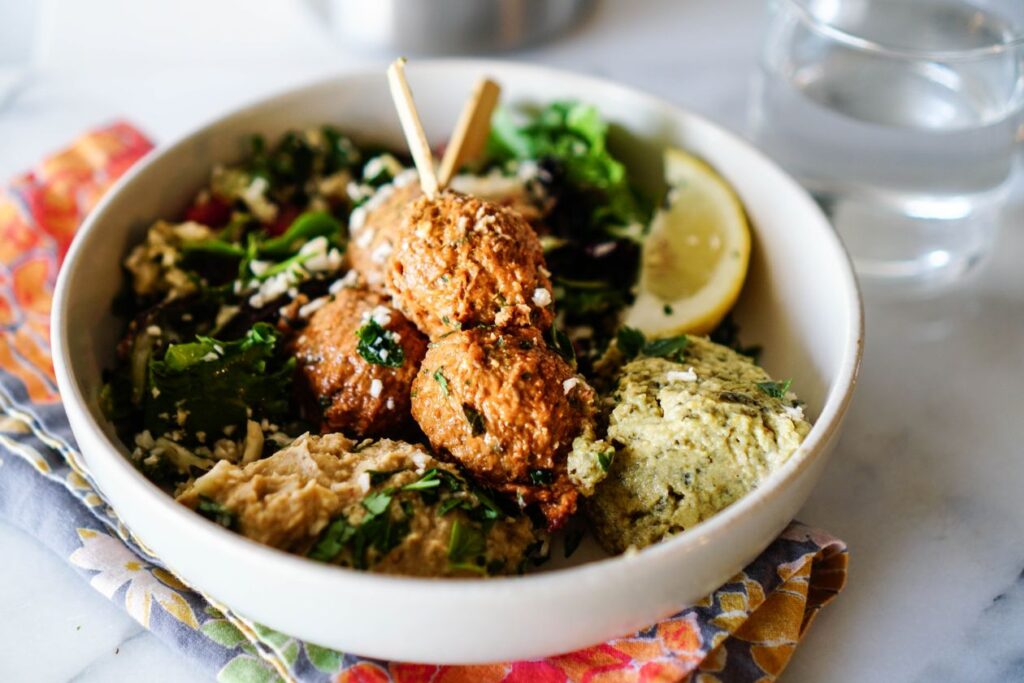
The most reliable vegan street food is falafel. Many kebab (Döner) stands have it on the menu. Ask about the sauce, because the garlic and herb ones are often yoghurt-based.
Sweet bakes and Christmas
German sweet baking is usually not vegan. Apple strudel is filled with apples and breadcrumbs toasted in butter. Pancakes (Pfannkuchen) are made from egg and milk.
Christmas Stollen is a heavy loaf with a lot of fat, most often butter. You’ll only know a Stollen or gingerbread (Lebkuchen) is vegan if the packaging says “vegan”.
Christmas markets are better than you’d expect. We cover where to eat vegan at them, including Dresden, Nuremberg and Munich, in our guide to the best Christmas markets in Europe for vegans.
The ask-first table for vegans
We built this table from German recipes and food entries, so you can use it in a restaurant or at a street stand. The “Vegan?” column shows how a dish is traditionally made. A particular kitchen may do it differently, which is why there’s a column with the question to ask.
| Dish | What it is | Vegan? | What to ask |
|---|---|---|---|
| Brezel / Brezn | pretzel | often not (butter or lard in dough) | Ist da Butter drin? |
| Thüringer Klöße | potato dumpling | dough usually yes, croutons often buttered | Sind die Croutons in Butter geröstet? |
| Semmelknödel | bread dumpling | no (egg) | Gibt es Kartoffelknödel? |
| Spätzle, Käsespätzle | Swabian egg noodles | no (egg, cheese) | Haben Sie Spätzle ohne Ei? |
| Kartoffelsalat (south) | potato salad with vinegar | often not (meat stock) | Mit Gemüsebrühe oder Fleischbrühe? |
| Kartoffelsalat (north) | potato salad with mayo | no (mayo, egg) | Ist die Mayonnaise vegan? |
| Sauerkraut, Rotkohl | sauerkraut, red cabbage | cabbage yes, cooking varies | Mit Schmalz oder Speck? |
| Bratkartoffeln | pan-fried potatoes | often not (butter, bacon) | Ohne Speck und Butter, bitte |
| Kartoffelpuffer / Reibekuchen | potato pancakes | no (egg) | Ohne Ei? |
| Spargel | white asparagus | yes, the sauce isn’t | Ohne Sauce hollandaise, bitte |
| Currywurst | sausage with curry sauce | only the vegan version | Ist die Wurst vegan? |
| Döner / Falafel | kebab or falafel in bread | falafel yes, sauces vary | Welche Sauce ist vegan? |
| Stollen, Lebkuchen | Christmas loaf, gingerbread | no, unless labelled | Ist das vegan? |
Regional food around Germany
German food changes from region to region, and for vegans it’s easiest in the big cities. Bavaria eats differently from Swabia, Saxony or Berlin, and for vegans the regions vary a lot. The big cities have their own vegan restaurants, while the countryside relies on side dishes and supermarkets. In Saxony you can see it in Leipzig, with a fully vegan cat café in the old town and a vegan döner shop in Volkmarsdorf, as we cover in our guide to things to do in Leipzig.
Bavaria
Bavarian food is what most people picture when they think of German food. White sausages, roast pork, dumplings, pretzels and beer gardens. Munich still has several good vegan restaurants. You’ll find the verified addresses in Things to Do in Munich (and Where to Eat Vegan).
For us, Bavaria is also the nearest bit of Germany. The Rozvadov–Waidhaus border crossing sits on the Czech D5 motorway, which becomes the A6 to Nuremberg on the German side. That’s why Bavarian supermarkets are where we do our own shopping.
Swabia and Baden
Swabia, in the south-west, is the land of Spätzle, Maultaschen and potato salad made with stock. For vegans, it’s the hardest of the traditional cuisines, because almost everything leans on egg and cheese. In the countryside, stick to salads, fries and the supermarket.
Berlin
Berlin is Germany’s vegan capital and arguably Europe’s. It has more vegan places than anywhere else in the country, from vegan currywurst to bakeries and fine dining. From Prague, a direct train takes just under four hours. We cover what to see and where to eat in Things to Do in Berlin (and Where to Eat Vegan).
In the west, Cologne has one of Germany’s best vegan scenes, from a fully vegan buffet near the cathedral to vegan pizza in Ehrenfeld. The verified addresses are in Things to Do in Cologne (and Where to Eat Vegan).
Saxony and Dresden
Saxon cooking means potato dumplings, Stollen and sheet cakes, and only the labelled ones are vegan. Saxony is also the closest part of Germany to Prague, just over the Ore Mountains. Dresden is about two hours and twenty minutes from Prague by direct train, and its Neustadt district has several vegan restaurants. Everything is in Things to Do in Dresden (and Where to Eat Vegan).
The Rhineland, Hesse and the north
Traditional food in the west and north of Germany isn’t vegan either. The Rhineland has potato pancakes with apple sauce and Himmel und Erde, Hesse has its green sauce, and Hamburg has fish sandwiches. The classic versions of these dishes aren’t vegan, so ask about egg, cream and lard here too.
Where to try traditional German food made vegan
The best vegan versions of traditional German food are in vegan restaurants in Berlin, Dresden and Munich. They serve schnitzel, beef-style rolls, roast with red cabbage and even a Bavarian breakfast with white sausages, just without the meat. We copied the prices below from each restaurant’s own menu in October 2026.
Berlin: roulade and Monday schnitzel at Försters
Försters in Prenzlauer Berg is a fully vegan restaurant serving German home cooking. Its autumn menu has a soy roulade in red wine sauce with roast pumpkin and potato gratin for €20. Every Monday it serves a Wiener schnitzel with lingonberries for €17. If you want one proper “grandma’s Sunday lunch” on your trip, this is it.
Dresden: schnitzel and a Saxon Mutzbraten burger
Steffenhagen in Dresden’s Neustadt is a fully vegan restaurant with home-style cooking. Since September 2026 its menu has had the Schnitzel Vien, a soy schnitzel with fried potatoes and aioli, for €18. The Saxon roast Mutzbraten appears as a Mutzbraten burger with seitan roast, sauerkraut, mustard and horseradish cream, €18 with salad.
Munich: seitan “duck” and vegan white sausages
bodhi in Munich’s Westend is a vegan Bavarian-style inn. Its seitan “duck” roast comes with dark beer gravy, apple red cabbage and a potato dumpling for €24.50. Keesspatzn, Bavarian spätzle with vegan cheese and crispy onions, is €16.50. Bring your meat-eating friends, because the plates look like any Bavarian inn’s.
Max Pett near Sendlinger Tor serves a Viennese-style soy schnitzel with fries or potato salad for €21. At weekend breakfast (Saturday and Sunday, 10:00 to 12:30), its Bavarian breakfast of three vegan white sausages, a pretzel and sweet mustard costs €16.
How much does food cost in Germany?
A main course in a vegan restaurant in a big German city costs roughly €16 to €25, based on these menus. Falafel from a stand or a lunch deal is cheaper. Cheapest of all is the supermarket, where some chains sell vegan products at the same price as the meat versions.
Read next
Want to combine Germany with other cities? Our list of vegan cities in Central Europe has 16 weekend breaks you can reach by train from Prague.
Vegan shopping in German supermarkets: what we buy
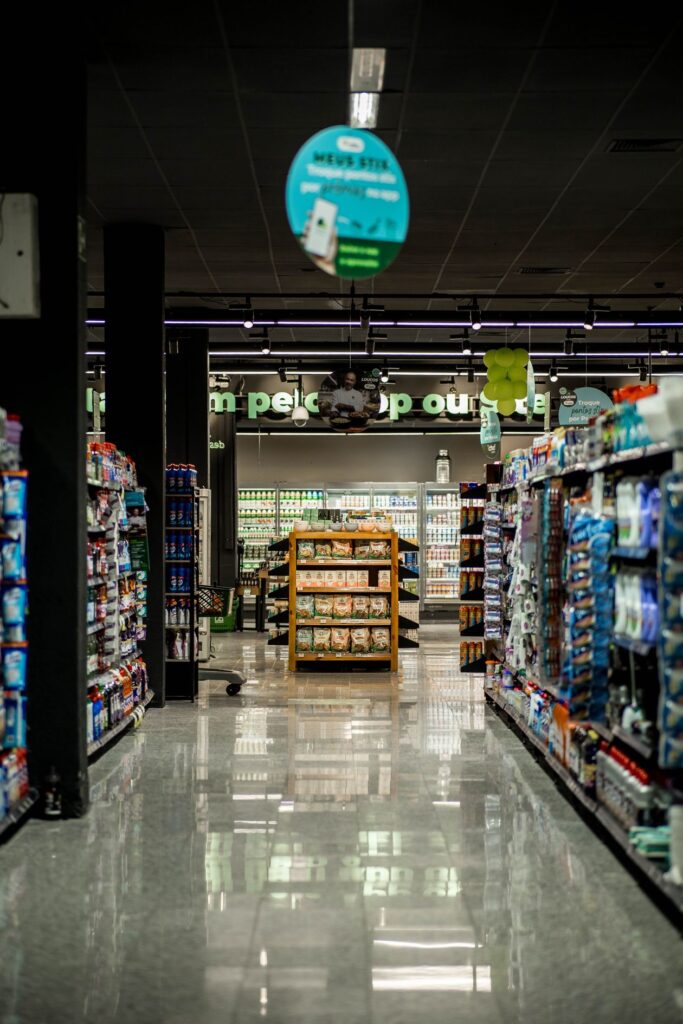
We drive across the border to shop in Germany for the vegan food, not for the prices. In our experience, German supermarkets have a good choice of plant-based ready meals, cheeses and meat alternatives. We know it first-hand from the Bavarian border area.
Waidhaus and Eslarn: where we shop
Waidhaus is the first German village after the Rozvadov border crossing. Eslarn is a short drive away. Both are small places in the Upper Palatinate (Oberpfalz). Depending on what’s closest that day, we go to Netto, Aldi, Rewe or Edeka.
We don’t go for the electronics or toiletries most Czech border shoppers are after. We go for vegan groceries, especially chilled food that’s harder to find at home.
What we bring home
Most often, we bring back vegan ready meals. German supermarkets usually have a good choice, from pasta and curry to soups and spreads, and they’re ideal for a road trip or a packed lunch.
The second thing is the vegan cheese Simply V, for us one of the best vegan cheeses there is.
It’s made by the German cheesemaker Hochland, and according to the official Simply V FAQ, it’s almond-based, with no soy and no palm oil. You’ll find it in the chilled cheese section at Rewe, Edeka, Kaufland and other chains. It comes grated, sliced and as a spread.
The third group is German classics in vegan form. Rügenwalder Mühle, founded in 1834 as a butcher’s shop, now sells vegan schnitzel, meatballs (Frikadellen), sausages, mortadella and vegan “ham”. If you’re curious which vegan hams are worth buying, we have a whole vegan ham guide.
Same price as meat
In Germany, vegan products are often sold at the same price as their animal-based equivalents. According to mobiflip, Lidl has sold most of its vegan Vemondo range at the same base price as the matching animal products since October 2023. vegconomist reports that Kaufland, Aldi Süd and Penny followed.
| Shop | Why we go | What to look for |
|---|---|---|
| Netto | close to the border | vegan ready meals |
| Aldi | vegan ready meals | the word “vegan” on the pack |
| Rewe | sells Simply V | the chilled cheese section |
| Edeka | sells Simply V | the chilled cheese section |
| Lidl | Vemondo at meat prices | the Vemondo name on the pack |
dm and Rossmann
dm and Rossmann are German drugstore chains you may know from home. We mostly shop in supermarkets, so we won’t compare drugstore food ranges we haven’t actually tried. If you go, look for the word “vegan” on the pack.
Opening hours and bottle deposits
Shops in Bavaria are closed on Sundays. According to the Bayreuth Chamber of Commerce (IHK), a new Bavarian law has applied since 1 August 2025, allowing shops to open Monday to Saturday from 6:00 to 20:00. Sundays and public holidays stay closed, with a few exceptions.
Tip: Shop on Saturday, not Sunday. And check the calendar before you go, because German public holidays don’t match those in other countries.
Germany charges a deposit (Pfand) on plastic bottles and cans. According to Verbraucherzentrale NRW, it’s always 25 cents on single-use containers. You return the empties at a machine in the shop and get a receipt to redeem at the till.
Tip: A deposit receipt usually only works in the shop that printed it. Return your bottles before you shop and hand the receipt over at the till.
Vegan fast food in Germany
Among the big fast-food chains in Germany, Burger King is the best bet for vegans. McDonald’s Germany has no fully vegan burger. Subway has two vegan fillings. We couldn’t confirm any vegan item at KFC Germany. We checked each chain’s official German site in October 2026.
| Chain | What’s vegan | Watch out for |
|---|---|---|
| Burger King | Plant-based Whopper, Plant-based Long Chicken, Plant-based Crispy Chicken, Plant-based Nuggets | Whopper patty shares the grill with beef |
| McDonald’s | McPlant Nuggets, if on the menu (may touch chicken) | McPlant dropped Oct 2025; Veggie patty is made from milk |
| Subway | Spicy Vegan Patty, Plant-based Chicken Teriyaki | skip the cheese, check bread and sauce |
| KFC | not confirmed | we couldn’t load the menu |
Burger King Germany serves its plant-based burgers with vegan mayo as standard. The Plant-based Whopper patty, though, is cooked on the same grill as beef, according to the chain, which matters to some people. The full picture for other countries is in our Burger King vegan menu guide.
McDonald’s Germany dropped the McPlant in October 2025. Its Veggie range is vegetarian, because the new patty from the dairy brand Valess is made from milk.
McPlant Nuggets are made from plant ingredients but, according to McDonald’s, may come into contact with chicken products. They also vanished from the German menu for a while in April 2026, so check the app before you go. Are McDonald’s fries vegan in Germany? McDonald’s Germany doesn’t label them vegan. We go through it all in our McDonald’s vegan menu guide.
Subway Germany has the Spicy Vegan Patty and a Plant-based Chicken Teriyaki with soy strips. You build the sub yourself, so leave off the cheese and pick a vegan bread and sauce. More in our Subway vegan options guide.
Getting to Germany from Prague
From Prague, the easiest ways into Germany are by train or by car. Direct trains run to Dresden, Berlin and Munich. For border shopping, a car makes more sense, because trains don’t serve small villages like Waidhaus directly.
By train
According to the IDOS journey planner, the direct train to Dresden takes about 2 hours 20 minutes. The same line continues to Berlin, which takes 3 hours 58 minutes. Direct trains to Munich run via Plzeň, Domažlice and Furth im Wald and take about 5 hours 45 minutes. There’s no direct train to Nuremberg, but FlixBus does it in about 4 hours.
Bring your own food for a long train journey. Big German stations have bakeries and shops, but you only learn what’s in the pastries by asking at the counter.
By car
By car, take the D5 motorway from Prague via Plzeň to the Rozvadov border crossing. On the German side it becomes the A6, and the first village is Waidhaus. You don’t need a vignette for German motorways in a car. According to the ADAC, Germany has no general toll for cars.
When to visit Germany as a vegan
Germany works for vegans all year, but two seasons stand out. Spring is white asparagus season, and Advent is Christmas market season.
Asparagus season starts in spring and traditionally ends on 24 June, which Germans call Spargelsilvester (asparagus New Year’s Eve). Until then, almost every restaurant and market has asparagus. For vegans, it’s one of the few traditional dishes that needs only a small tweak.
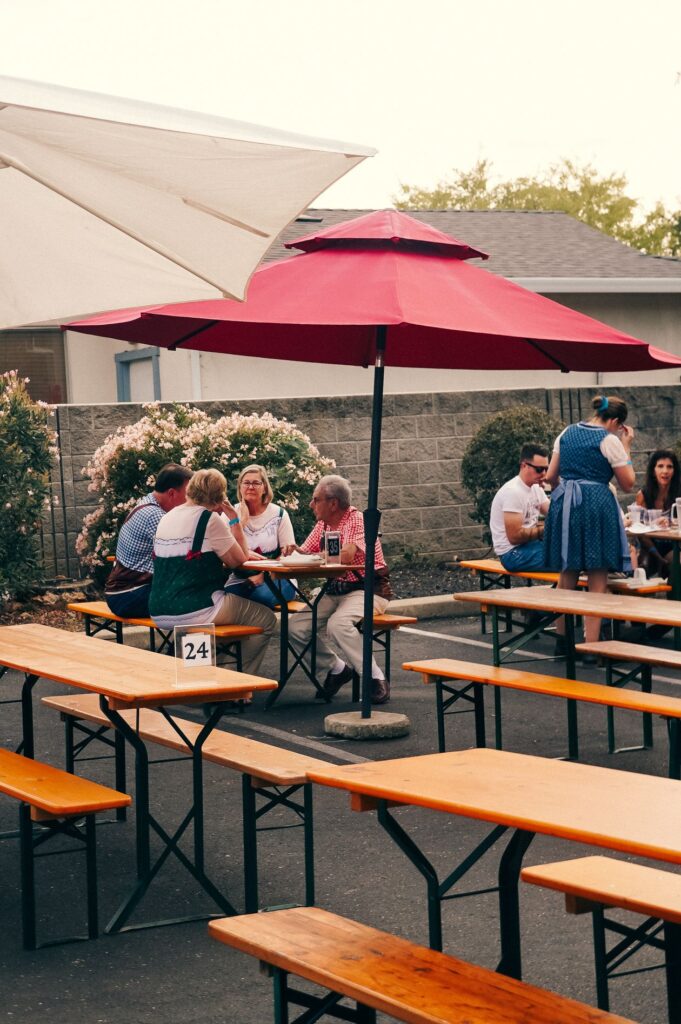
Christmas markets usually open in late November and run until Christmas. Mulled wine, Stollen and gingerbread there aren’t automatically vegan, so ask at the stall. Summer belongs to Bavarian beer gardens, where tradition lets you bring your own food.
Where to stay in Germany as a vegan
Germany has more fully vegan hotels than you might expect. Four of the 25 fully vegan hotels in our list are in Germany, level with Italy for the most of any country. The 7 Sentidos chalets in Bischofsmais are in the Bavarian Forest, near the Czech border. The ahead burghotel is a castle in Lenzen on the Elbe, Vegan Hotel Nicolay 1881 is on the Moselle, and Libertine Lindenberg is in Frankfurt.
In an ordinary hotel, ask about a vegan breakfast in advance, ideally by email when you book. Spell out what you don’t eat (meat, fish, milk, eggs, honey), because every hotel reads “vegan” a little differently.
Useful German phrases for vegans
German will get you through even a small village pub where nobody speaks English. Everyone knows the word “vegan”, pronounced “veh-GAHN”. Here are the most useful phrases, with rough pronunciation.
| English | German | Pronunciation |
|---|---|---|
| I’m vegan. | Ich bin Veganer / Veganerin. | ikh bin veh-GAH-ner / veh-GAH-ner-in |
| Is this vegan? | Ist das vegan? | ist dahs veh-GAHN |
| No meat, milk or egg, please. | Ohne Fleisch, Milch und Ei, bitte. | OH-neh flysh, milkh oont eye, BIT-teh |
| Is there butter in it? | Ist da Butter drin? | ist dah BUT-ter drin (u as in put) |
| Is it made with vegetable or meat stock? | Mit Gemüsebrühe oder Fleischbrühe? | mit geh-MEW-zeh-brew-eh OH-der FLYSH-brew-eh |
| No cheese, please. | Ohne Käse, bitte. | OH-neh KAY-zeh, BIT-teh |
| Do you have anything vegan? | Haben Sie etwas Veganes? | HAH-ben zee ET-vas veh-GAH-nes |
Germany for vegans: our verdict
Traditional German food isn’t vegan, and it’s fair to say so out loud. Schnitzel, sausages, Spätzle and potato salad made with stock are built on meat, eggs and butter. Germany as a country, though, is one of the best places in Europe to be vegan. The cities have vegan restaurants cooking German classics, and every supermarket has vegan versions of them. The border shops have the cheeses and ready meals we drive over the Rozvadov crossing for.
The strategy is simple. Ask about the traditional dishes, head to the cities for vegan restaurants, and stock up in the supermarket.
What about you? What do you always bring home from Germany? Tell us in the comments.
Frequently asked questions
Is Germany vegan friendly?
Yes, Germany is one of the most vegan-friendly countries in Europe. Every supermarket stocks vegan products and the big cities have dozens of vegan restaurants. Traditional restaurants in the countryside don’t usually offer vegan dishes, so you’ll need to ask.
What is traditional German food?
Traditional German food is based on meat, potatoes, cabbage and bread. Typical dishes include schnitzel, sausages, pork knuckle, dumplings, Spätzle, potato salad, sauerkraut and pretzels. Each region has its own specialities, from Bavarian white sausages to Swabian Maultaschen.
Are German pretzels vegan?
Often not. Pretzel dough usually contains a little fat, 3 to 10% butter by flour weight in Swabia and up to 3% in Bavaria. Some bakeries use lard and others vegetable fat, so ask “Ist da Butter drin?” (Is there butter in it?).
Are McDonald’s fries vegan in Germany?
McDonald’s Germany doesn’t label its fries as vegan, so we can’t confirm they are. Its Veggie burgers are vegetarian, with a milk-based patty. If you want a vegan fast-food meal in Germany, Burger King’s plant-based burgers are the safer choice.
Are shops open on Sundays in Germany?
Mostly not. In Bavaria, shops may open Monday to Saturday from 6:00 to 20:00 and stay closed on Sundays and public holidays. There are exceptions for some tourist towns, so do your shopping on Saturday.
Featured photo: Iryna Shapoval, Pexels.
Newsletter
Get our free e-books
Join the newsletter and download Our Vegan Christmas Kitchen straight away, 10 recipes for Czech cookies, gingerbread and vánočka. Then once a month, new places from the vegan map and new articles. Unsubscribe with one click.