The best things to do in Denmark mix sea, bikes and some of the most exciting food in Europe. Copenhagen gives you canals, Tivoli and a city built for cycling. Beyond it lie the island of Funen with Hans Christian Andersen’s Odense, the Jutland peninsula with dunes and the original Legoland, and Skagen in the far north, where two seas meet. Denmark is small, so a single trip can cover a lot.
What should you actually do in Denmark if you have a week? Is Denmark expensive to visit, and why? What is traditional Danish food like, and what do you eat if pork and herring aren’t for you? Which route works for 5, 7 or 10 days? We answer all of it below, with prices in Danish kroner and euros.
We haven’t travelled to Denmark together yet, so this isn’t a trip diary. In November 2026 we read every restaurant’s own website and menu, checked prices with museums and transport operators, and converted at the Czech National Bank rate of 19 November 2026 (1 DKK = €0.13). We left out any place where we couldn’t confirm it still serves vegan food.
Is Denmark worth visiting on holiday?
Yes, Denmark is worth a holiday, especially if you like the sea, cycling and calm, walkable cities. In one trip you can see a capital on canals, Renaissance castles, wild beaches on the North Sea and islands in the Baltic. Distances are short and the land is flat, so you can get around easily by car, train or bike.
Denmark is expensive. Eurostat data puts it among the priciest countries in the EU, closer to Norway than to Sweden on prices. For plant-based eating, though, it’s one of the easiest countries in Europe. In October 2023 the Danish government published what GFI Europe calls the world’s first national action plan for plant-based foods, and Copenhagen has fully plant-based restaurants listed in the Michelin Guide.
If you’re still choosing between the Nordic countries, our comparison of Denmark, Sweden, Norway and Finland explains the best time to visit Scandinavia and where to eat. This article goes deep on Denmark only.
Copenhagen on our vegan map
3 places. Tap a pin to see the details.
Loading the map…
- 100% vegan
See every place from this article on our vegan map.
Things to do in Denmark, region by region
Denmark has three main parts, and it helps to plan your trip around them. There’s the island of Zealand (Sjælland) with Copenhagen, the island of Funen (Fyn) with Odense, and the Jutland peninsula, which borders Germany. Long bridges link all three, so you can travel from Copenhagen to Aarhus by train or car without a ferry.
Copenhagen: Nyhavn, Tivoli and the city on two wheels
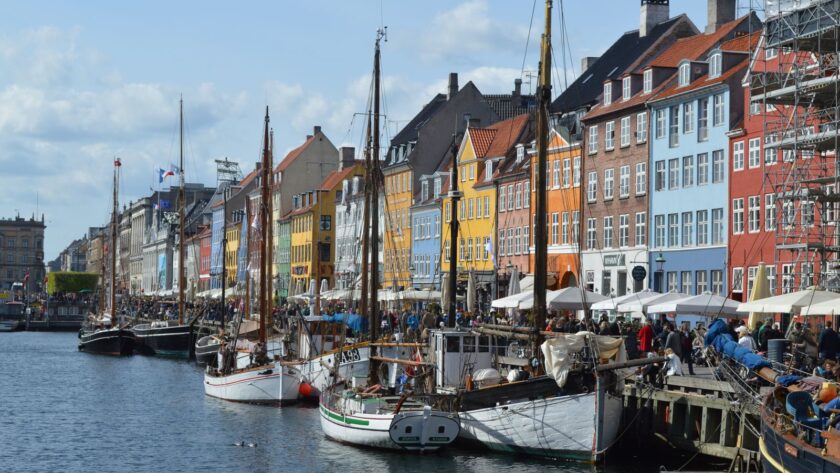
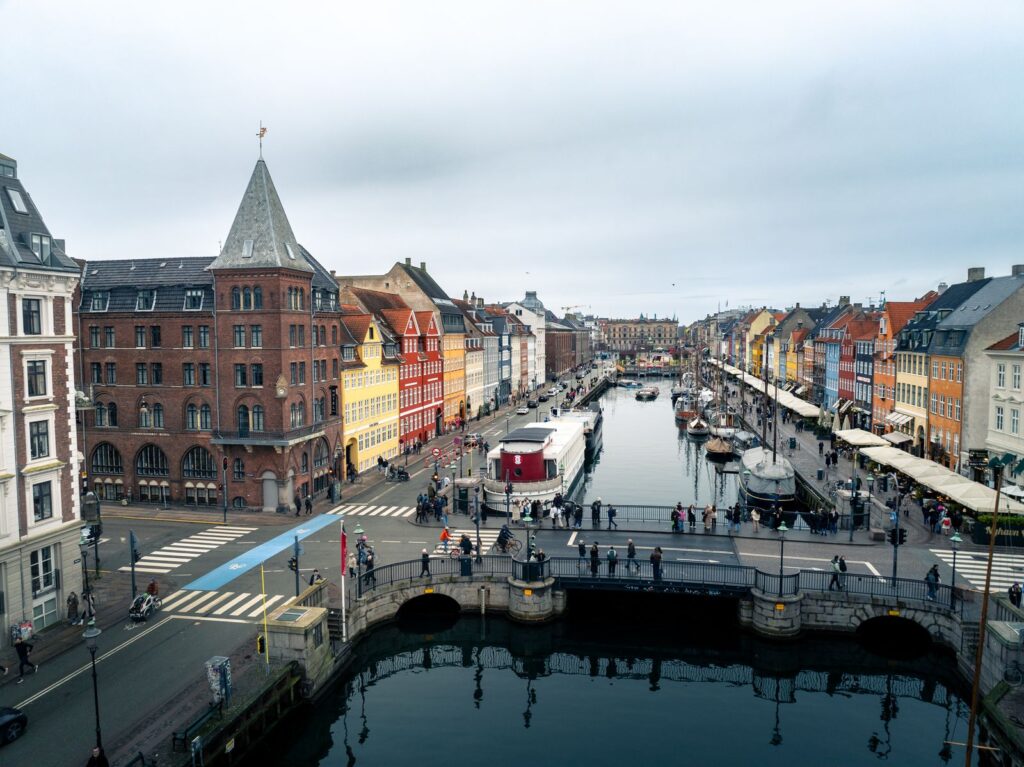
Copenhagen is the best place to start a Denmark holiday. The coloured houses of the Nyhavn harbour are the most photographed spot in the country, and canal boat tours leave from here. Nearby, the Royal Life Guards change at noon at Amalienborg Palace, and the Christiansborg parliament has a free viewing tower. For every sight, price and vegan place by neighbourhood, see the best things to do in Copenhagen.
Tivoli Gardens, next to Copenhagen Central Station, opened on 15 August 1843. It’s the second-oldest operating amusement park in the world. The oldest, Dyrehavsbakken, is also in Denmark, just north of Copenhagen.
At Christmas Tivoli turns into a garden of lights, in the 2026/27 season from 13 November to 3 January.
In Christianshavn, walk along the canals to the Church of Our Saviour, whose spire has a staircase winding around the outside. Next door is Christiania, the self-declared free town founded in 1971 in former army barracks. Above all, Copenhagen is a cycling city. Rent a bike for a day and ride the wide cycle lanes like a local.
One ticket covers Copenhagen’s metro, trains, buses and harbour buses. According to Copenhagen Metro, the cheapest two-zone ticket costs 24 DKK (about €3.20) and is valid for 75 minutes. The airport to the city centre is 30 DKK (about €4), and a 24-hour City Pass is 100 DKK (about €13). The metro runs around the clock.
Day trips from Copenhagen: Kronborg, Louisiana and Roskilde
The three best day trips from Copenhagen are all easy by train. Kronborg Castle in Helsingør is Hamlet’s castle from Shakespeare’s play and a UNESCO World Heritage Site. According to the castle’s website, adult tickets cost 150 DKK (about €20), or 135 DKK online, and children go free.
On the way to Helsingør, stop in Humlebæk for the Louisiana Museum of Modern Art, set in a sculpture garden above the sea with views across to Sweden. West of Copenhagen lies Roskilde. Its cathedral is the burial church of the Danish monarchs and also on the UNESCO list. At the Viking Ship Museum you can see five Viking ships raised from the fjord.
South of Copenhagen, the chalk cliffs make a great road trip. Stevns Klint is a roughly 15-kilometre UNESCO-listed cliff where you can see the layer left by the meteorite impact that wiped out the dinosaurs 66 million years ago. The white cliffs of Møns Klint on the island of Møn are even taller, with wooden steps down to the beach.
Funen and Odense: fairy tales and castles
Funen is Denmark’s countryside island, with orchards, castles and small harbours. Its capital, Odense, is Hans Christian Andersen’s birthplace, and the H.C. Andersens Hus museum brings his fairy tales to life. You can walk the old centre of low, colourful houses in an afternoon.
In the south of Funen stands Egeskov Castle, built in 1554 and the best-preserved Renaissance water castle in Denmark. Its gardens and mazes make it a good day out with kids. From southern Funen, ferries run to small islands such as Ærø and its storybook town of Ærøskøbing.
Odense is a pleasant surprise for vegans. Mộc Chay, a fully vegan Vietnamese restaurant, is on Nørregade, and the vegan Café Ojo is on Lottrups Gård (more in the vegan Denmark section below).
Jutland: Aarhus, Legoland, Ribe and Skagen
Jutland is the largest part of Denmark and the best region for families and beach lovers. Aarhus is the country’s second city. On the roof of the ARoS art museum you walk around Your rainbow panorama, a circular glass walkway that turns the city every colour of the rainbow. According to ARoS, admission is 200 DKK (about €27), under-31s pay 150 DKK and under-18s go free.
Right by the centre is Den Gamle By, an open-air museum that first opened to the public in 1914. It’s full of old workshops, shops and houses moved here from all over Denmark.
Things to do in Denmark with kids: Billund and Ribe
Billund is the town where LEGO began, and it’s home to the very first Legoland, opened on 7 June 1968. According to Legoland, day tickets bought online start at 269 DKK (about €36). Next door is the Lalandia water park, which bills itself as the largest in Scandinavia.
In the southwest lies Ribe, Denmark’s oldest town, with a cathedral and half-timbered houses. Beyond it is the Wadden Sea, a national park on the UNESCO list. At low tide you can walk on the seabed with a guide.
Skagen, Grenen and Råbjerg Mile
At the very tip of Jutland is Skagen, a town of yellow houses and the painters who came here in the late 19th century for its special northern light. On the sandy spit of Grenen, two seas collide, the Skagerrak and the Kattegat, and you can watch the waves meet in a line.
A short drive south is Råbjerg Mile, a migrating dune that moves across the landscape every year. North Jutland is best explored by car, because trains stop at towns like Frederikshavn and Skagen, not at the dunes and beaches.
Bornholm: a rocky island in the Baltic
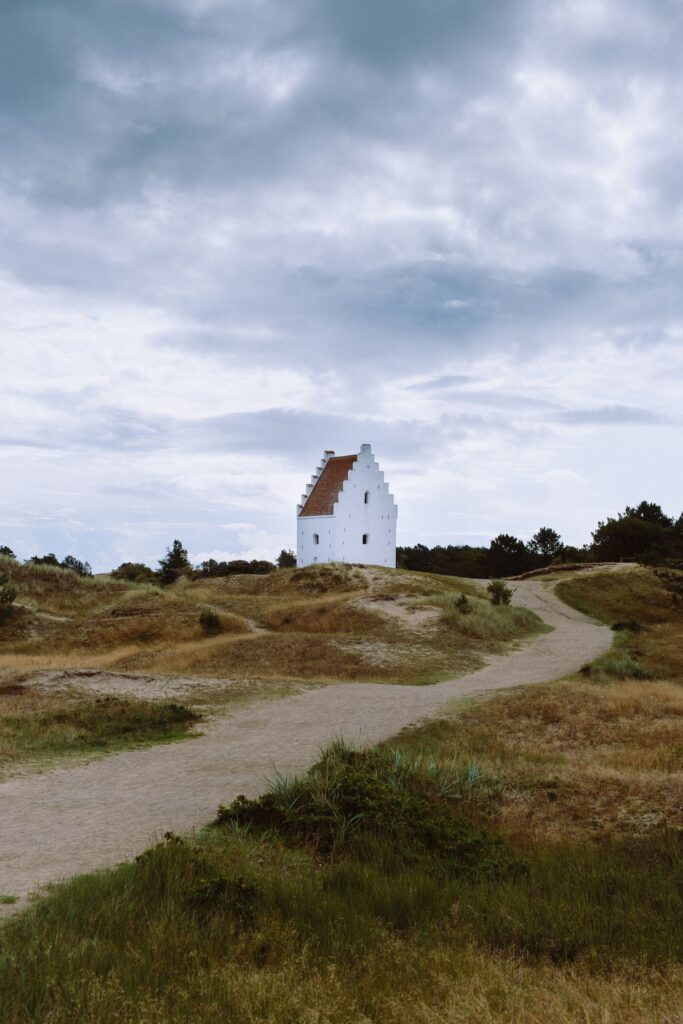
Bornholm is a Danish island that sits closer to Sweden than to Copenhagen, with granite cliffs, fishing villages and round white churches. Its main town is Rønne. The island is popular for cycling and summer beach holidays, with sandy beaches in the south around Dueodde. You get there by ferry from Køge near Copenhagen or from Ystad in Sweden, or by plane from Copenhagen. In summer you should book ahead.
Denmark’s beaches: the North Sea and the Baltic
For a beach holiday, Denmark has two very different coasts. Jutland’s west coast on the North Sea has long, wide beaches, tall dunes and strong winds, ideal for walks, kite flying and surfing. You can swim, but the water is cold and the waves are strong, so stick to lifeguarded beaches with children.
The east coast, on the Baltic and around the bays of Funen and Zealand, is calmer and shallower, and the water warms up more in summer. You’ll also find sandy beaches in the south of Bornholm and around Skagen. Most beaches are free to use and often have toilets, but beach kiosks lean towards hot dogs and fish, so bring your own picnic for a full day by the sea.
Is Denmark a good country for a cycling holiday?
Yes, Denmark is one of the best countries in Europe for a cycling holiday, because it’s flat and has long signposted routes along the coast and between towns. You can rent a bike in any bigger town, and in Copenhagen straight from the street through an app. DSB trains take bikes, so you can ride part of the way and take the train for the rest.
The most popular rides follow the coast and the islands of southern Funen, or loop Bornholm, which adds hills and sea views. The only real challenge is the wind. Plan your route so the wind is at your back, and expect it to blow almost constantly near the sea.
Denmark itinerary: 5, 7 and 10 days
For a first trip to Denmark, plan at least five days, or a week for Copenhagen plus Jutland. The country is small, so you can link a lot of places, but an extra hour on a bike or by the sea beats one more castle.
5 days in Denmark: Copenhagen and around
Spend three days in Copenhagen (Nyhavn, Tivoli, Christianshavn, a bike day and dinner at Bistro Lupa). On day four, take the train to Kronborg in Helsingør with a stop at Louisiana. On day five, visit Roskilde, or cross the Øresund Bridge to Malmö in Sweden, under an hour by train from Copenhagen.
7 days in Denmark: Copenhagen, Odense and Aarhus
After three days in Copenhagen, take the train to Odense for a day of Andersen, Egeskov and lunch at Mộc Chay. Then continue to Aarhus for ARoS, Den Gamle By and a burger at Plant Food. Head back to Copenhagen on the last day, or fly home from Billund Airport.
10 days in Denmark: a road trip
With a car and ten days, you can loop the whole country. Copenhagen (3 days), Stevns Klint and Møn (1 day), Odense and Egeskov (1 day), Aarhus (2 days), Skagen and Råbjerg Mile (2 days), then Ribe and Billund on the way back (1 day). This route works well as a family holiday too.
How to get to Denmark by train, car and plane
Most international visitors fly into Copenhagen, which has direct flights from across Europe and beyond. From central Europe, the train and the car are good alternatives, with short ferries or bridges at the end.
Driving to Denmark: ferries and bridges
If you drive from Germany, you have three options. The Scandlines ferry from Rostock to Gedser takes about two hours. The ferry from Puttgarden on Fehmarn to Rødby takes about 45 minutes. Or you can drive overland via Flensburg into Jutland with no ferry at all. The Fehmarn Belt tunnel under the strait is still under construction.
| Route | Type | Time | Best for |
|---|---|---|---|
| Rostock – Gedser | Scandlines ferry | about 2 hours | the shortest way from Berlin to Copenhagen |
| Puttgarden – Rødby | Scandlines ferry | about 45 minutes | via Hamburg, frequent sailings |
| Flensburg – Jutland | motorway, no ferry | – | Legoland and the north |
| Storebælt (Funen – Zealand) | bridge, toll | – | between Jutland and Copenhagen |
| Øresund (Copenhagen – Malmö) | bridge, toll | – | a day trip to Sweden |
The Storebælt Bridge between Funen and Zealand is tolled, and the price depends on how you pay. Check the current rates on the Storebælt Bridge website. Danish motorways are otherwise free.
Driving tip: In Copenhagen, leave the car at your hotel and use the metro or a bike. Parking in the centre is expensive, and you’ll get most places faster without a car.
By train and plane
Since 14 June 2026, Czech Railways has run direct trains from Prague via Berlin and Hamburg to Copenhagen, up to three times a day, in about 11 hours. Hamburg is the main rail gateway to Denmark from the rest of Europe. If you’re passing through Berlin, see our things to do in Berlin and where to eat vegan.
Inside Denmark, DSB trains link Copenhagen, Odense, Aarhus and the north. You can also fly to Bornholm or Jutland, but for short distances the train is easier.
Bring your ID: In 2026 Denmark still runs temporary border checks, even inside Schengen. Everyone in the car or on the train should carry a passport or national ID card.
Best time to visit Denmark
The best time to visit Denmark is June to August, when days are long and average highs in Copenhagen are about 19 to 23 °C. May and September are quieter and cheaper. December is cold but bright with Christmas markets and Tivoli at its most magical.
| Season | Copenhagen weather | What’s on | Vegan tip |
|---|---|---|---|
| December – February | highs of 3 to 5 °C, short days | Christmas markets, Tivoli until 3 January | Ark takes a winter break from 10 January to 1 February 2027 |
| March – May | 6 to 16 °C | spring, parks in bloom | fewer tourists, easier bookings |
| June – August | 19 to 23 °C | beaches, festivals, cycling | book dinners ahead |
| September – November | 8 to 17 °C | autumn, fewer crowds | seasonal menus from local vegetables |
The temperatures are average daily highs at Copenhagen Airport for 1991 to 2020. It’s windy by the sea almost all year, so pack a jacket even in summer.
Denmark also makes a lovely Christmas break. Besides Tivoli, Kronborg Castle holds a Christmas market too. For more ideas, see our pick of the best Christmas markets in Europe.
Is Denmark expensive to visit?
Yes, Denmark is expensive to visit, especially for restaurants, alcohol and summer hotels. VAT is 25 % on almost everything. Public transport and museum tickets are similar to other European capitals, though, and you’ll save a lot by making breakfast and lunch from the supermarket.
| Item | DKK | Euro (approx.) |
|---|---|---|
| Copenhagen 2-zone ticket | 24 | €3.20 |
| Copenhagen 24-hour City Pass | 100 | €13 |
| Kronborg Castle ticket | 150 | €20 |
| ARoS museum ticket | 200 | €27 |
| Legoland, online from | 269 | €36 |
| Burger at Plant Food, Aarhus | 95 | €13 |
| Phở at Mộc Chay, Odense | 130 | €17 |
| Tasting menu at Ark, Copenhagen | from 899 | €120 |
Why is Denmark so expensive?
Denmark is expensive mainly because of high wages and high taxes, including 25 % VAT with no reduced rate on food. Eating out costs the most, because you pay for the labour as well as the ingredients. The Danish krone is pegged to the euro, so the price you see this year won’t swing much with exchange rates.
Is food expensive in Denmark?
Food in Danish supermarkets costs more than in most of Europe, but it’s still far cheaper than eating out. The discount chains Netto, Lidl and Rema 1000 are the cheapest, while Føtex and Meny cost more. Plant-based milk, tofu, hummus and meat alternatives are easy to find even in small shops. Danish rye bread, rugbrød, is cheap, filling and usually dairy-free, but always check the label.
How to save money in Denmark
In Copenhagen, the Copenhagen Card can pay off if you want to see a lot of museums. According to Visit Copenhagen, it covers more than 80 attractions plus unlimited public transport, including to and from the airport. Do the maths on how much you’ll really see first.
Other easy savings are a bike instead of taxis and a picnic instead of a restaurant. Tap water is safe to drink everywhere in Denmark.
Leave the cash at home: In Denmark you pay almost everywhere by card or phone, and some places don’t take cash at all. Watch for surcharges on foreign cards, though. Bistro Lupa, for example, adds 3.75 % to the bill.
Traditional Danish food and its plant-based versions
Traditional Danish food is built on rye bread, potatoes, pork, fish and buttery pastries. The national dish, chosen in a 2014 public vote, is stegt flæsk, crispy fried pork belly with potatoes and parsley sauce. Denmark is also the home of New Nordic cuisine, which puts seasonal vegetables, mushrooms and fermentation at the centre of the plate.
| Dish | What it is | Plant-based version |
|---|---|---|
| Smørrebrød | open sandwich on rugbrød rye bread | topped with potato, mushrooms, beetroot or avocado |
| Rugbrød | dense, dark sourdough rye bread | usually dairy-free, check the label |
| Frikadeller | fried meatballs | made with pulses or plant-based mince |
| Stegt flæsk | fried pork belly with parsley sauce | best at home, with smoked tofu |
| Wienerbrød | the buttery “Danish pastry” | vegan versions at plant-based bakeries |
| Risalamande | Christmas rice pudding with cream and almonds | made with plant-based cream |
New Nordic food and vegetables
The New Nordic movement that started in Copenhagen changed the way Europe cooks vegetables. Danish kitchens work with what grows nearby, forage in the woods and ferment. The fully plant-based restaurant Ark says on its website that it forages about 40 ingredients from March to November on Zealand and Bornholm, and it co-owns its own mushroom farm.
One to try even if you eat meat
Smørrebrød is the best first taste of Danish food, vegan or not. Dark rye bread with sliced potato, chives and mayonnaise is a Danish classic everyone enjoys, and vegan cafés often serve smørrebrød in a fully plant-based version.
Christmas in Denmark: æbleskiver and gløgg
At Christmas, Danish markets sell æbleskiver, round fried batter balls served with jam and powdered sugar, usually with a mug of gløgg, the Scandinavian mulled wine. The batter is traditionally made with buttermilk, milk and eggs, so a regular stall won’t have a vegan version. They’re easy to make at home with plant-based milk, though, in a special pan with round dips (an æbleskivepande). For Danes, they’re as much a part of December as the tree.
New Nordic cooking was born from vegetables, so in Denmark vegan food isn’t a substitute. It’s the kitchen at its best.
Vegan Denmark: where to eat
The best places to eat vegan in Denmark are in Copenhagen, Aarhus and Odense, where you’ll find fully plant-based restaurants from casual bistros to tasting menus. In the countryside and harbour towns, expect vegan options at regular restaurants instead. We checked every place below in November 2026, on its own website or its official tourist board page.
Vegan Copenhagen
Ark, at Nørre Farimagsgade 63, is a fully plant-based tasting-menu restaurant listed in the Michelin Guide. According to the restaurant’s website, the short menu (Tuesday to Friday) costs 899 DKK (about €120), with a longer menu at 1,199 DKK, and it’s open Tuesday to Saturday evenings.
Ark closes from 20 to 28 December 2026 and takes a winter break from 10 January to 1 February 2027. Children are welcome from age 12.
Bistro Lupa, at Marstalsgade 8 in Østerbro, is a plant-based bistro from the same group as Ark and a little more affordable. It opens every evening, plus Saturday lunch. According to the bistro’s website, it closes from 23 to 29 December 2026.
Beyla, at Købkes Plads 34 in the new Carlsberg Byen district, is a relaxed vegan bar and eatery for weekend brunch and dinner. Book all three, especially on Fridays and Saturdays.
Vegan Aarhus
Plant Food, at Graven 16H in central Aarhus, is a fully plant-based bistro serving burgers made with Beyond Meat. According to its menu, a burger costs 95 DKK (about €13) and a meal with fries and a soft drink 145 DKK. There are also vegetable focaccias for 85 DKK and salad bowls.
For brunch with friends who aren’t vegan, try Café Gaya at N. J. Fjords Gade 2. It’s an organic vegetarian café with vegan dishes on the menu too, so just ask.
Vegan Odense
Mộc Chay, at Nørregade 32, is Odense’s first fully plant-based Vietnamese restaurant. According to its website, every dish is vegan. Order the phở with tofu and mushrooms for 130 DKK (about €17) or a bánh mì for 85 DKK. It’s closed on Sundays and Mondays.
Café Ojo, at Lottrups Gård 1, is a vegan café with a fixed menu plus a daily board where the kitchen tries new dishes. According to VisitOdense, it’s open Tuesday to Saturday from noon until the evening.
Read next
Carrying on north? The Øresund Bridge takes you to Malmö in under an hour, so see our things to do in Sweden and where to eat vegan.
Where to stay in Denmark
The best places to stay in Denmark are summer houses, hostels and city apartments with a kitchen. A Danish summer house (sommerhus) by the sea is the classic family holiday, especially on Jutland’s west coast and on Bornholm. A kitchen saves you the most, because cooking from the supermarket is far cheaper than eating out in Denmark.
In Copenhagen, stay near a metro line, for example in Vesterbro, Nørrebro or Ørestad, and ride into the centre. Book months ahead for summer, when hotel prices peak. If you’d like a fully vegan stay somewhere on your travels, browse our list of fully vegan hotels around the world.
Danish customs worth knowing on holiday
Danes are friendly but direct, and they value punctuality and order. Cyclists ride fast and by the rules, so never stand in a bike lane and look out for bikes before you cross. Tipping isn’t expected, as service is included in menu prices, though rounding up for great service is a nice touch.
Hygge means cosiness, candlelight, good food and people you love. You’ll see the word everywhere, especially in winter. Danes eat dinner on the early side. Bistro Lupa, for example, takes last orders at 8.30pm from Sunday to Thursday, so book for around seven.
For vegans: In Denmark, vegetarisk means vegetarian, so a dish may contain milk, cheese or eggs. Look for vegansk (vegan) or plantebaseret (plant-based) instead.
Useful Danish phrases for vegans
English works almost everywhere in Denmark, but a few Danish words help in cafés and shops. The pronunciation below is simplified for English speakers.
| English | Danish | Say it like / When it helps |
|---|---|---|
| I’m vegan. | Jeg er veganer. | “yai air veh-GAHN-er”, at a restaurant |
| Is it vegan? | Er det vegansk? | “air deh veh-GAHNSK”, at a counter |
| Without milk or eggs, please. | Uden mælk og æg, tak. | “OO-then melk oh egg, tak”, when ordering |
| With oat milk, please. | Med havremælk, tak. | “meth HOW-er-melk, tak”, for coffee |
| Do you have anything vegan? | Har I noget vegansk? | “har ee NO-et veh-GAHNSK”, in a café |
| Plant-based | Plantebaseret | “PLAN-teh-bah-SAIRT”, on the menu |
| Thank you | Tak | “tak”, everywhere |
Denmark is easier than it looks
Denmark has a reputation for pork and pickled herring, but it’s one of the best countries in the north for a meat-free holiday. Copenhagen has a plant-based restaurant in the Michelin Guide, Aarhus and Odense have fully vegan bistros, and supermarkets are full of plant-based food. What helps most is a well-planned route, booked dinners and a kitchen where you stay. It will be expensive, we won’t pretend otherwise, but in a week you’ll see castles, dunes and two seas meeting, and you’ll eat brilliantly.
Are you planning Denmark for the summer, or tempted by Copenhagen at Christmas? Tell us in the comments.
Frequently asked questions
Is Denmark expensive to visit?
Yes, Denmark is expensive to visit, especially restaurants and summer hotels. A Copenhagen metro ticket costs 24 DKK (about €3.20) and Kronborg Castle 150 DKK (about €20). You’ll save the most by self-catering from Netto or Lidl and staying somewhere with a kitchen.
What is the best time to visit Denmark?
The best time to visit Denmark is June to August, with long days and average highs of 19 to 23 °C in Copenhagen. May and September are quieter and cheaper. In December, Tivoli’s Christmas season runs from 13 November to 3 January.
How many days do you need in Denmark?
Plan five days for Copenhagen and its day trips, or seven days to add Odense and Aarhus. With ten days and a car you can loop the whole country, including Skagen in the far north.
What is traditional Danish food?
Traditional Danish food centres on rye bread, potatoes, pork and fish. The best-known dishes are smørrebrød (open sandwiches on rye), frikadeller (meatballs) and stegt flæsk (fried pork belly), which won a 2014 vote as the national dish. Plant-based versions of smørrebrød are easy to find.
Is it easy to eat vegan in Denmark?
Yes, Denmark is easy for vegans. Copenhagen has the fully plant-based Ark, Bistro Lupa and Beyla, Aarhus has Plant Food, and Odense has Mộc Chay and Café Ojo. Supermarkets everywhere stock plant-based milk, tofu and meat alternatives.
Newsletter
Get our free e-books
Join the newsletter and download Our Vegan Christmas Kitchen straight away, 10 recipes for Czech cookies, gingerbread and vánočka. Then once a month, new places from the vegan map and new articles. Unsubscribe with one click.